Whose rules these are, and whose they are not.
The entry advice this cluster cites is published by the UK Foreign, Commonwealth and Development Office and opens by saying it is for people traveling on a full British citizen passport, based on the UK government's understanding of Malaysia's current rules. The rules themselves are Malaysia's and are set and enforced by the Malaysian authorities. What generalizes is the shape of the rule; whether it applies to you depends on the passport you hold, and the only authority on that is your own government. Americans can also raise it with the U.S. Embassy in Kuala Lumpur.
You must submit an arrival card before you travel.
This is the step most likely to be missed and the easiest to do. The entry advice states that you must submit an arrival card online to enter Malaysia, and to do it before you travel because airlines may ask for it at check-in. The card is the Malaysia Digital Arrival Card, published by the Immigration Department of Malaysia, and it is free.
Three things follow. Do it before you leave for the airport rather than in the queue, since an airline asking at check-in is not the moment to discover it. Use the official government site only, because a search will surface intermediaries charging for a free registration. And note the exemption the same advice records: if you are not passing through immigration, you do not need to complete one.
Passport validity, and what Malaysia asks that its neighbors do not.
Your passport must have an expiry date at least 6 months after the date you arrive, and it must be undamaged with no pages missing. Read the second half, because it is not the same rule as the one next door: several countries in this region require a minimum number of blank pages, and this advice does not. What it does require is that the document is intact. A passport that has been through a wash, or that is missing a page, is a problem here in a way that a full one is not.
Two further conditions in the same advice. You will be denied entry without a valid travel document or with one reported lost or stolen. And Malaysia does not recognize dual nationality: if you hold two passports, neither of them Malaysian, enter and exit on the same one.
How long you can stay.
The advice states that you can visit Malaysia without a visa for tourism, and that you will normally be allowed to stay for 90 days on arrival. Longer than that, or for any purpose that is not tourism, means applying for a visa from the nearest Malaysian diplomatic mission before you travel.
Overstaying is treated seriously and the consequences outlast the trip. The same advice records that the Malaysian authorities do not tolerate illegal immigration, that even a few days over can mean being fined, detained, deported at your own cost and banned from returning, and that detention facilities can be poor with limited healthcare. It also notes that the British High Commission cannot help anyone stay or issue a document to support an overstay, which is the general shape of what any embassy can do. Keep a copy of your passport and entry stamp: if you cannot show the original on exit, you may be treated as an overstayer.
Money at the border, and this one has two halves.
When you enter or exit, you must declare cash in any currency or travelers checks worth 10,000 US dollars or more. The penalty for not declaring is not nominal: the advice records that customs officials could seize the money and that you could face a fine of up to 3 million Malaysian ringgit and up to 5 years in prison.
The second half is separate and is easier to miss. Before you travel you must get approval to take ringgit worth 10,000 US dollars or more into or out of the country. The Immigration Department of Malaysia states the same pair of rules on its arrival card site, adding that permission for ringgit above that equivalent comes from Bank Negara Malaysia. Foreign currency is declared; the national currency needs prior approval. They are different obligations.
The border inside the country.
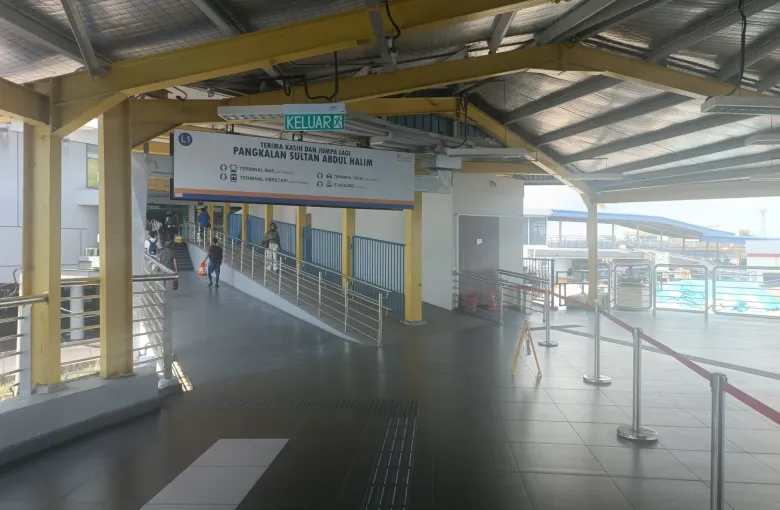
This is the fact that surprises people most, and it has nothing to do with international travel. Traveling between Peninsular Malaysia and East Malaysia, which is Malaysian Borneo and the states of Sabah and Sarawak, means passing through immigration control and getting entry and exit stamps. The advice is explicit that you must carry your passport for it.
It feels like a domestic flight, it is sold like a domestic flight, and it is not one for immigration purposes. Sabah and Sarawak run their own immigration. So a day trip that leaves the passport behind is a trip that does not happen, and a tight connection that assumed no immigration queue is a connection to rebuild. Budget the time and carry the document.
Three things Malaysia is strict about.
Drug screening. The Malaysian authorities could ask you to take a urine test on arrival if they suspect drug use, and if they find drugs in your system they could detain or deport you and ban you from returning. The advice states this applies even if the drug was taken outside Malaysia, including somewhere it is legal.
Firearms. It is illegal to import unlicensed firearms and ammunition, and the advice includes spent ammunition and souvenirs from war museums in that. Conviction for dealing in illegal firearms can carry a death sentence. This is not a category to be casual about, and a spent cartridge picked up as a keepsake is exactly how someone becomes casual about it.
Customs generally. There are strict rules on what can be taken in or out, and anything that may be prohibited or subject to tax or duty must be declared. The advice is specific that if you are unsure whether an item is legal, including medications, you declare it on entry.
Vaccination at the border.
The FCDO entry advice states that to enter you must have a certificate proving a yellow fever vaccination if you are arriving from a country listed as a transmission risk. This is a routing question rather than a destination one: it depends on where you have been, not on where you are going. If the itinerary passes through Africa or South America, settle it well before you fly. The health guide in this cluster covers the rest.
Sources
- UK Foreign, Commonwealth and Development Office: sets out Malaysia's entry rules as the UK government understands them: a passport valid for at least 6 months after arrival, normally 90 days on arrival for tourism without a visa, an arrival card submitted online before travel, immigration control between Peninsular Malaysia and East Malaysia, and a customs declaration for cash worth 10,000 US dollars or more. Accessed 22 September 2026.
- Immigration Department of Malaysia: publishes the Malaysia Digital Arrival Card, and states that travelers carrying cash or bearer negotiable instruments worth more than the equivalent of 10,000 US dollars must declare it to customs, and that carrying Malaysian ringgit above that equivalent requires permission from Bank Negara Malaysia. Accessed 22 September 2026.
- UK Foreign, Commonwealth and Development Office: advises against all but essential travel to parts of Malaysia, and states that no travel can be guaranteed safe and that travelers should get appropriate travel insurance. Accessed 22 September 2026.
Other Articles

Getting Around Malaysia

Malaysia Currency and Money Guide