What this page is and is not about.
Age is not the variable that decides whether Malaysia works for you. Heat, walking surfaces, the cost of care and the pace of the itinerary are, and they apply to a fit seventy-year-old and an unfit forty-year-old in much the same way. This page is about those, written for anyone planning a slower trip.
The money fact that matters most.
The health advice this cluster cites states that government and private hospitals in Malaysia charge for all services, that private care is expensive, and that travelers should make sure they have adequate travel health insurance and accessible funds to cover the cost of any medical treatment abroad and repatriation.
Read repatriation as the expensive word. The routine costs are manageable; the cost that ruins people is being flown home. So the useful work here happens before departure: declare pre-existing conditions honestly to the insurer, get the answer in writing, and check that the policy covers everything in the itinerary rather than the general idea of a holiday. The main advice is blunt that no travel can be guaranteed safe and that appropriate insurance should cover your itinerary, planned activities and expenses in an emergency.
Start the medical conversation eight weeks out.
The health advice says to see a health professional at least 8 weeks before the trip. That matters more if you take regular medication, because some courses take time and because the entry advice is specific that anything you are unsure about, including medications, must be declared on entry and should be carried in original packaging with documentation.
The U.S. Centers for Disease Control and Prevention names hepatitis A, typhoid, Japanese encephalitis, rabies and malaria among the health topics travelers to Malaysia should raise, and recommends that travelers going to certain areas of Malaysia take prescription medicine to prevent malaria. Take the actual itinerary to that appointment, including any rural or forest stays, because that is what changes the answer.
Heat, and how it shapes a day.
This page publishes no temperature figure. What it can say is that the things most worth doing here are walked, that the middle of the day is the hardest part of it, and that the answer is structural rather than heroic: two outings a day with a long break between them, early starts, shade and water, and a plan that survives dropping one item.
The health advice also records that haze from forest fires in Indonesia between June and October may worsen respiratory conditions, and that altitude sickness is a risk in parts of the country including Mount Kinabalu. Both are worth weighing at the planning stage rather than discovering on the ground.
Ground conditions, honestly.
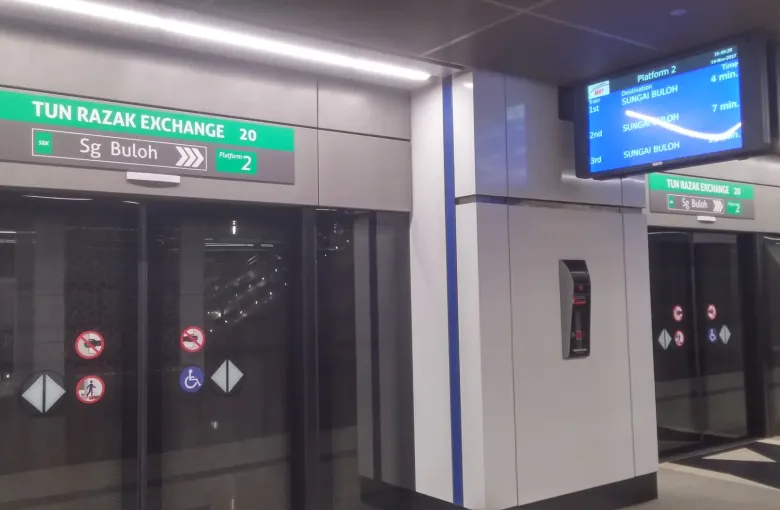
Melaka and George Town are the reason many people come and they are old towns: narrow streets, uneven surfaces, high curbs, steps into buildings. They are entirely manageable at a slow pace with rests built in, and they are not manageable at somebody else's pace. Kuala Lumpur's newer rail lines have level boarding and lifts, which makes the city the easiest part of most itineraries.
No source here assesses any of that formally, which the accessibility guide in this cluster sets out in more detail. Ask hotels and operators directly and ask in measurements.
Two safety notes that apply particularly.
The safety advice records that thieves on motorbikes have cut bag straps and pulled people to the ground, injuring and in some cases killing those who held on. The instruction to let go is worth rehearsing rather than reading, because the instinct is the opposite. Carry the bag across the body, on the side away from traffic, and carry the day's money rather than the trip's.
The same advice records that by law you must carry identification and to always carry your passport, and separately advises not opening a hotel room door to strangers, particularly late at night.
Pace.
The mistake is not attempting too much in a day. It is attempting a country with two halves, an immigration control in the middle and several hundred miles of sea in between, on an itinerary built as though it were one place. Pick the peninsula or Borneo, or give the crossing the time it needs. The transport guide in this cluster covers what that crossing involves.
Sources
- UK Foreign, Commonwealth and Development Office: advises seeing a health professional at least 8 weeks before travel, names malaria, dengue and rabies in the states of Perlis, Kedah, Penang and Sarawak among the health risks, records altitude sickness as a risk including on Mount Kinabalu, and notes that forest fires in Indonesia can cause haze between June and October. Accessed 22 September 2026.
- U.S. Centers for Disease Control and Prevention: names hepatitis A, typhoid, Japanese encephalitis, rabies and malaria among the health topics travelers to Malaysia should raise, and recommends that travelers going to certain areas of Malaysia take prescription medicine to prevent malaria. Accessed 22 September 2026.
- UK Foreign, Commonwealth and Development Office: advises against all but essential travel to parts of Malaysia, and states that no travel can be guaranteed safe and that travelers should get appropriate travel insurance. Accessed 22 September 2026.
- UK Foreign, Commonwealth and Development Office: records a kidnapping threat in coastal eastern Sabah, that it is illegal under Malaysian law for foreign nationals to take part in demonstrations, that bag-snatching by thieves on motorbikes is common and has injured and killed people who held on, that credit card and ATM fraud is widespread, that drink spiking and methanol poisoning occur, and that by law you must carry identification. Accessed 22 September 2026.
Other Articles
Accessible Travel in Malaysia
Getting Around Malaysia