What this page will and will not do.
It will not name a restaurant or price a meal. No source in this cluster research register does, and a recommendation invented here would be indistinguishable on the page from one that had been checked. What it can do is explain the shape of eating in Malaysia, which is genuinely unusual, and carry the two warnings the sources do publish.
The food follows the same history as the cities.
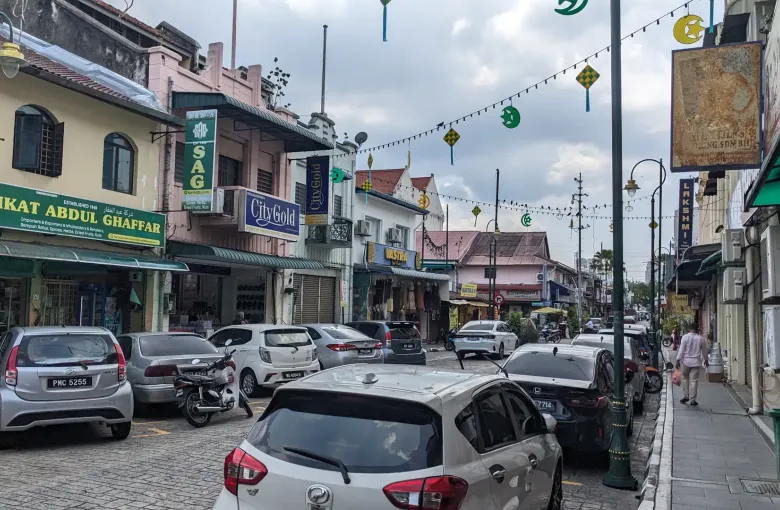
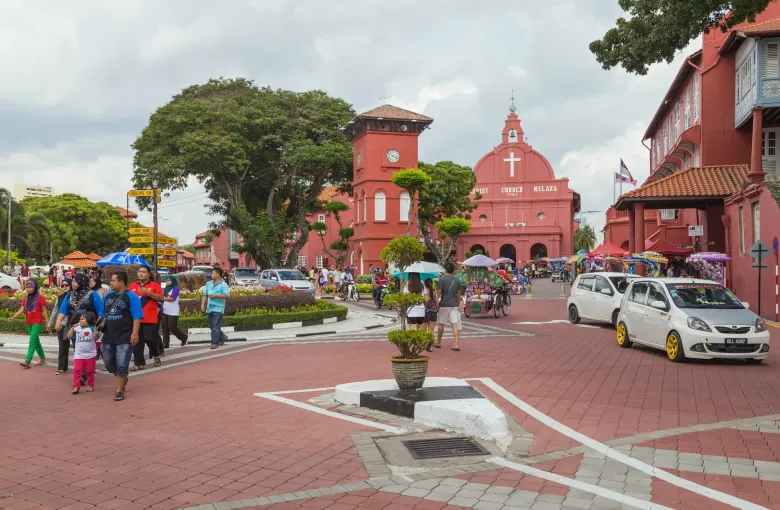
The UNESCO record describes Melaka and George Town as historic cities of the Straits of Malacca, and the reason they were inscribed is the reason the food is what it is. Centuries of trade through those ports brought Malay, Chinese, Indian, Arab and European cooking into the same streets, and they did not stay separate. The result is a set of traditions that exist here and in very few other places: Peranakan or Nyonya cooking from Chinese settlement into Malay communities, Mamak food from Tamil Muslim traders, and a hawker culture that treats a single dish cooked for decades as a serious pursuit.
That is why a food itinerary in Malaysia is mostly a list of stalls rather than rooms. A hall of hawker stalls, or a street of them, will have one vendor for one dish, and the queue in front of each is doing your research for you.
How to eat well without a recommendation from us.
Go where the turnover is. A stall with a line is a stall whose food has not been sitting. Prefer things cooked in front of you over things held warm. Eat at the hours locals do, which for hawker food is usually earlier than a visitor expects for lunch and later for dinner. And take cash: many of the best stalls are cash businesses, which the money guide in this cluster covers.
Halal, and why it shapes a menu.
The safety advice this cluster cites describes Malaysia as a multicultural, majority Muslim country. In practice that means much of the food economy is halal, that pork appears in Chinese and some Peranakan cooking and is clearly separated, and that alcohol is available but is not present everywhere as a matter of course. None of that limits a visitor, and it does explain why a stall that looks similar to its neighbor may be run on different rules.
Ramadan changes eating hours substantially. The safety advice records it as a holy month for Muslims whose dates vary by year and by country, and advises checking the opening hours of shops and restaurants. This page does not print a date for it, and the festivals guide explains why.
The drinks warnings, which belong on a food page.
The safety advice records cases of strangers offering tourists a spiked drink, even in reputable bars or restaurants, and then robbing or assaulting them. Separately it records an increase in serious illness caused by alcoholic drinks containing methanol in popular travel destinations around the world, states that even small amounts can kill, and notes that methanol cannot be identified by taste or smell.
The instructions are the same ones that work anywhere and are worth stating because these are specific published warnings rather than general caution. Watch a drink being poured. Do not accept one from a stranger or leave one unattended. Treat unusually cheap spirits and unlabeled bottles as a reason to decline. Seek urgent medical attention if anyone shows signs of methanol poisoning after drinking.
Food-borne illness.
The U.S. Centers for Disease Control and Prevention names hepatitis A and typhoid among the health topics travelers to Malaysia should raise. Both are subjects for a conversation with a clinician well before the trip rather than for a decision at a stall, and the health guide in this cluster covers the timing. What follows for eating is unglamorous and effective: busy places, hot food, and washed or peeled fruit.
None of that is an argument for avoiding street food, which would be an odd conclusion to draw about the thing Malaysia does best. It is an argument for choosing by turnover and for having had the medical conversation in advance.
Sources
- UK Foreign, Commonwealth and Development Office: records a kidnapping threat in coastal eastern Sabah, that it is illegal under Malaysian law for foreign nationals to take part in demonstrations, that bag-snatching by thieves on motorbikes is common and has injured and killed people who held on, that credit card and ATM fraud is widespread, that drink spiking and methanol poisoning occur, and that by law you must carry identification. Accessed 22 September 2026.
- U.S. Centers for Disease Control and Prevention: names hepatitis A, typhoid, Japanese encephalitis, rabies and malaria among the health topics travelers to Malaysia should raise, and recommends that travelers going to certain areas of Malaysia take prescription medicine to prevent malaria. Accessed 22 September 2026.
- UNESCO World Heritage Centre: records six properties inscribed on the World Heritage List for Malaysia and three sites on its Tentative List, among them Melaka and George Town, Historic Cities of the Straits of Malacca, inscribed in 2008. Accessed 22 September 2026.
Other Articles
Malaysia Culture and Etiquette Guide
Melaka and George Town: Visitor and Heritage Guide