The short version
Say bonjour first. Before the question, before the order, before pointing at the thing you want, and to the room rather than to a person when you walk into a small shop.
That is not a nicety and it is not a tip about being polite. In France, entering a space and addressing someone without the greeting reads as having skipped a step, and the flat response it produces is the thing visitors take home as French rudeness. The greeting is a door. Most of the reputation this country has abroad is the sound of that door not being used.
The greeting, properly
Use bonjour until early evening and bonsoir after. Add madame or monsieur in a shop or a hotel and it lands better still. On leaving, merci, au revoir, to the room again rather than to nobody.
The formal vous is the default for anyone you do not know, of any age, and staying with it is never wrong. Being invited to use tu is a small event rather than a shrug, and the invitation comes from the other person.
The language question, which is not what visitors expect
The received wisdom is that French people resent being spoken to in English. What actually happens is narrower and more interesting: an exchange that opens in French, even badly, and then moves to English, goes well. An exchange that opens in English is the one that goes flat.
Four words carry it: bonjour, merci, pardon, and parlez-vous anglais?. Asking that question rather than assuming the answer is the whole of the courtesy, and in cities the answer is usually yes. Your accent is not the point and nobody is grading it.
France is also more multilingual than its reputation. Regional languages are alive in Brittany, Alsace, the Basque country, Corsica and Occitan-speaking areas, and you will see bilingual signage that has nothing to do with tourism.
Reserve, and what it is not
Public behavior in France is quieter than in much of the English-speaking world. Voices are lower on trains and in restaurants. Strangers do not open conversations. Service is professional rather than warm, and a server who does not check whether you are enjoying your meal is doing the job as it is understood here rather than neglecting you.
None of that is coldness and a great deal of it is respect for other people's space. The corollary is that a French acquaintance, once made, is not casual.
Eating, and the small rules that actually matter
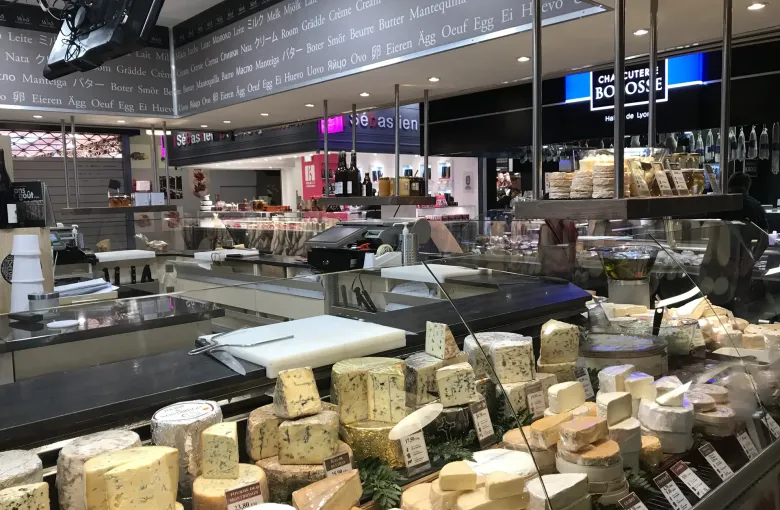
Keep both hands visible at the table rather than one in your lap. Bread goes on the cloth beside the plate, not on it. Cheese is taken as a small amount of several rather than a portion of one. Coffee comes after dessert. You ask for the bill rather than waiting for it, because bringing it unasked would be hurrying you out.
Service is included by law, so tipping is rounding up rather than calculation. Our money guide covers what people actually leave.
Churches, museums and monuments
Many of the buildings on a French itinerary are still in use. Cover shoulders and knees in a church, keep your voice down, and do not photograph a service. Some monuments ban flash, some ban tripods, and the rules differ building to building rather than nationally, so read the sign at the door rather than assuming the last place's rules.
The one law about what you wear
Dress in France is a matter of taste with a single legal exception, and it is worth knowing before you arrive rather than after. Covering your face in a public place is illegal. The ban reaches balaclavas, full veils and any other garment or mask used to hide the face; the advisory states that the law applies to tourists; and not complying carries a fine of up to 150 euros. Forcing another person to hide their face is a separate offense carrying a year's imprisonment and a fine of up to 30,000 euros, doubled where the person forced is aged seventeen or under.
We state it plainly because it is law and because a visitor may be affected by it without ever having heard of it. What it means in practice for most travelers is nothing at all.
Two habits that make France easier
Queue properly and wait your turn at a counter, including in a bakery where the order is understood rather than marked. And treat shop hours as real: a lunchtime closure is not a suggestion, and a small business closed on Monday is not closed for good.
Read this with our food guide, where most of the daily etiquette actually lives, and our festivals guide for the days when the ordinary rules do not apply.
Sources
- UK Foreign, Commonwealth & Development Office: France safety and security: terrorism, industrial action and demonstrations, pickpocketing on the Metro and the RER, assaults on RER lines B and D, drink spiking, the identification requirement, the face-covering ban and its fines, swimming and riptides, driving law, winter equipment, pollution stickers, extreme heat and wildfires. Accessed 16 September 2026.
Other Articles
France and Diaspora Reconnection
France Festivals and Celebrations