The short version
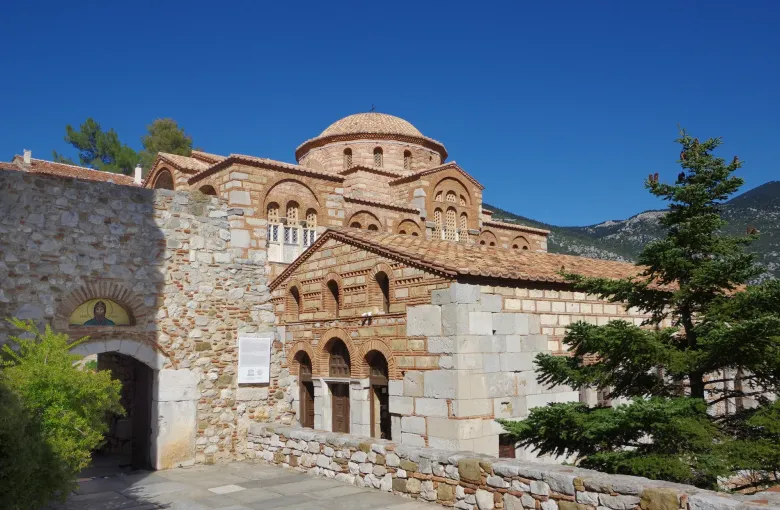
Meteora is a group of monasteries in the center of mainland Greece, in Thessaly, built on almost inaccessible sandstone peaks. The name means suspended in the air. It was inscribed on the World Heritage List in 1988 under criteria (i)(ii)(iv)(v)(vii), which includes a natural criterion as well as cultural ones: the rock formations are part of what is protected.
Who climbed up, and when
Hermits and ascetics probably began settling this extraordinary landscape in the eleventh century. In the late twelfth century a small church called the Panaghia Doupiani, or Skete, was built at the foot of one of the columns where monks were already living. During the political instability of fourteenth-century Thessaly, monasteries were built systematically on top of the inaccessible peaks, and by the end of the fifteenth century there were twenty-four of them.
UNESCO's record is careful to say they were built despite incredible difficulties, at the time of a great revival of the hermitic ideal. Standing underneath one, that is the fact that lands: every stone, beam and barrel of water went up the same way the monks did.
The painting
Many of the monasteries were built or renovated in the sixteenth century, a period of prosperity for monasticism here, and famous painters came to work in them. Theophanes the Cretan painted the Monastery of Saint Nikolas Anapafsas in 1527, and is considered the founder of the Cretan School of painting. Frangos Katelanos worked here too. The sixteenth-century frescoes mark a key stage in the development of post-Byzantine painting, and UNESCO's second criterion says Theophanes's 1527 work became the basic reference for its iconographic and stylistic features, exerting widespread and long-lasting influence.
Italian influence on that painting was strong, and the record says so. This is not a sealed tradition; it is a crossroads that happens to be on top of a rock.
It is still in use
The monasteries flourished until the seventeenth century. UNESCO's record names four that still house religious communities: Aghios Stephanos, Aghia Trias, Varlaam and the Meteoron. Which are open to visitors, and on which days, is a local matter that changes, so we confirm it for the date you are traveling rather than printing a timetable that will age.
Treat a visit as what it is. These are working religious houses that admit guests, not exhibits. Our travelers carry a long skirt or trousers and something to cover the shoulders, keep voices low, and ask before photographing anyone or anything inside. If a service is in progress, the right move is to wait or leave.
Visiting well
Getting between the monasteries means steps, a great many of them, cut into rock and often exposed. Footwear matters. So does timing: this is a place to start early, take one or two houses properly rather than all of them badly, and come back in the late afternoon when the light does the work.
Meteora is a natural site as well as a built one, and the FCDO's advice on hiking in Greece applies on the paths between the peaks. Plan the route, check the forecast, carry water and a charged phone, and tell someone where you are going.
Read this with the Acropolis of Athens, Delphi and culture and etiquette.
Sources
- UNESCO World Heritage Centre: the inscription of Meteora in 1988 under criteria (i)(ii)(iv)(v)(vii). Accessed 15 September 2026.
- UNESCO World Heritage Centre: Greece’s State Party record: twenty-one properties inscribed on the World Heritage List. Accessed 15 September 2026.
- UK Foreign, Commonwealth & Development Office: Greece safety and security: terrorism, strikes and demonstrations, theft on the Athens metro, water safety, road rules, wildfires and earthquakes. Accessed 15 September 2026.
Other Articles
Greece and Diaspora Reconnection
Acropolis of Athens: Visitor and Heritage Guide