The short version
Greek food is regional rather than national, seasonal rather than year-round, and social rather than individual. Dishes arrive together and are shared. Ordering four things for two people and reaching across the table is not greed here, it is the correct procedure.
How a meal actually works
Small plates first, and as many of them as the table wants: dips, greens dressed with oil and lemon, something fried, something from the sea. A larger dish or two in the middle. Bread that is there to be used. The meal takes as long as it takes, and the plates are not cleared to hurry you along.
Lunch, eaten late, is often the substantial meal, and dinner starts much later than most American visitors expect. Adjusting to that rhythm rather than fighting it is the difference between eating where Greeks eat and eating where the kitchen opens at six for people who do not live here.
Regional, and worth planning around
Crete cooks with its own greens, cheeses and rusks and has its own drinking culture. The islands of the Aegean lean on fish, capers, tomato and whatever the wind allows in. Epirus and the mountain interior are pie country, with pastry, wild greens and hard sheep's cheese. Thessaloniki is where the city's Balkan, Anatolian and Jewish histories all turn up on the same street. If there is one argument for moving around Greece rather than settling in one place, it is that the cooking genuinely changes.
Street food, and one health note
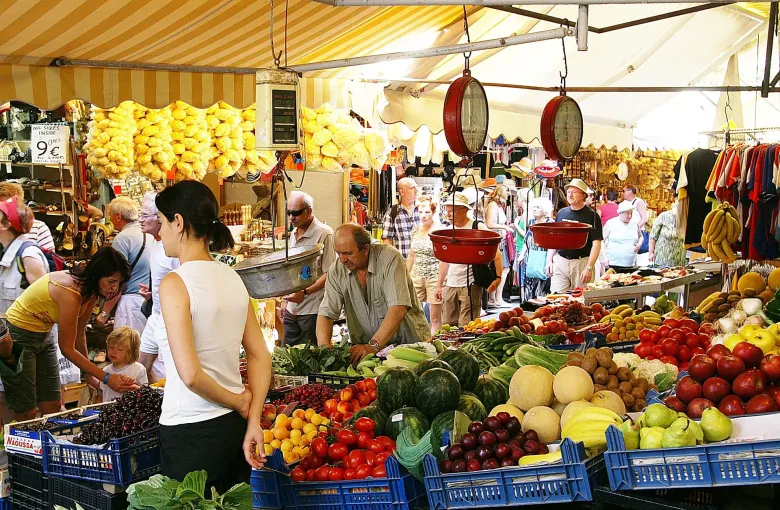
Eat the street food. Souvlaki from a good grill, a bougatsa in the morning in Thessaloniki, a koulouri from a cart on the way somewhere. Greek street food is among the best value in Europe and it is part of how the country eats rather than a sideline for visitors.
One sensible precaution goes with it. The US Centers for Disease Control and Prevention recommends considering hepatitis A vaccination for most travelers to Greece, and specifically for those who plan on eating street food, and for anyone visiting smaller cities, villages or rural areas where infection can come through food or water. That is a conversation with a travel clinic several weeks before you go, not a reason to eat differently when you arrive. The FCDO asks you to check vaccine recommendations at least eight weeks ahead.
Coffee, and the pace it sets
A Greek coffee is not a transaction, it is an hour. Iced coffee in summer is the national default, and both are ordered by sweetness rather than size. Nobody will move you on. A cafe table for two hours with one order is the arrangement, not an imposition on it.
Wine, ouzo and tsipouro
Greek wine is having a very good decade and the indigenous grapes are the interesting part: assyrtiko from the volcanic islands, xinomavro from the north, agiorgitiko from the Peloponnese. Ouzo and tsipouro come with food rather than instead of it, which is the local convention and also the sensible one.
Two legal points travelers should know. It is illegal to sell or provide alcohol to anyone under 18, bars and nightclubs cannot admit or serve under-18s even with an adult present, and age verification at the point of sale is normal. And Greek police will arrest for behavior they consider rowdy or indecent, especially where excessive drinking is involved. Courts impose heavy fines or prison sentences, and travel insurance may not cover a flight missed because of an alcohol-related arrest.
The bill
By law, restaurants must provide an itemized bill, and you should get a receipt for anything you buy. Ask for it as a matter of course. It is the cleanest way to resolve a total that looks wrong, and asking is entirely normal here.
Bringing food in and out
You cannot take meat, milk or products containing them into EU countries, with narrow exceptions for powdered baby milk, baby food and special medical or pet foods. Going home, oil, honey and dried herbs travel well and belong in checked baggage.
Read this with culture and etiquette and the money guide.
Sources
- US Centers for Disease Control and Prevention: Travelers’ Health, Greece: routine vaccines, hepatitis A and B, measles, rabies, tick-borne encephalitis and insect bite prevention. Accessed 15 September 2026.
- UK Foreign, Commonwealth & Development Office: Greece safety and security: terrorism, strikes and demonstrations, theft on the Athens metro, water safety, road rules, wildfires and earthquakes. Accessed 15 September 2026.
- UK Foreign, Commonwealth & Development Office: Greece entry requirements: Schengen area rules, visa-free stays of up to 90 days in any 180-day period, the two passport validity tests, and the 10,000 euro cash declaration. Accessed 15 September 2026.
- UK Foreign, Commonwealth & Development Office: Greece health: the emergency numbers, vaccine timing, prescription medicine rules, and healthcare that is good on the mainland and limited on some islands. Accessed 15 September 2026.
Other Articles

Greece Culture and Etiquette Guide

Greece Festivals and Celebrations