The four things asked of you at the border.
The Foreign, Commonwealth and Development Office sets them out in a single short passage. A passport must have an expiry date at least 6 months after the date you arrive. A visitor can visit Trinidad and Tobago without a visa for up to 90 days. To do that you must have an onward or return ticket and proof of funds for your stay.
Read the passport rule twice, because it is not the one its neighbors use. It counts from the day you arrive, not from the day you leave. A passport with five months left when you land fails this test however short your trip is.
Ninety days is generous by the standards of this batch. Saint Lucia grants six weeks. Saint Vincent and the Grenadines grants six months. Nothing about one island's rules transfers to another, and this is the clearest illustration of it in the program.
Getting the stamp, and extending.
One sentence in the official advice is worth more than its length suggests: make sure you get your passport stamped, because if you do not have an entry stamp in your passport, it will be difficult to extend your stay. The ninety days can be extended by applying to the passport and immigration department, and the stamp is what that application rests on.
If you are a returning resident you may be asked to show a residence permit or work permit on arrival.
The cash figure.
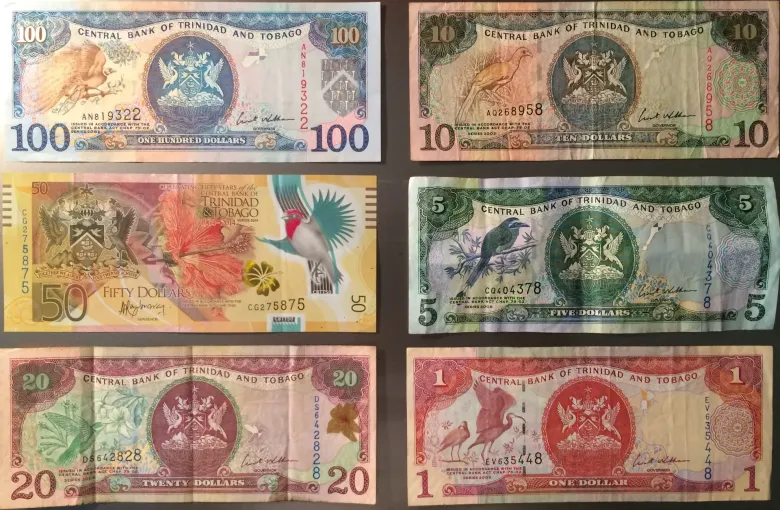
There is no limit on what you may bring in or take out. There is a declaration threshold, and it is specific: you must declare cash in any currency worth over 20,000 Trinidad and Tobago dollars, with strict penalties for failing to declare amounts in excess of the limit.
That figure is in local currency, so what it means in yours depends on the rate on the day. This cluster publishes no exchange rate, for a reason given in the money guide, so work the threshold out at the point of exchange and keep the receipt.
Arriving by sea.
Yachts are common here and the rule is stated: you can sail into and out of the marinas or Chaguaramas Bay, and you must follow government regulations or you could be stopped by the coast guard, who will hand you over to the police. Chaguaramas is the named point of entry, and it is on Trinidad's northwest peninsula.
Health requirements are not entry requirements.
This distinction gets collapsed constantly, and getting it wrong in either direction causes trouble. TravelHealthPro states plainly that there are no certificate requirements under International Health Regulations for this country. Nobody will ask you for a yellow fever certificate at the border.
Separately, and this is a recommendation rather than a rule, the same page states that yellow fever vaccination is recommended for travelers aged 9 months and older traveling to densely forested areas on the island of Trinidad. Note both limits in that sentence: the island of Trinidad, and densely forested areas of it.
Where these rules come from, and where they do not.
Everything above is cited to the Foreign, Commonwealth and Development Office, which states it. It would be better to cite the Immigration Division of Trinidad and Tobago directly, and this build could not: www.immigration.gov.tt fails SSL certificate verification from the environment these pages are written in, so it could not be read and is not cited. That is recorded rather than worked around. If you want the primary text, that department is where it lives.
Customs rules are strict and anything prohibited or subject to tax or duty must be declared. One prohibition surprises almost every visitor and it is not in the customs paragraph at all: see the packing list.
If you would like us to check your dates and documents against your itinerary before you book, start here.
Sources
- UK Foreign, Commonwealth and Development Office: Trinidad and Tobago travel advice, entry requirements: that a passport must have an expiry date at least 6 months after the date of arrival; that a traveler will be denied entry without a valid travel document or with a passport reported lost or stolen; that a visitor may enter without a visa for up to 90 days and must have an onward or return ticket and proof of funds for the stay; that the 90-day visit can be extended by applying to the passport and immigration department and that the passport must be stamped on arrival or an extension will be difficult; that a traveler may sail into and out of the marinas or Chaguaramas Bay but must follow government regulations; that health entry requirements and recommended vaccinations are set out by TravelHealthPro; that there are strict rules about goods taken into or out of the country and that anything prohibited or subject to tax or duty must be declared; and that the amount of currency brought in or taken out is unlimited but cash in any currency worth over 20,000 Trinidad and Tobago dollars must be declared, with strict penalties for failing to do so. Accessed 21 September 2026.
- TravelHealthPro, the National Travel Health Network and Centre: Trinidad and Tobago country page: that there are no certificate requirements under International Health Regulations and that there is a risk of yellow fever transmission in parts of the country; that yellow fever vaccination is recommended for travelers aged 9 months and older traveling to densely forested areas on the island of Trinidad and is not recommended for cruise ship passengers; that there is a risk of dengue in the country and a risk of Zika virus in the country; that on 24 March 2026 the Ministry of Health reported a confirmed detection of yellow fever in a deceased monkey with no human cases detected, and that the last significant yellow fever outbreak in Trinidad occurred in 1979; that as of 2 April 2025 the Ministry of Health was investigating a cluster of five malaria cases on the island of Trinidad with the first case identified on 27 March 2025, that it was unclear whether it was locally acquired and that the species had not been confirmed, and that mosquito bite avoidance is recommended for all travelers; and that the capital is Port of Spain, the official language English and the monetary unit the Trinidad and Tobago dollar. Accessed 21 September 2026.
Other Articles

Trinidad and Tobago Travel Safety Guide
Trinidad and Tobago Currency and Money Guide