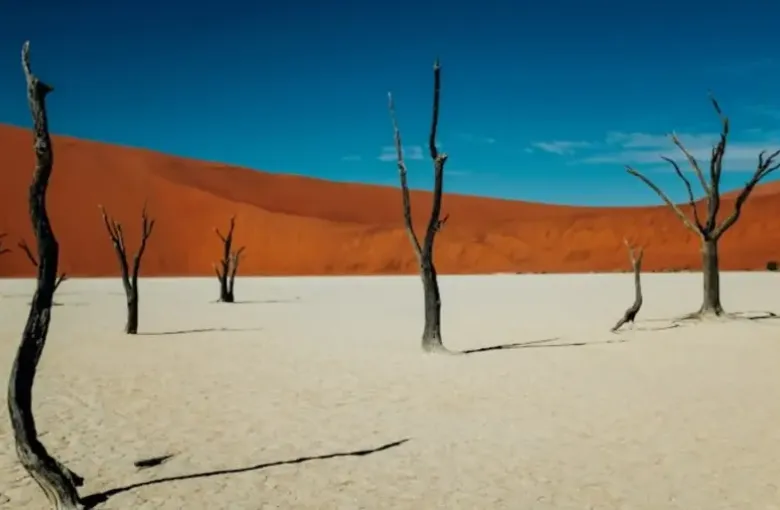
The quick answer
Namibia is one of the driest countries in Africa, and it has three quite different climates at once: a cold, foggy Atlantic coast; a hot, arid interior; and a high central plateau that is temperate by day and cold at night. Pack for all three, because most itineraries cross all three.
The coast is cold, and that surprises everyone
The Benguela current runs north up this coast carrying cold water from the Southern Ocean. Where it meets warm desert air it produces fog, frequently and thickly, and it keeps Swakopmund and Walvis Bay cool and gray while the interior a hundred miles inland is baking.
Do not plan a beach holiday on the Skeleton Coast. Do bring a windproof jacket for the coastal section of any itinerary, in any month.
That fog is also the reason the Namib supports life at all: the desert's beetles, lichens and welwitschia take their water from it rather than from rain. It is the ecosystem, not a nuisance.
The desert and the interior
Hot days and cold nights, with one of the widest daily temperature ranges you will experience anywhere. A dune morning at Sossusvlei in June can start below freezing and reach shirt-sleeve warmth by mid-morning. In summer the interior is genuinely hot — daytime temperatures in the south and around the Kalahari are severe in December and January.
Windhoek sits high, at around 1,700 meters, which makes it milder than its latitude suggests and cool after dark for much of the year.
Rain, where there is any
The rainy season runs roughly November to April, and almost all of it falls in the north and east. The far north-east — the Zambezi region, formerly the Caprivi Strip — is green, wet and subtropical, and looks nothing like the rest of the country. The south-west may see essentially nothing.
Rain arrives as short violent thunderstorms rather than steady drizzle. The practical consequence is not wetness but road condition: gravel roads wash out and rivers that are dry sand for eleven months can run for a day.
⚠ Never cross a flowing riverbed
Dry riverbeds crossing the road are normal in Namibia and can fill with startling speed after rain that fell somewhere you cannot see. If water is flowing across the road, stop and wait. Vehicles are lost this way every season, and it is the desert's least intuitive hazard.
What to pack for
- Layers, and a real jacket. Freezing dawns in the desert from May to August.
- A windproof for the coast, in every month.
- Sun protection at full strength. Clear desert skies at altitude are unforgiving, and the fog on the coast hides UV rather than blocking it.
- Lip balm and moisturizer. This is the driest air most visitors will ever experience, and it is the complaint we hear most.
Our Namibia packing list goes through the rest.
Checking a forecast
Ask your lodge. Conditions at the coast, in the dunes and on the plateau differ so sharply on the same day that a national forecast tells you very little about where you will actually be.
Other Articles
Best Time to Visit Namibia
Namibia Packing List