The short version
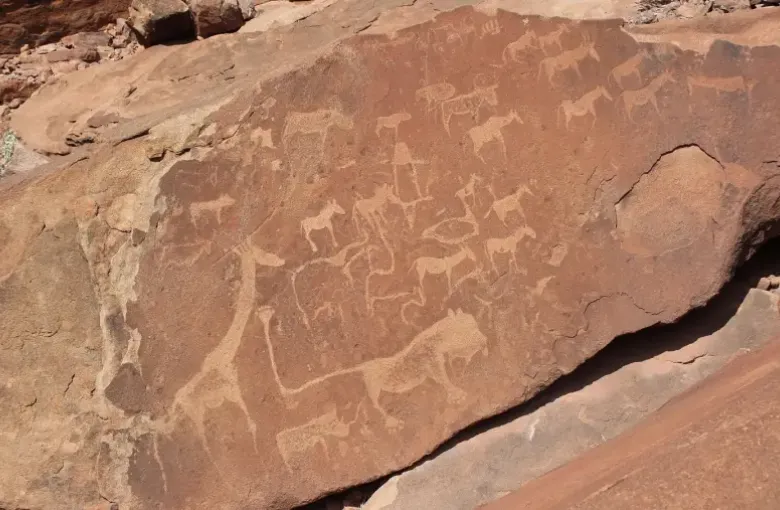
Sossusvlei is a clay pan among the great dunes of the Namib Sand Sea, an inscribed UNESCO World Heritage Site and one of Namibia's two — the other being Twyfelfontein. The Namib is generally described as the oldest desert on earth, and the dune sea is the only coastal desert in the world shaped substantially by fog.
What you are actually looking at
The dunes are enormous, and they are red because their sand is old: iron in the grains has oxidized over a very long time, and the older the dune, the deeper the color. The sand itself has traveled a remarkable distance — carried down the Orange River from the interior, north along the coast by the current, and then inland by wind.
Sossusvlei is where the ephemeral Tsauchab River ends, blocked by dunes, on the rare occasions it flows at all.
Deadvlei, which is the photograph
Deadvlei is a white clay pan a short walk from Sossusvlei, holding the blackened skeletons of camelthorn trees that died roughly six to seven hundred years ago when the river was cut off. The wood has not rotted — it is too dry — so it has simply stood there, scorched black, on white clay, against orange dunes and blue sky.
It is the most photographed place in Namibia and it deserves to be. Go early: by mid-morning the contrast flattens and the heat becomes serious.
The dunes worth knowing
- Dune 45 — the accessible one, 45 km from the gate, climbable in a manageable time and the usual sunrise stop.
- Big Daddy — the tall one overlooking Deadvlei. A serious climb in soft sand; the reward is running down the face into the pan, which is genuinely joyful.
- Elim Dune — near Sesriem, good for an evening walk without the drive.
- Sesriem Canyon — a narrow gorge cut by the Tsauchab, and a good low-effort stop.
⚠ The one booking decision that matters
The dunes are at their best in the first hour of light, and the outer park gate opens at sunrise while the inner gate, for guests staying inside, opens earlier. Staying inside the park — at Sesriem — is what lets you be at Dune 45 or Deadvlei for the light rather than an hour behind it.
That single choice affects your photographs more than the season, the camera or the guide. Decide it when you book, because inside-the-gate accommodation is limited and goes early.
Getting there and around
The road from Sesriem toward Sossusvlei is tarred for most of its length; the final 5 km is deep sand and requires 4x4. If you are in a 2WD, park at the 2WD car park and take the shuttle, which runs regularly. Do not attempt the last section in an unsuitable vehicle — being dug out is a routine and expensive event.
Practicalities
- Water, far more than you expect. The dry air hides how much you are losing.
- Climb early or late. Midday on a dune is dangerous, not merely unpleasant.
- Barefoot is often easier than shoes on the dune ridge — but the sand is hot by mid-morning.
- Protect your camera from sand. It is extremely fine and gets into everything.
- No malaria risk here, unlike the north.
Access
The dunes cannot be made accessible, but the drive and the pans can be seen without climbing anything — see our accessibility guide. A scenic flight over the dune sea is, for some travelers, the better experience anyway.
Visiting with LABUSA Travel
We book inside the gate where we can, and we will tell you plainly when we cannot — it is the difference between the trip you imagined and an hour of queuing behind it.
Other Articles
Best Time to Visit Namibia
Namibia Packing List