The quick answer
Namibia is, in some ways, the most accessible country in this guide series — and in one way the least. The road network is good and the game viewing is done from a vehicle, which helps enormously. The distances are long and the signature experience is climbing a sand dune, which does not.
What works in Namibia's favor
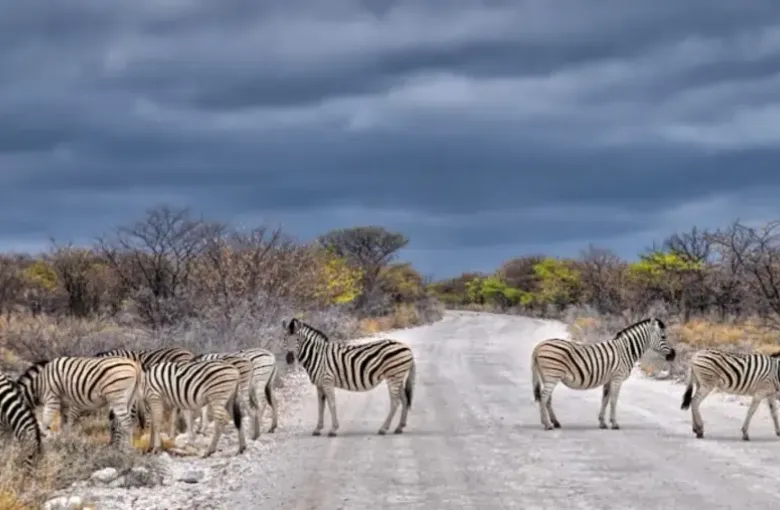
- Etosha is a self-drive park. You can see extraordinary wildlife from your own vehicle, at your own pace, without transferring into a high open game-viewer. For many travelers with reduced mobility that is the single biggest difference from a Botswana or Zambia safari.
- Waterhole viewing. Several Etosha rest camps have floodlit waterholes with seating a short level walk from the accommodation. You can sit still and let the animals come to you — some of the best wildlife watching in Africa requires nothing more than a chair.
- Tarred trunk roads connect the main centers, and Windhoek and Swakopmund have hotels built to international standards, some with accessible rooms.
- Adapted vehicle hire exists. A small number of Namibian operators specialize in accessible self-drive and guided travel with hand controls, hoists and adapted campers. This is unusual in the region and worth seeking out.
What does not work
- Sossusvlei's dunes are not accessible, and there is no pretending otherwise. Climbing Dune 45 or Big Daddy is a strenuous walk in soft sand. But the drive in is spectacular in itself, the 2WD road to Sossusvlei is tarred most of the way, and the shuttle to the last section can be arranged. You can see the dune sea without climbing it.
- Deadvlei requires a walk over sand from the shuttle drop-off. That one is genuinely difficult, and it is the photograph everyone wants.
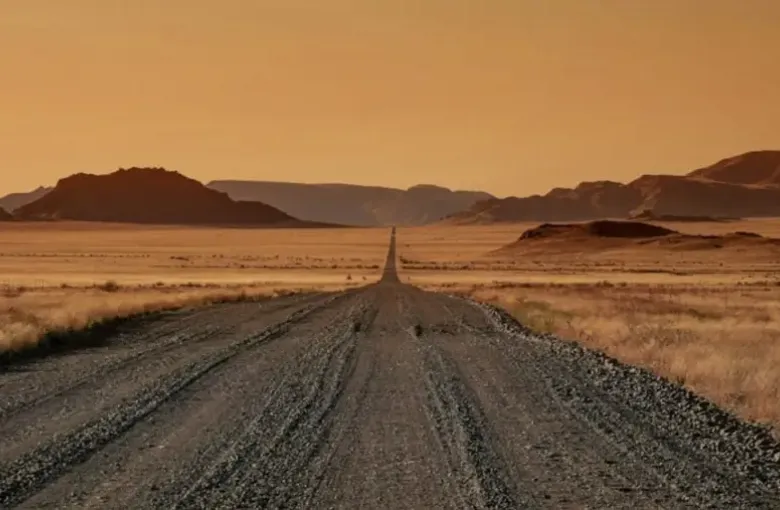
- Gravel roads are tiring over long distances, corrugations are hard on the spine, and journeys are longer than the map suggests.
- Remote lodges are often on raised decks with steps and sand paths, as elsewhere in the region.
A realistic itinerary
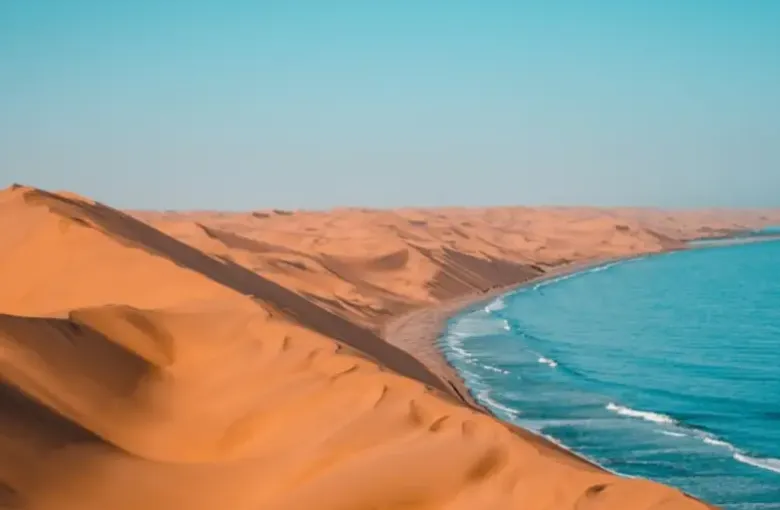
Windhoek, Sossusvlei viewed rather than climbed, Swakopmund, and Etosha by self-drive with waterhole viewing, is a genuinely good Namibia trip that avoids almost all of the difficulty. Add a scenic flight over the dune sea and the Skeleton Coast — boarding a light aircraft is a step, but a short one, and the aerial view is arguably better than the ground view.
Visual and hearing impairment
Guiding standards are high and a good guide will narrate in detail if you say that is what you need. Audio description, braille and hearing loops are not generally available; a private guide is the practical answer.
Medical practicalities
Facilities are good in Windhoek and limited elsewhere. Bring all medication and consumable supplies for the whole trip with margin. Insurance with explicit medical evacuation cover matters more here than in most destinations, because of the distances — see our safety guide.
The questions to ask before booking
- Is the room on a raised deck, and how many steps? Roll-in shower or fixed bath? Door width?
- Is the path between parking, room and dining hard surface or sand, and is it lit?
- Does the operator have an adapted vehicle, hand controls, or a hoist — and can you see photographs of it?
- At Sossusvlei, how far is the shuttle drop-off from the point you want to reach?
- Which Etosha camp has a waterhole closest to accessible accommodation?
Ask the specific property, in writing, describing what you actually need.
Planning with LABUSA Travel
Tell us your requirements in detail and we will check them property by property. Namibia has more genuine options than its neighbors here, and it takes asking the right operators.
Other Articles
Namibia for Senior Travelers
Etosha National Park: Visitor and Heritage Guide