The quick answer
Namibia's calendar mixes three quite different things: traditional festivals in the north, German-inherited celebrations in Windhoek and Swakopmund, and commemorations that are not celebrations at all and should not be approached as though they were.
⚠ Dates for the traditional and commemorative events are set locally each year. Confirm close to the time rather than planning around a date found online.
Oshituthi shomagongo — the marula fruit festival
The one Namibian festival on UNESCO's Representative List of the Intangible Cultural Heritage of Humanity, inscribed in 2015.
Held across the Oshiwambo-speaking north over roughly two months after the marula harvest, it centers on omagongo, the drink made from marula fruit. Households prepare it, and the communal drinking, singing and poetry that follow are the festival. It is a genuine community occasion rather than a staged event, and it is bound to the harvest, so its timing follows the fruit.
Aboxan Musik
Namibia's other inscribed element sits on the List in Need of Urgent Safeguarding (2020) — ancestral musical sound knowledge and skills. It is on the urgent list because the practitioners are few and the transmission is fragile. If you get a chance to hear it performed by the community that holds it, that is a privilege, and paying properly is the point.
The German inheritance
- Windhoek Karneval (WIKA) — a carnival with a street parade, usually around April. Küska is Swakopmund's coastal equivalent, usually in August or September.
- Oktoberfest in Windhoek, and it is taken entirely seriously.
These are odd and enjoyable to encounter in southern Africa, and they are a living part of the country's mixed inheritance rather than a tourist confection.
Independence Day — 21 March
Namibia became independent on 21 March 1990, the last country in mainland Africa to emerge from colonial and minority rule. The day is a national holiday with official celebrations, and it means a great deal here.
⚠ The commemorations, which are not festivals
Herero Day, usually held around late August at Okahandja, and the Nama commemorations in the south, are days of mourning and remembrance for the 1904–1908 genocide and for the ancestors killed in it. Herero and Nama communities gather in traditional dress and process to the graves of their leaders.
They are public, and visitors are not unwelcome, but they are not spectacle. If you attend: dress soberly, follow your host absolutely, stand where you are put, and do not photograph without explicit permission. Do not treat the dress as a photo opportunity. Read our heritage and reconnection guide first so that you understand what you are looking at.
Other things worth knowing
Windhoek Show (agricultural, late September) and the Namibia Annual Music Awards are the big domestic events. Enjando Street Festival brings music and dance through Windhoek's streets. And the Nama Stap dance festivals in the south are worth seeking out if your route goes that way.
Attending well
- Confirm the date locally, close to the time.
- Ask about photography and accept restrictions without argument.
- Know which kind of event you are at. The distinction between a festival and a commemoration is the most important thing on this page.
Planning with LABUSA Travel
If an event is the reason for your trip, tell us early and we will be straight about what can be guaranteed — and we will make sure you arrive at a commemoration understanding what it is.
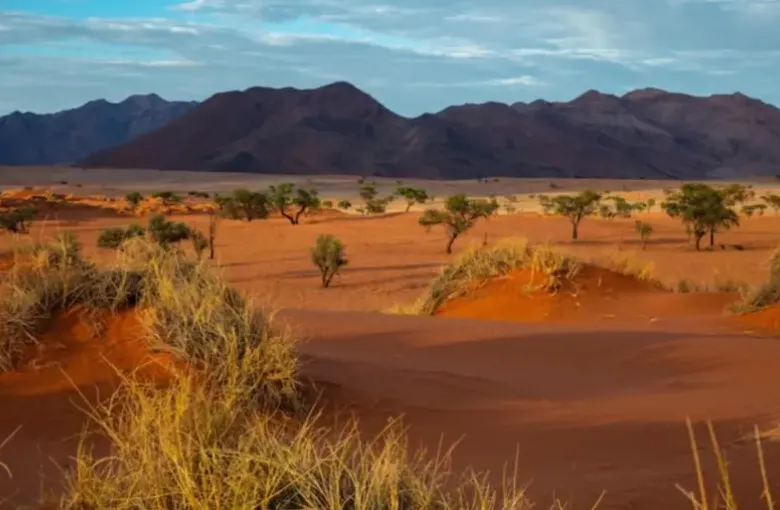
Banner photograph by Chtrede, CC BY-SA 4.0, via Wikimedia Commons.
Other Articles
Namibia Culture and Etiquette Guide
Namibia and Diaspora Reconnection