
The quick answer
Namibian eating splits three ways: the everyday food of the north, built on mahangu and stews; meat, which this country does exceptionally well; and a German colonial inheritance that shows up in bakeries and butchers and is stranger to encounter than it sounds.
Kapana — start here
Kapana is thin-sliced beef grilled over open coals at a market, cut with a knife, dipped in a chili-and-spice mix, and eaten standing up with your fingers. Windhoek's Single Quarters market in Katutura is the place it is most associated with.
You buy a handful at a time from a griller who cuts and passes it straight to you. It is fast, social, extremely good, and it is the single most Namibian meal a visitor can eat. Go with someone who knows the etiquette if you can — and take cash in small notes.
The staple north
- Mahangu (pearl millet) is the staple grain of the north, better adapted to this climate than maize. Ground and cooked into oshifima, the stiff porridge eaten with the hand alongside a relish.
- Ombidi and other wild spinach-type greens, cooked down, are the usual accompaniment.
- Oshikundu is a lightly fermented mahangu drink, mildly sour and refreshing, still made at home across the north.
- Dried and smoked fish from the northern floodplains and the rivers.
Meat, and game
Namibian beef is superb and is a serious export. Beyond it, game meat is normal restaurant food here rather than a novelty — oryx (gemsbok), kudu, springbok and zebra appear on ordinary menus, generally from farmed or managed populations.
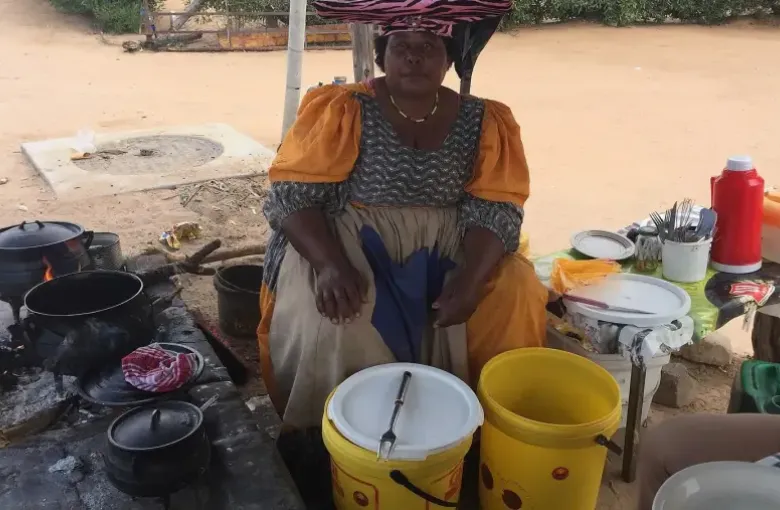
Worth trying: biltong (air-dried, spiced, and better than the jerky it is usually compared to), potjiekos (a slow stew cooked in a three-legged pot over coals), and a braai if anyone invites you to one, which they may well.
Omajowa
After the first good rains, giant termite-mound mushrooms — omajowa — appear at roadsides across the north and are sold by the bucket. They are seasonal, they cannot be farmed, and they are delicious fried in butter. If you are traveling in the wet season and see them for sale, stop.
The German inheritance
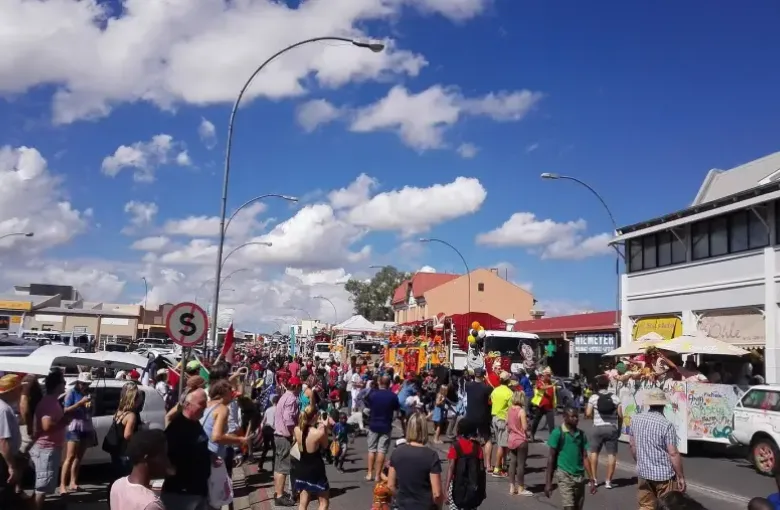
Namibia was a German colony until the First World War, and the food legacy is unmistakable: bakeries selling proper bread and cakes, butchers making sausage, Windhoek Lager brewed to the German purity law, and an Oktoberfest in Windhoek and a carnival in Swakopmund.
It is genuinely enjoyable, and it is worth holding alongside the history in our heritage guide: the bakeries and the colonial period are the same inheritance, and the second part of it is not comfortable.
The coast
The Benguela current makes Walvis Bay and Swakopmund excellent for seafood — oysters in particular, which are farmed in the lagoon and are among the best in Africa. Kingklip and hake are the standard fish.
Practical care
Tap water is generally safe in towns and lodges provide filtered water. Take the usual care with food outside established kitchens, and eat street food where it is hot, freshly cooked and busy — which describes a kapana grill exactly.
Eating with LABUSA Travel
We will get you to a kapana grill with someone who knows it rather than leaving you to lodge menus for a fortnight, and we will book the coast for a seafood night if your route touches it.
Banner photograph by Martin Hipangwa, CC BY-SA 4.0, via Wikimedia Commons.
Other Articles
Namibia Culture and Etiquette Guide
Namibia Festivals and Celebrations
