What it is
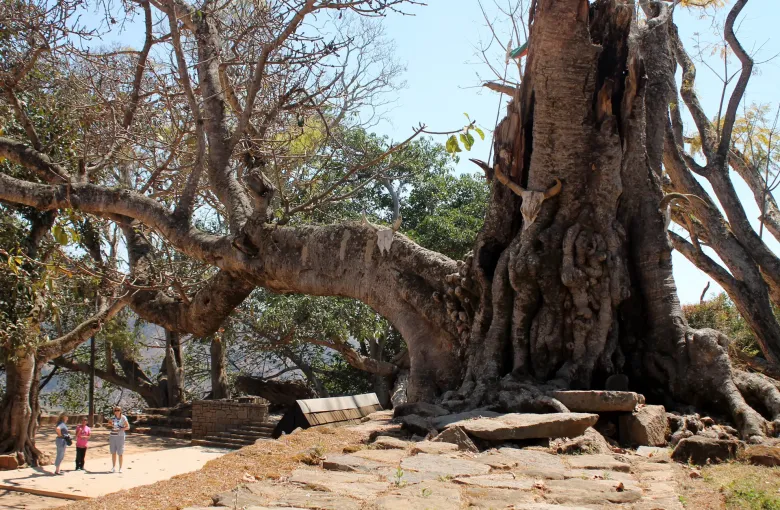
Ambohimanga is a fortified royal hill and burial site about twenty kilometers northeast of Antananarivo, inscribed by UNESCO in 2001. Its name means roughly the blue hill, or the beautiful hill.
UNESCO's citation is unusually direct about why it matters. The hill is described as an exceptional witness to the civilization which developed in the central highlands between the 15th and 19th centuries, and to the cultural and spiritual traditions, the cult of kings and ancestors, closely associated with it. It calls Ambohimanga the cradle of the kingdom and the dynasty that made Madagascar a modern state.
⚠ It is not a ruin, and that changes how you behave
This is the single most important thing to understand before arriving. Ambohimanga is a place of worship and of pilgrimage, and people come to it to make offerings and to address ancestors. You are visiting a working sacred site that happens to be old, not a monument that happens to be venerated.
In practice:
- Go with a guide, and follow instructions about where you may and may not walk.
- Expect fady, local prohibitions, and accept them without asking for reasons. Some apply to particular days, some to particular ground, some to pointing or to photography.
- Ask before photographing anything, and especially before photographing people.
- Dress as you would for a place of worship at home.
See Madagascar Culture and Etiquette Guide.
What is on the hill
The site is an ensemble rather than a single building: the fortified enclosure and its gateways, the royal compound, sacred pools and basins, tombs, and the trees and open ground that are as much part of the place as the structures. Dark timber palisades and dry-stone enclosures are the visual signature.
The scale surprises people. It is intimate rather than monumental, and the interest is in understanding what each space was for, which is exactly what a guide provides and a plaque does not.
Visiting
- Getting there. It is an easy half day from Antananarivo, and the usual arrangement is a car and driver from your accommodation. That also satisfies the standing advice to use pre-booked transport rather than hailing. See Getting Around Madagascar.
- How long. Two to three hours on the hill is normal, more if you walk the approach.
- Combining it. Ambohimanga pairs naturally with the royal hill in Antananarivo itself, and the two together make the history legible in a way either alone does not.
- Underfoot. Stone, earth and steps, on a hill. Shoes with grip, and see Accessible Travel in Madagascar if steps are a constraint.
When to go
Any time of year. The highlands are cool and often cold at night, and the site is more pleasant in the dry months from about May to October, when the ground is firm. See Madagascar Weather Guide.
Why it belongs in a heritage itinerary
Madagascar's other two inscribed properties are natural: forests and karst and endemic species. Ambohimanga is the one that is about people, and specifically about the Merina kingdom of the central highlands and the making of a state. If your trip is otherwise lemurs and limestone, this is the half day that puts a country around them.
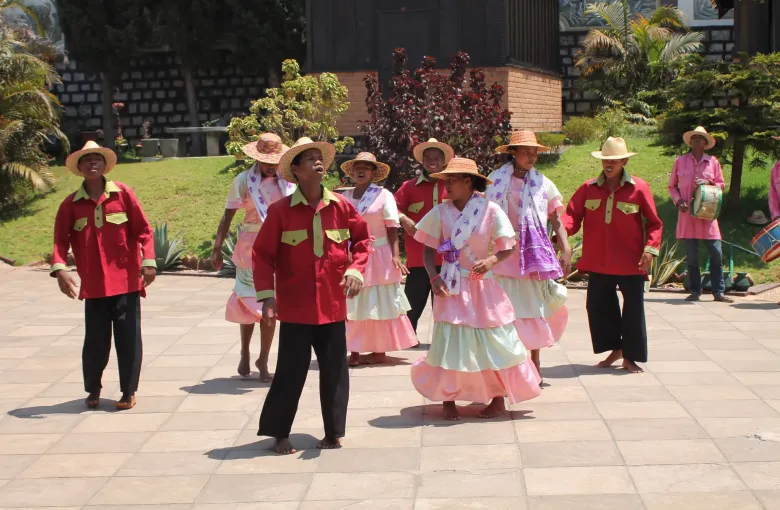
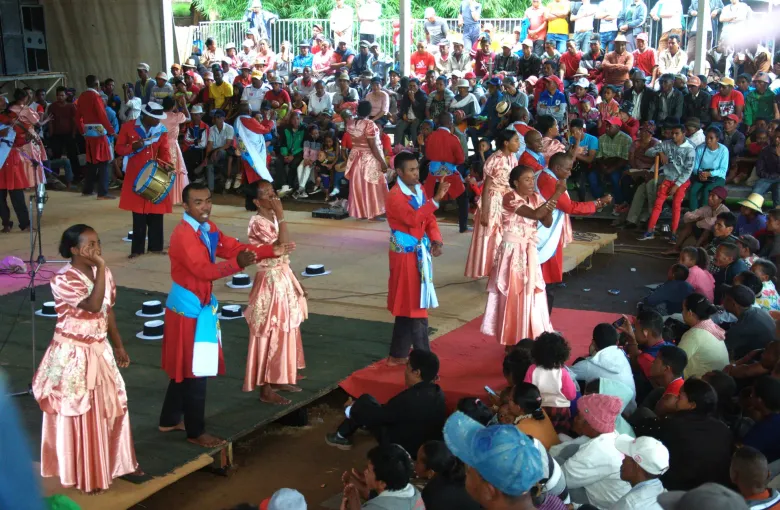
It also connects directly to what you may see performed. Hiragasy and Malagasy Kabary, both inscribed by UNESCO as intangible heritage, are highland traditions of the same world: formal oratory and open-air performance, with proverbs and ancestors at the center of both. See Madagascar Festivals and Celebrations.
Sources
- UNESCO World Heritage Centre: the inscription of the Royal Hill of Ambohimanga. Accessed 14 September 2026.
- UNESCO World Heritage Centre: Madagascar’s State Party record and its three inscribed properties. Accessed 14 September 2026.
- UNESCO Intangible Cultural Heritage: Madagascar’s four inscribed elements: Tsapiky, Hiragasy, Malagasy Kabary and the woodcrafting knowledge of the Zafimaniry. Accessed 14 September 2026.
- UK Foreign, Commonwealth & Development Office: Madagascar safety and security: crime, beaches, vehicle crime, the advice against taxi-brousses and the false-police warning. Accessed 14 September 2026.
Other Articles
Madagascar Culture and Etiquette Guide
Madagascar Festivals and Celebrations