An island settled from two directions
Madagascar is the only place in Africa whose national language belongs to the Austronesian family. Malagasy is related to languages of Borneo, not to those of the African mainland a few hundred kilometers to the west. The island was settled from Southeast Asia and from East Africa, and both are present in what people eat, sing, farm and say.
For a traveler with African or Indian Ocean ancestry, that is the first thing to understand: Madagascar's story is not a variation on a continental one. It is its own, and it is genuinely double-rooted.
Where the two strands show
- Language. Malagasy is Austronesian, spoken across the whole island in regional varieties, and it is the language of daily life everywhere. French is the language of administration.
- Rice. The centrality of rice, and the terraced wet-rice cultivation of the highlands, is an Austronesian agricultural signature. See Madagascar Food Guide.
- Cattle. The zebu, and the social weight it carries, is East African.
- Music. The valiha, the tubular bamboo zither, has close relatives in Southeast Asia. Tsapiky, the southwestern style UNESCO has inscribed, sits in a different lineage again.
- Ancestors. The centrality of the razana, and rites such as famadihana, are Malagasy rather than borrowed, and they are the spine of highland social life. See Madagascar Culture and Etiquette Guide.
The slave trade, and what is and is not documented
Madagascar was both a source and a destination in Indian Ocean slavery. Malagasy people were taken to the Mascarenes, to the Cape and across the Atlantic, and enslaved East Africans were brought to Madagascar. Some of the clearest surviving documentation of Indian Ocean labor movement is held not here but in Mauritius, at Aapravasi Ghat, which received indentured laborers from India, East Africa, Madagascar, China and Southeast Asia.
We will not overstate what a visitor can trace. Madagascar has no equivalent of a searchable register for most of this history, and a reconnection journey here is more often about landscape, language and living practice than about documents.
What a reconnection journey can honestly offer
- The highlands. Ambohimanga is the cradle of the Merina kingdom and, in UNESCO's words, of the dynasty that made Madagascar a modern state. It is also a living place of worship, which makes it the opposite of a museum.
- Language. Learning even a little Malagasy changes how you are received, and it is the single most direct connection available.
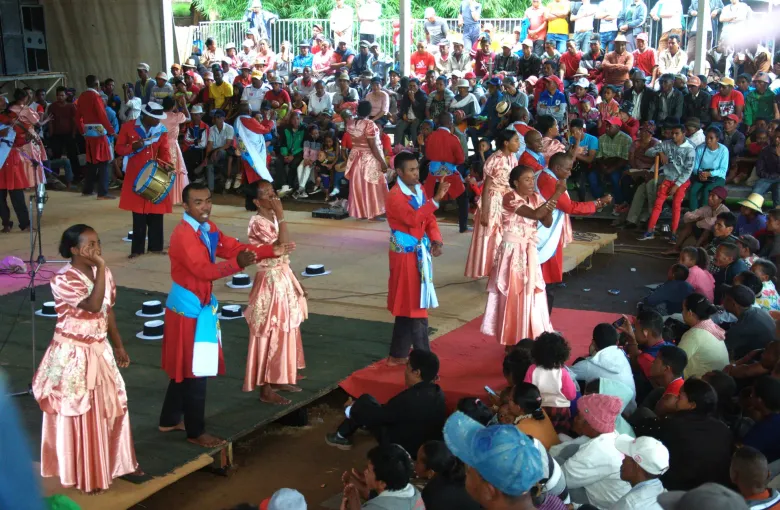
- Performance. Hiragasy and kabary, both UNESCO inscribed, are the living forms of highland oratory and ceremony.
- Craft. The Zafimaniry woodcarving tradition around Ambositra is inscribed by UNESCO and can be visited in the villages that practice it.
If you have a specific family connection
Go slowly and go through people. Malagasy social life runs on relationships and on the ancestors, and an approach that arrives with a document and a schedule will not get far. A local guide or a community contact who can make an introduction is worth more than any amount of preparation.
Practical notes that matter here more than usual:
- Ask before photographing tombs, ceremonies or people. Fady is real and local.
- Accept a refusal without asking for a reason.
- Bring a contribution if you are received by a family.
- Do not arrange attendance at a famadihana through an operator. See Madagascar Festivals and Celebrations.
Practicalities
A journey of this kind usually means time in the highlands and time in one other region, and it means road travel. Read Madagascar Travel Safety Guide and Getting Around Madagascar before you fix an itinerary, and allow more days than the distances suggest.
Sources
- UNESCO Intangible Cultural Heritage: Madagascar’s four inscribed elements: Tsapiky, Hiragasy, Malagasy Kabary and the woodcrafting knowledge of the Zafimaniry. Accessed 14 September 2026.
- UNESCO World Heritage Centre: the inscription of the Royal Hill of Ambohimanga. Accessed 14 September 2026.
- UK Foreign, Commonwealth & Development Office: Madagascar safety and security: crime, beaches, vehicle crime, the advice against taxi-brousses and the false-police warning. Accessed 14 September 2026.
Other Articles
Madagascar Culture and Etiquette Guide
Royal Hill of Ambohimanga: Visitor and Heritage Guide