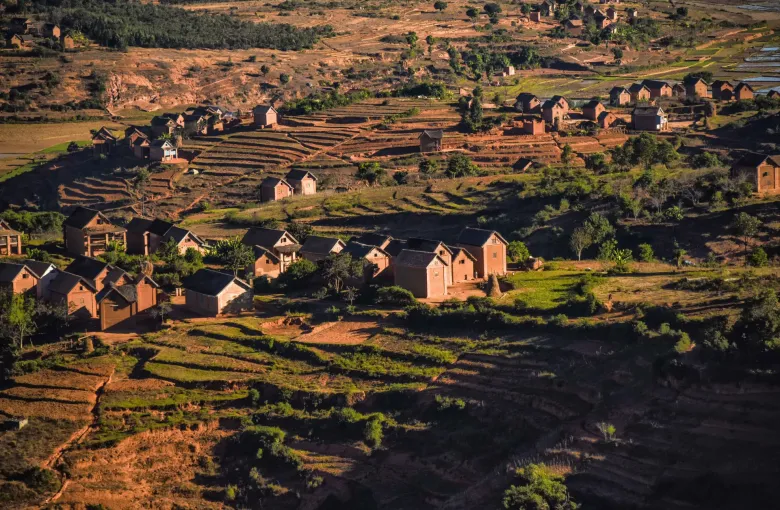
Start with fady
The most useful single concept for a visitor is fady: a prohibition, and the closest English word is taboo. A fady may apply to a place, a day, a direction, an action or a food. It is local, not national: something forbidden in one village may be unremarkable in the next.
You cannot learn them in advance and nobody expects you to. What is expected is that you ask, and that you accept the answer without requiring a justification. A guide is the practical route: ask before you photograph, before you enter, before you touch, and before you point. Pointing at a tomb with a straight finger is a common example; the courteous form is a bent knuckle.
Ancestors are present tense
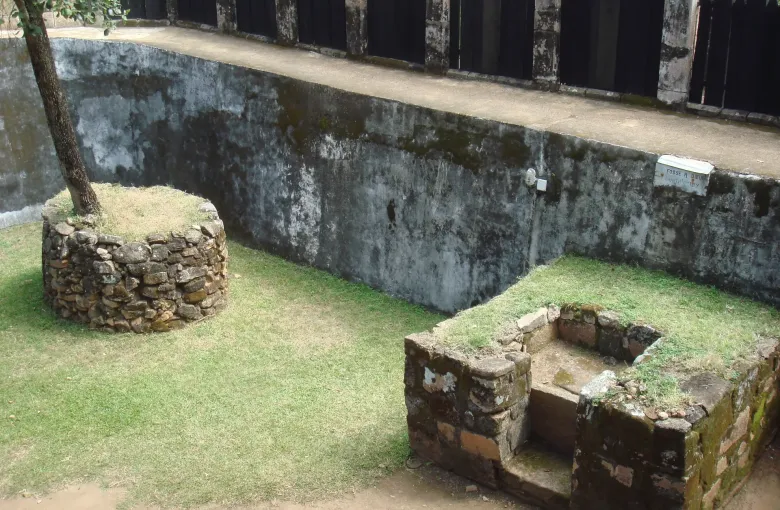
The razana, the ancestors, are not a historical subject. UNESCO's citation for the Royal Hill of Ambohimanga describes it as an exceptional witness to the cultural and spiritual traditions and the cult of kings and ancestors of the central highlands, and calls it a place of worship and pilgrimage still.
Practically: tombs are significant architecture and significant ground. Treat them as you would treat a working cemetery at home, which is to say ask before approaching, do not climb, and do not photograph people at a family occasion without being invited to.
What UNESCO has inscribed, and why it is useful to know
Madagascar has four elements on the Representative List of the Intangible Cultural Heritage of Humanity, and each names something you may encounter.
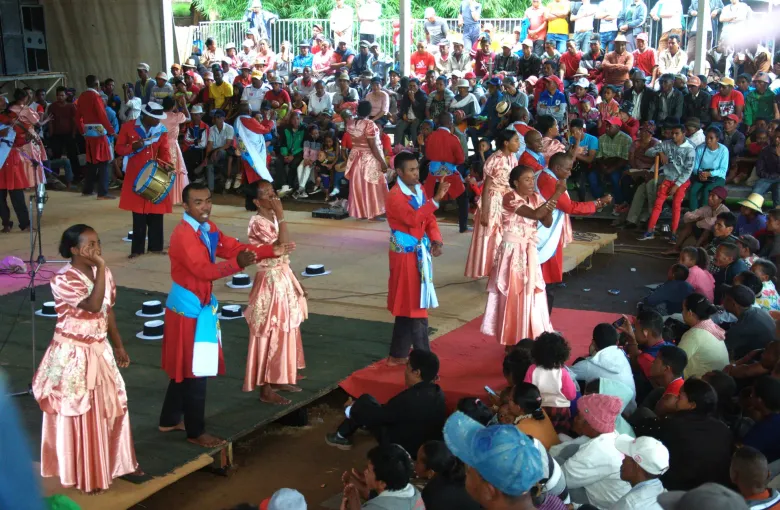
- Hiragasy, a performing art of the central highlands: troupes combining music, dance and formal speech, performed in the open and usually at length. If you are offered the chance to watch one, take it. See Madagascar Festivals and Celebrations.
- Malagasy Kabary, the oratorical art: formal, allusive public speech, delivered at weddings, funerals and official occasions. Proverbs are the currency. It is a skill people are known for, and it explains why ceremonies take longer than a visitor expects.
- Tsapiky, the rhythm and musical style characteristic of the southwest.
- Woodcrafting knowledge of the Zafimaniry, the geometric carved woodwork of the southeastern highland communities around Ambositra.
Naming the tradition correctly is a small courtesy that lands well. "Is this hiragasy?" is a better question than "is this traditional dancing?".
Greetings and manners
- Greet before you transact. Entering a shop, a stall or an office and going straight to the request reads as brusque.
- Manao ahoana is the general greeting; misaotra is thank you. Both are worth learning even badly.
- French is widely used in business and administration; Malagasy is the language of daily life. A little of the second goes much further than fluency in the first.
- Use the right hand, or both hands, to give and receive.
- Dress modestly in towns and villages. Beachwear belongs on the beach.
Photography
Ask. This is the rule that covers tombs, ceremonies, markets and people, and it is not a formality here given how central fady is. Expect that the answer will sometimes be no, and that the reason may not be explained. Do not photograph military installations, police or airports.
Money and the tourist economy
Madagascar is a poor country with an expensive tourism sector, and that gap is visible everywhere you go. Bargaining in markets is normal and should stay good-humored; grinding a stallholder down over a sum that is trivial to you is the behavior visitors are remembered for. Tip guides and drivers properly. See Madagascar Currency and Money Guide.
Be skeptical of anyone offering to guide you unprompted, which is the FCDO's advice as well as ours, and arrange guides through your accommodation, a park office or an operator.
One thing to avoid saying
Madagascar is not a small island and it is not off the coast of somewhere more important. It is the fourth largest island in the world, it separated from other land tens of millions of years ago, and UNESCO's citations for both its natural properties turn on exactly that isolation. The endemism that brings visitors here is the biological form of a fact Malagasy people state about themselves.
Sources
- UNESCO Intangible Cultural Heritage: Madagascar’s four inscribed elements: Tsapiky, Hiragasy, Malagasy Kabary and the woodcrafting knowledge of the Zafimaniry. Accessed 14 September 2026.
- UNESCO World Heritage Centre: the inscription of the Royal Hill of Ambohimanga. Accessed 14 September 2026.
- UK Foreign, Commonwealth & Development Office: Madagascar safety and security: crime, beaches, vehicle crime, the advice against taxi-brousses and the false-police warning. Accessed 14 September 2026.
Other Articles
Madagascar Festivals and Celebrations
Royal Hill of Ambohimanga: Visitor and Heritage Guide