What it is
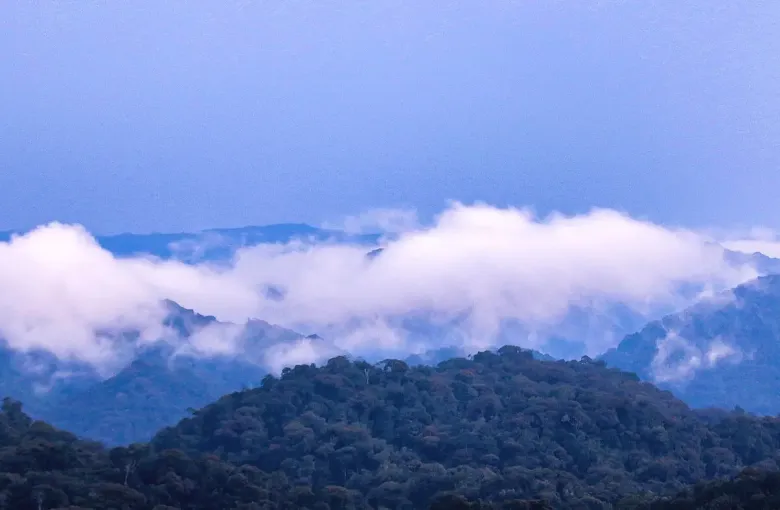
Volcanoes National Park covers the Rwandan flank of the Virunga massif, a chain of volcanoes shared with the Democratic Republic of the Congo and Uganda, and it is home to a population of mountain gorillas. For most visitors it is the reason Rwanda is on the itinerary at all.
One clarification, because the assumption runs the other way: the park is not inscribed on the World Heritage List. Rwanda has exactly two World Heritage properties, Nyungwe National Park and the memorial sites of the genocide, and the country has nothing on its Tentative List. Volcanoes is internationally significant on its own terms and it is not a World Heritage Site, and you will see it described as one.
The mountain gorillas
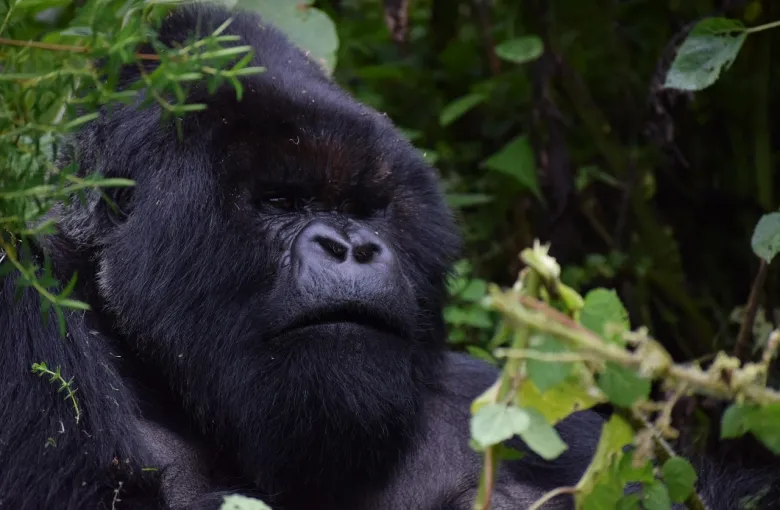
Mountain gorillas live only in this massif and in Bwindi in Uganda. The population has grown over recent decades, against the expectations of almost everyone who wrote about them in the twentieth century, and that recovery is the product of sustained protection, community revenue sharing and tourism income. It remains a small population in a small area.
The conservation history here is inseparable from Dian Fossey, whose research center at Karisoke, established between two of the volcanoes, produced the long term study on which much of what is known rests, and whose killing in 1985 remains unresolved. The modern research center operates from Musanze, and her grave is in the park, reached by a demanding walk.
What the trek is actually like
Groups are assigned in the morning at park headquarters near Kinigi, and allocated to a gorilla family according to how far and how hard the walk is likely to be. Then you walk. It can be an hour to reach them or most of a morning, on steep muddy ground, at altitude, through vegetation that stings. Once you are with them, the time you are permitted is short, closely managed and unlike anything else.
Practical points that matter:
- Hire a porter. Everyone should. They carry your bag, steady you on bad ground, and the work is a significant local livelihood.
- Be honest about your fitness when groups are allocated.
- Boots, waterproofs, gaiters and thick gloves. See our packing list.
- Health rules are enforced. Gorillas share our susceptibility to human respiratory illness. If you are unwell, you will not be permitted to go, and that rule protects the animals.
- Permits are limited, allocated in advance through the Rwanda Development Board, and sell out in the high season. No price appears here because it changes; confirm the current fee with the RDB.
Golden monkeys, and the gentler day
Golden monkey trekking in the bamboo is shorter, easier and much less oversubscribed than a gorilla trek, and it is a real wildlife experience rather than a fallback. For travelers who are unsure about the climb, it is the better first question.
The boundary, and what you will actually see
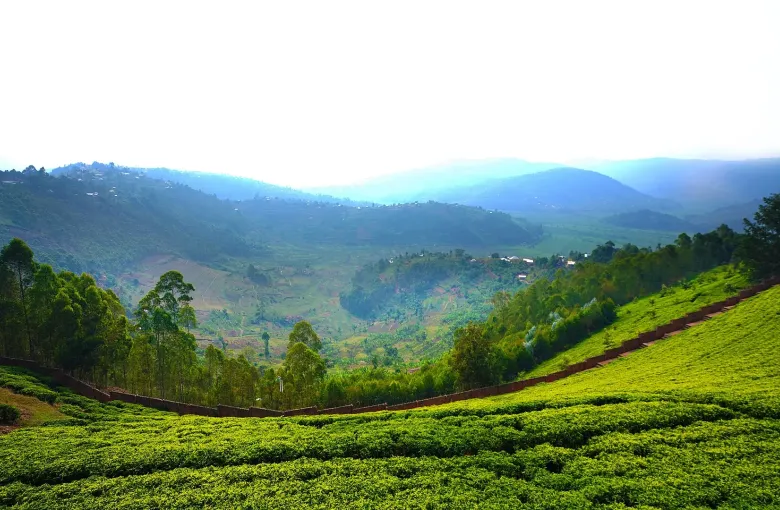
The most striking thing about Volcanoes from the road is not the forest. It is the line. Dense cultivation runs right up to the park edge, so a wall of farmed hillside stops and the forest begins, with almost no transition. Rwanda is one of the most densely populated countries in Africa and this is what that looks like on the ground.
That boundary is the whole conservation argument in one view: the park survives because the revenue from it reaches the communities pressed against it, and a share of park income is directed to them by policy.
Musanze Caves, and a health note
The Musanze Caves lie within the park boundaries and are a popular half day. One piece of standing advice applies: after the Marburg virus outbreak that Rwanda declared over on 20 December 2024, which was linked to contact with fruit bats in a mine near Kigali, the FCDO advises that anyone entering caves inhabited by fruit bat colonies should wear gloves, protective clothing and a face mask. Ask your operator what is provided.
What the advisories say about the northwest
This is worth setting out plainly because travelers reasonably worry about it.
The US State Department places a Do Not Travel area within ten kilometers of Rwanda’s border with the DRC. It then states explicitly that Volcanoes National Park is not included in that area of increased risk. The FCDO’s advice against all but essential travel is confined to parts of Rusizi District in the southwest, which is a different part of the country altogether.
The FCDO does record that in 2022 artillery fire from the DRC struck Rwandan territory near the Kinigi sector of Musanze District. It is in the record and it belongs here. It also has not been repeated in the years since, and the park has continued to operate throughout. Read our safety guide and make your own decision with the facts rather than the impression.
Kwita Izina
Each year the infant gorillas born in the preceding year are named in a public ceremony near the park. It fills accommodation around Musanze and it is a considerable occasion. Dates are set annually by the Rwanda Development Board; see our festivals guide.
Planning with LABUSA Travel
We secure permits early, we put you near the park the night before rather than driving out at four in the morning, and we book the porters before you arrive.
Sources
- Rwanda Development Board: the government body responsible for tourism, conservation and park permits. Accessed 13 September 2026.
- Visit Rwanda: the national tourism presentation of parks, culture and itineraries. Accessed 13 September 2026.
- UK Foreign, Commonwealth & Development Office: Rwanda travel advice: regional risks, local laws, health and entry requirements. Accessed 13 September 2026.
- US Department of State: the Rwanda travel advisory and its Do Not Travel area along the border with the Democratic Republic of the Congo. Accessed 13 September 2026.
- UNESCO World Heritage Centre: Rwanda’s State Party record: two inscribed properties and a Tentative List of none. Accessed 13 September 2026.
Other Articles
Best Time to Visit Rwanda
Rwanda for Senior Travelers