Start with what this is not
On most of the African destinations we write about, a diaspora page is about the Atlantic: the forts on the coast, the departure points, the return. Rwanda is not that country. It is landlocked, roughly a thousand kilometers from the Atlantic, and it was not a source region for the transatlantic trade.
Writing Rwanda in that register would be a category error, and it would also crowd out the history that is actually here. If transatlantic heritage travel is what you are looking for, Ghana is the destination we would point you to, and we say so plainly rather than selling you the wrong trip.
The Rwandan diaspora is recent, and it is political
Rwanda’s diaspora was formed in living memory. Successive waves of Rwandans left from the late 1950s onward amid political violence, and settled in Uganda, Burundi, the Democratic Republic of the Congo, Kenya, Tanzania and further afield. Many spent decades as refugees, and many children of that generation grew up as nationals of somewhere else.
The genocide against the Tutsi in 1994 produced another displacement, in both directions: those who fled the killing, and those who left afterward. The return that followed, of long exiled families and of their children, reshaped the country and is one of the central facts of modern Rwanda.
It is also a subject on which accounts differ. The official history of exile and return is prominent and confidently told. Rwandans in political exile abroad tell it differently. Both exist, we are a travel company rather than an arbiter, and a visitor who comes expecting a single settled story will be missing something.
Coming as a returning Rwandan or a descendant
If your family left, the shape of your trip is different from a visitor’s and usually has three parts: the place, the people, and the record.
- The place. Many families can identify a hill, a sector, a parish. Rwanda’s administrative geography is unusually well defined and local officials are generally used to helping people find where they are from.
- The people. Extended family connections are frequently traceable through community and church networks. This takes time and is much better begun before you fly than on the second day of a ten day trip.
- The record. Church registers, local administrative records and the memorial sites themselves hold names. The Kigali Genocide Memorial at Gisozi maintains documentation and a substantial archive.
We would encourage anyone doing this to allow more time than the itinerary suggests and to expect some of it to be difficult. It is not a sightseeing morning.
The memorial sites, and the families they belong to
UNESCO inscribed the Memorial sites of the Genocide: Nyamata, Murambi, Gisozi and Bisesero in 2023. UNESCO records that more than 250,000 victims are buried at Gisozi alone. These are burial places, and for a great many Rwandan families they are the only known resting place of named relatives.
That is worth holding onto if you visit as a descendant, and worth holding onto if you do not. Our guide to the memorial sites covers what a visit involves and how to conduct yourself.
Connecting in the present rather than the past
Not every diaspora trip is genealogical. A large number of Rwandans abroad come back to invest, to teach, to work on a project, or to bring children who have never been. Rwanda actively courts that, and Kigali has a visible returnee professional community.
If that is your reason for coming, the useful connections are made through professional networks, cooperatives and community organizations rather than through tourism. Tell us what you are trying to do and we will build the trip around the meetings rather than around the parks.
Bringing a group
Family reunion travel, church groups and heritage groups all work well here, partly because distances are short and partly because Rwanda is set up for organized visits. The two things that most improve a group trip of this kind are a long lead time and a willingness to let the itinerary breathe when something takes longer than planned, which in this kind of travel it frequently does.
Planning with LABUSA Travel
We have taken groups to Rwanda, including to the Kigali Genocide Memorial, and we plan this kind of trip differently from a safari. Tell us what you are hoping to find and we will tell you honestly what is realistic in the time you have.
Sources
- UNESCO World Heritage Centre: the inscription of the Memorial sites of the Genocide: Nyamata, Murambi, Gisozi and Bisesero. Accessed 13 September 2026.
- Visit Rwanda: the national tourism presentation of parks, culture and itineraries. Accessed 13 September 2026.
- UK Foreign, Commonwealth & Development Office: Rwanda travel advice: regional risks, local laws, health and entry requirements. Accessed 13 September 2026.
Other Articles
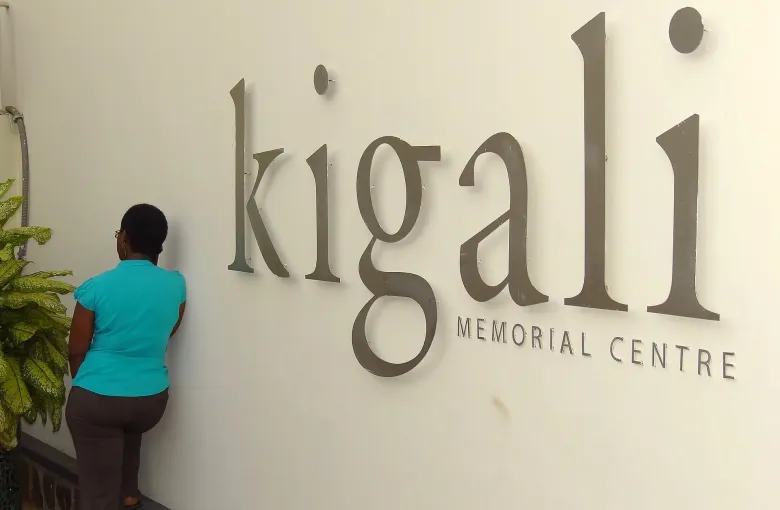
Visiting Rwanda’s Genocide Memorial Sites
Rwanda Culture and Etiquette Guide