The quick answer
Rwanda’s calendar is less about festivals in the carnival sense and more about observances that the whole country actually takes part in. The four a visitor is most likely to meet are Umuganda every month, Kwibuka in April, the Kwita Izina gorilla naming ceremony, and Intore performance, which UNESCO inscribed in 2024.
Umuganda, the last Saturday of the month
A national morning of community work, held on the last Saturday of every month. Roads are quiet, most normal services close from 7am to 11am, and communities turn out to work on something local: drainage, a school building, a path, a clean up.
As a visitor you are not obliged to take part and you may well be welcome to, if you are somewhere you have a connection and you ask rather than assume. Even observed from the outside it explains more about how Rwanda works than a museum could.
Practically: do not schedule an early transfer, a shop visit or a bank errand into that window. Kigali separately closes streets to cars from 7am to 10am on the first and third Sunday of the month for a car free morning.
Kwibuka, and the week after 7 April
Genocide Memorial Day falls on 7 April and begins an official week of mourning. Kwibuka means remember. Commemoration events are held nationally and locally, broadcasting changes, music in public places is restrained, and the national mood is unmistakable.
This is not a festival and should never be described as an attraction. It is also not a reason to stay away. Visitors who are in Rwanda that week, and who arrive having read something and prepared to be quiet, often describe it as the most important part of their trip. If your dates fall in it, we will talk it through with you rather than simply booking it.
The commemoration period continues in a lower key for some weeks after the first.
Kwita Izina, the gorilla naming ceremony
Each year Rwanda names the mountain gorilla infants born in the preceding year, in a ceremony held near Volcanoes National Park, with namers drawn from conservationists, Rwandan public figures and international guests. It grew out of the practice of trackers naming the animals they follow and has become the country’s conservation showpiece, with a week of surrounding events.
No date appears here. The ceremony is annual and its date is set each year by the Rwanda Development Board. If you want to be there for it, check with the RDB well in advance and book early, because accommodation near Musanze fills for it.
Intore
UNESCO inscribed Intore on the Representative List of the Intangible Cultural Heritage of Humanity in 2024, and it is Rwanda’s only inscribed element.
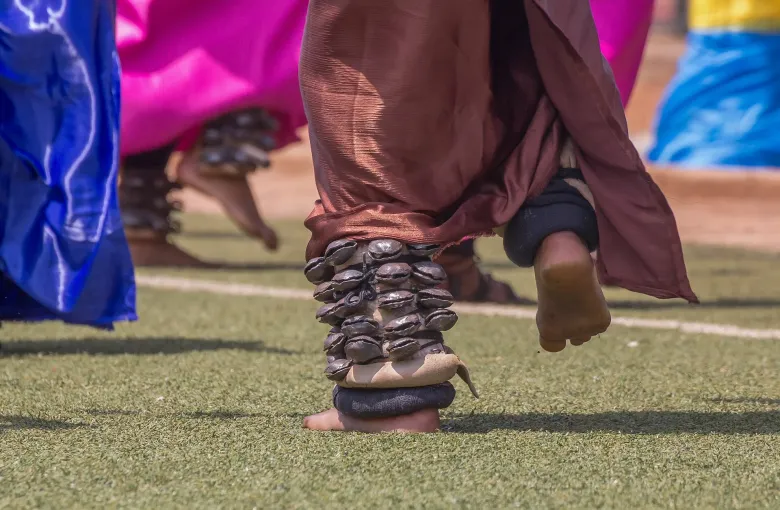
Intore combines dance, drumming and poetry, with origins in the royal court, and the form most visitors recognize is the warrior dance with its distinctive headdress and its extraordinary drumming ensemble. Performances range from genuinely ceremonial to frankly touristic. The difference is worth caring about, and the good ones are usually found through a cultural center or a village cooperative rather than a hotel lobby.
Other things in the calendar
- National holidays. Rwanda observes a set of public holidays through the year on which government offices and banks close. Check the current year’s dates rather than assuming, as some move.
- Harvest and cultural festivals are held regionally and are usually best reached through a local host rather than a listings page.
- Kigali’s arts calendar is small, real and growing, with music, film and gallery events. The city’s arts centers are the place to ask.
How this changes an itinerary
Umuganda costs you a morning and is easy to plan around. Kwibuka changes the character of a whole trip and should be a decision rather than a surprise. Kwita Izina fills the accommodation near the park and pushes prices up, and is wonderful if it is why you came. Intore is a single evening and worth arranging properly.
Planning with LABUSA Travel
We check your dates against the Rwandan calendar before we quote, and we say so when what you have booked collides with something you would rather have known about.
Sources
- UNESCO Intangible Cultural Heritage: Rwanda’s single inscribed element, Intore, on the Representative List. Accessed 13 September 2026.
- UK Foreign, Commonwealth & Development Office: Rwanda travel advice: regional risks, local laws, health and entry requirements. Accessed 13 September 2026.
- Rwanda Development Board: the government body responsible for tourism, conservation and park permits. Accessed 13 September 2026.
- Visit Rwanda: the national tourism presentation of parks, culture and itineraries. Accessed 13 September 2026.
Other Articles
Rwanda Culture and Etiquette Guide
Rwanda and Diaspora Reconnection