What it is
Lake Malawi National Park sits at the southern end of the lake, around Cape Maclear and the islands offshore. UNESCO's description gets to the point quickly: the park is home to many hundreds of fish species, nearly all endemic, and its importance for the study of evolution is comparable to that of the finches of the Galapagos Islands.
That comparison is UNESCO's, not ours, and it is the reason this is a World Heritage property. The fish are the cichlids, known locally as mbuna, which have radiated into hundreds of distinct species within a single lake. Most of them live nowhere else on earth.
What UNESCO recognized
Inscribed in 1984 under natural criteria (vii), (ix) and (x), which between them cover exceptional natural beauty, ongoing ecological and biological processes, and significant natural habitat for biodiversity. UNESCO locates it in Malawi's Central and Southern Regions.
It is one of three World Heritage properties in Malawi, alongside Chongoni Rock Art and Mount Mulanje, the last of which was inscribed in 2025.
⚠ Bilharzia: the honest answer
This is the first thing most people want to know and the thing most likely to be glossed over, so we will be direct.
Schistosomiasis, commonly called bilharzia, is present in Lake Malawi. The CDC lists it as a risk from wading, swimming, bathing or washing in contaminated fresh water anywhere in Malawi, and the FCDO's health advice covers the same ground. It is a parasite carried by freshwater snails, contracted through the skin.
What visitors and residents actually do:
- Take local advice on which stretches of water and which conditions carry least risk. Lodges on the lake deal with this question daily and will give you a straight answer.
- Avoid reedy, shallow, still water near settlements, which is where the snails live. Open, deep, clear water away from vegetation is generally regarded as lower risk.
- Dry off briskly afterward.
- Get tested when you get home if you have been in the lake. Treatment is straightforward once diagnosed, and the test is the standard advice rather than a precaution for the anxious. Tell your doctor you have swum in Lake Malawi.
People swim in this lake every day, and the risk is managed rather than eliminated. Make the decision knowing what it is, rather than discovering it afterward.
What to do there
- Snorkelling and diving among the mbuna, which is the whole point of the place: the fish are brightly colored, abundant and close in around the rocky shores.
- Boat trips to the islands, and out at dusk when the lake goes still.
- Walking in the hills behind the shore, which is how you see the park is not only the water.
- Fish eagles, which are everywhere and unmistakable.
Practical notes
- Season. The dry months, May to October, give the clearest water and the most reliable roads in. See Best Time to Visit Malawi.
- Malaria. The lakeshore is low and warm and transmission covers all of Malawi. Cover up at dusk and take your prophylaxis.
- Boats. Ask what safety equipment is carried before you board, and be willing to decline.
- Cash. Bring kwacha. Card acceptance around the lake is thin. See Malawi Currency and Money Guide.
- Sun. On open water it is much stronger than it feels.
A note on the lake as a whole
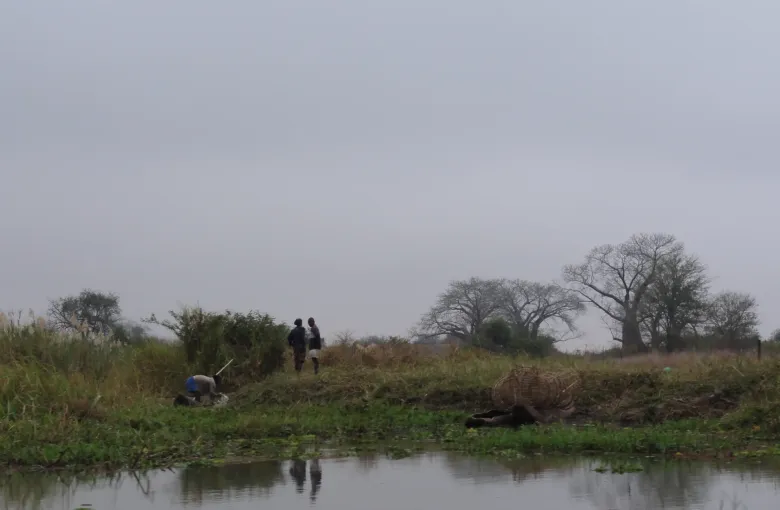
The national park is one protected corner of a lake that runs almost the length of the country. Much of the lakeshore outside the park is villages, fishing, and lodges, and that is worth seeing too. The inscription covers the park; the bilharzia advice covers the lake.
Sources
- UNESCO World Heritage Centre: the inscription of Lake Malawi National Park. Accessed 14 September 2026.
- UNESCO World Heritage Centre: the World Heritage List export, which carries each Malawian property’s inscription year, criteria and description. Accessed 14 September 2026.
- UNESCO World Heritage Centre: Malawi’s State Party record and its three inscribed properties. Accessed 14 September 2026.
- US Centers for Disease Control and Prevention: Travelers’ Health, Malawi: malaria, schistosomiasis, cholera, rabies and routine vaccination. Accessed 14 September 2026.
- UK Foreign, Commonwealth & Development Office: Malawi health advice, including cholera and the standard of healthcare. Accessed 14 September 2026.
Other Articles
Malawi Travel Safety Guide
Best Time to Visit Malawi