The quick answer
Malawi's tourism slogan calls it the warm heart of Africa, and unusually for a slogan it describes something real. People are welcoming and patient with visitors. What is asked in return is straightforward: greet properly, dress modestly away from the tourist areas, and ask before you photograph anybody.
Greetings are not a formality
Going straight to a question or a transaction reads as rude. Greet first, ask how someone is, and let them ask you. This takes fifteen seconds and changes every interaction you will have.
- A handshake is standard. Supporting your right forearm with your left hand is a courteous form and is noticed.
- Greet the oldest person present first. Age carries real standing.
- Use the right hand for giving, receiving and eating.
- Muli bwanji in Chichewa gets you a long way, and the reply is ndili bwino. Trying matters much more than getting it right.
Dress
The FCDO's advice is to dress conservatively outside the main tourist areas to avoid offending local sensitivities. In practice that means shoulders and knees covered for everyone, and rather more care in villages and small towns than at a lakeshore lodge. Beachwear belongs at the beach.
Gule Wamkulu, and what you are actually watching
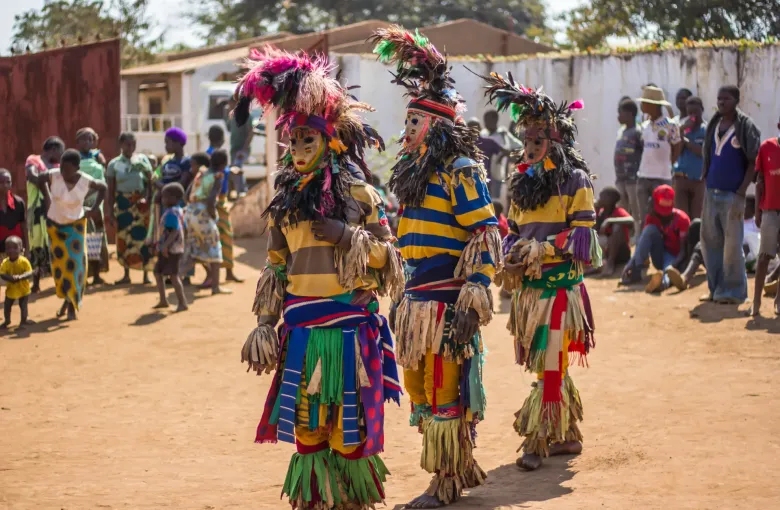
The masked dance in the photographs on this page and on Malawi Festivals and Celebrations is Gule Wamkulu, the Great Dance, inscribed on UNESCO's Representative List of the Intangible Cultural Heritage of Humanity. It belongs to the Nyau, a brotherhood within Chewa society, and it is performed at initiations, funerals and other significant occasions.
Two things follow for a visitor. The masked figures are not understood as men in costume, and that framing should be respected whether or not you share it. And the Nyau is a closed society: there is a great deal you will not be told, and asking persistently is not curiosity but intrusion. Watch where you are invited to watch, from where you are put, and let the rest alone.
The other inscribed traditions
Malawi has six elements on the UNESCO Representative List, which is a lot for a country this size:
- Gule Wamkulu, the Great Dance of the Chewa.
- Vimbuza healing dance, a Tumbuka practice in which dance and drumming are the treatment rather than the entertainment.
- Tchopa, the sacrificial dance of the Lhomwe people of southern Malawi.
- Mwinoghe, a joyous dance.
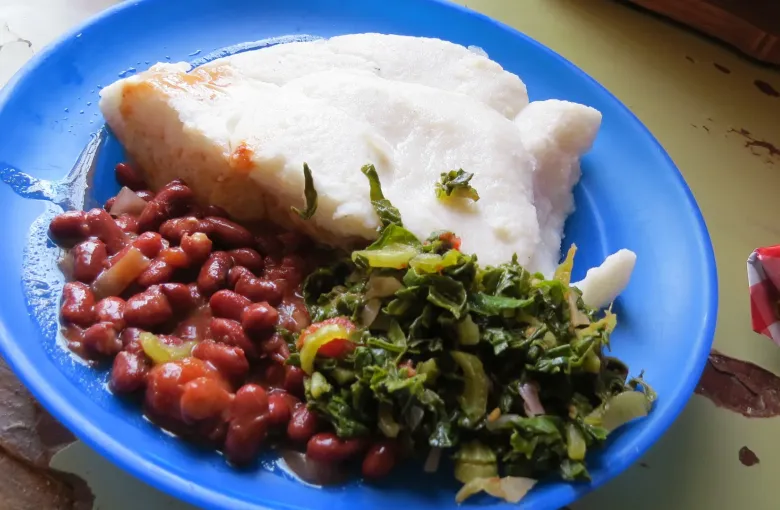
- Nsima, the culinary tradition, covered in Malawi Food Guide.
- The art of crafting and playing the Mbira or Sansi, the finger-plucked instrument, inscribed jointly with Zimbabwe.
Vimbuza in particular is a healing ceremony, not a performance. If you are present at one, you are a guest at somebody's treatment.
Photography
Ask before photographing people, and accept a refusal without negotiating. Do not photograph government buildings, military sites, airports or police. At a ceremony, ask whoever brought you what is permitted rather than working it out from what other people are doing.
Laws a visitor should know
- Same-sex sexual activity is illegal and may result in a custodial sentence. The FCDO describes Malawi as a socially conservative society and notes that showing affection in public may attract unwanted and negative attention.
- Drug penalties are severe, including for cannabis.
- Uncut precious gemstones may not be bought.
- Wildlife products. It is illegal to buy, sell, kill or capture protected wildlife or trade its parts without a license. Ivory is illegal outright, and being caught buying or carrying it means prosecution and a prison sentence or a fine.
- Carry identification. Police sometimes ask for it, and a copy of your passport, visa or residence permit is sufficient.
The fuller treatment is in Malawi Travel Safety Guide.
Buying things well
Bargaining at markets is expected and should be good-humored rather than grinding. The wood carvings, baskets and printed cloth are genuinely good and are what to take home. Pay a fair price rather than the lowest achievable one: the difference is small to you and not small to the seller, and haggling a craftsman down hard in front of others is not the interaction you want to have in the warm heart of Africa.
Sources
- UNESCO Intangible Cultural Heritage: the inscription of Gule Wamkulu. Accessed 14 September 2026.
- UNESCO Intangible Cultural Heritage: the inscription of the Vimbuza healing dance. Accessed 14 September 2026.
- UNESCO Intangible Cultural Heritage: Malawi’s six inscribed elements, among them Gule Wamkulu, Vimbuza and the culinary tradition of nsima. Accessed 14 September 2026.
- UK Foreign, Commonwealth & Development Office: Malawi safety and security: crime, kidnap, road travel, fuel, local laws and the rainy season. Accessed 14 September 2026.
Other Articles
Malawi Festivals and Celebrations
Chongoni Rock Art: Visitor and Heritage Guide