The quick answer
Malawi has six elements inscribed on UNESCO's Representative List of the Intangible Cultural Heritage of Humanity, which is a great many for a country of its size, and four of them are dances. The best known is Gule Wamkulu.
None of them is a scheduled show. They happen when the occasion calls for them, which is the single most important thing to understand before planning around one.
The six
- Gule Wamkulu, the Great Dance, performed by the Nyau brotherhood within Chewa society at initiations, funerals and other significant occasions.
- Vimbuza healing dance, a Tumbuka tradition in which drumming and dance are the treatment for illness.
- Tchopa, the sacrificial dance of the Lhomwe people of southern Malawi.
- Mwinoghe, a joyous dance.
- Nsima, the culinary tradition, which is on the same list as the dances and is on your plate every day. See Malawi Food Guide.
- The art of crafting and playing the Mbira or Sansi, inscribed jointly with Zimbabwe.
Gule Wamkulu
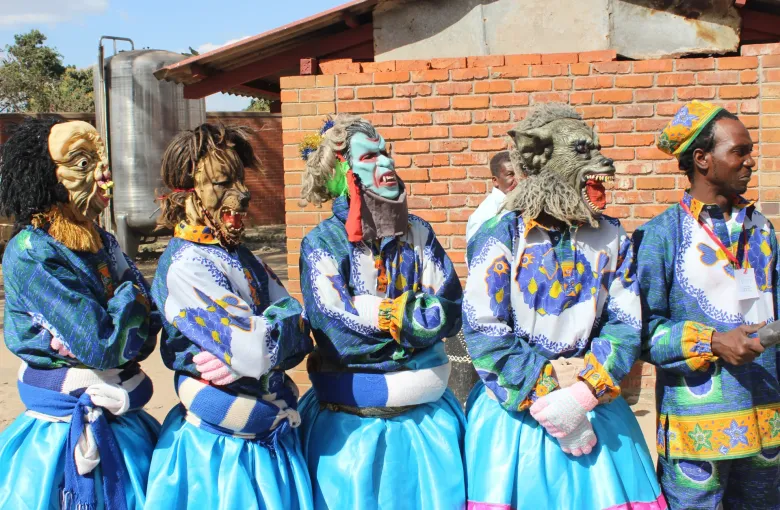
The masked figures, in fringed costumes and carved or feathered headdresses, appear at moments that matter in Chewa life. Within the tradition they are not understood as men in costume, and a visitor should respect that framing whether or not they share it.
The Nyau is a closed society. You will be told some things and not others, and the boundary is not negotiable. If you are invited to watch, stand where you are put, do not follow performers, and ask your host rather than a performer about anything you do not understand.
Vimbuza
This is a healing ceremony among the Tumbuka of the north. Drumming and dance are the therapy. It is not staged for visitors and attending one is being present at someone's treatment, which is a very different thing from attending a performance. Go only if you are brought, and behave accordingly.
The lakeshore festivals
Alongside the traditional calendar, Malawi has developed a set of music and arts festivals on the lakeshore that draw Malawian and international performers and a large, young, mostly Malawian crowd. They are a genuinely good time and a completely different register from the inscribed traditions.
Dates move year to year and events are sometimes rescheduled or canceled, so confirm directly with the organizer before booking flights around one, and confirm that accommodation nearby is actually available: lakeshore beds around a festival fill long in advance.
Timing
Most public events sit in the dry season, May to October, for the same reason everything else does: the roads work. See Best Time to Visit Malawi.
How to attend well
- Be invited. For the traditional dances this is the whole of the etiquette. Go with someone local who can explain what you are seeing and where you should stand.
- Dress conservatively. The FCDO's advice about dress outside tourist areas applies with particular force at a ceremony.
- Ask before photographing, and accept a refusal. Do not photograph a masked dancer without asking your host first.
- Do not treat it as a performance. Nobody is doing this for you, and the welcome you are shown is hospitality rather than an invitation to behave as an audience.
- Contribute if it is appropriate, and ask your host how rather than guessing.
Crowds, practically
The State Department notes that demonstrations may occur more often around political events such as elections, that tear gas is often used and that roads may be blocked. Separately, the FCDO records that most thefts from tourists happen around main bus stations in urban areas, and warns against accepting food or drink from strangers. At any large gathering: agree a meeting point, keep valuables out of reach, and know your way out. See Malawi Travel Safety Guide.
Sources
- UNESCO Intangible Cultural Heritage: Malawi’s six inscribed elements, among them Gule Wamkulu, Vimbuza and the culinary tradition of nsima. Accessed 14 September 2026.
- UNESCO Intangible Cultural Heritage: the inscription of Gule Wamkulu. Accessed 14 September 2026.
- UNESCO Intangible Cultural Heritage: the inscription of the Vimbuza healing dance. Accessed 14 September 2026.
- UK Foreign, Commonwealth & Development Office: Malawi safety and security: crime, kidnap, road travel, fuel, local laws and the rainy season. Accessed 14 September 2026.
- US Department of State: the Malawi travel advisory, currently Level 2, Exercise Increased Caution. Accessed 14 September 2026.
Other Articles
Malawi Culture and Etiquette Guide
Chongoni Rock Art: Visitor and Heritage Guide