Why Malawi
Malawi is not one of the countries that appears first in conversations about diaspora return, and that is precisely why it repays a visit. Its history connects to the wider African story in ways that are rarely told to visitors, and the country is small enough that you can see a good deal of it properly in a single trip.
The history that is not on the brochure
Three strands are worth understanding before you arrive.
The Indian Ocean routes
The transatlantic trade dominates how the diaspora's history is taught, and it is not the only one. The nineteenth-century slave trade out of East and Central Africa moved people eastward toward the coast and the Indian Ocean, and the lakeshore and the Shire highlands lay directly on those routes. Places along the lake were crossing and holding points.
This is a different history from the Atlantic one, with a different geography and a different diaspora, and it is one reason a Malawi visit does not map neatly onto the West African model of ancestral return.
The mission stations
The Scottish missions that followed Livingstone into the Shire highlands in the later nineteenth century established themselves partly in opposition to that trade, and they also brought schooling, printing and a particular kind of colonial encounter. The consequences, including an educated class that later drove the independence movement, run right through modern Malawian history.
Independence
Malawi's road out of federation and colonial rule is a substantial story in its own right, and the national museums and memorials tell it. It is worth a day at the beginning of a trip rather than an afternoon at the end.
What a reconnection visit realistically looks like
Be clear with yourself about what you are looking for, because the answers differ.
- Ancestral tracing is very difficult here and the records that exist for the Atlantic trade largely do not for this one. A trip framed around finding a family line is likely to end in frustration.
- Historical understanding is available and substantial: the lake, the mission sites, the museums and the memorials together tell a coherent story.
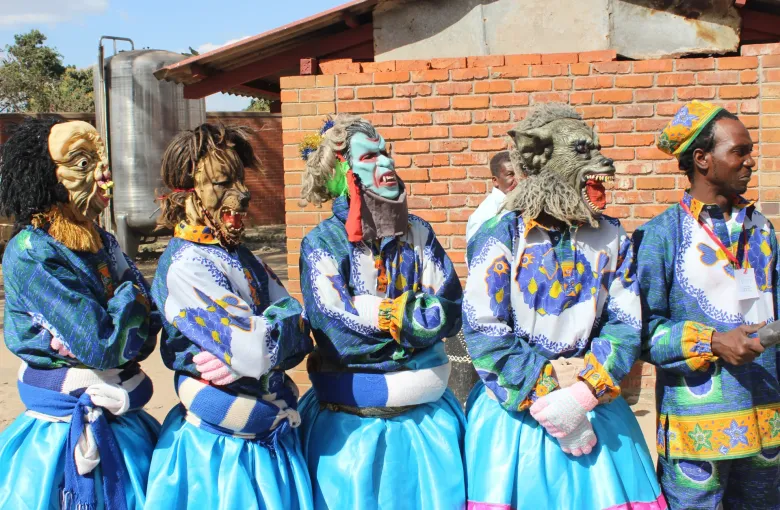
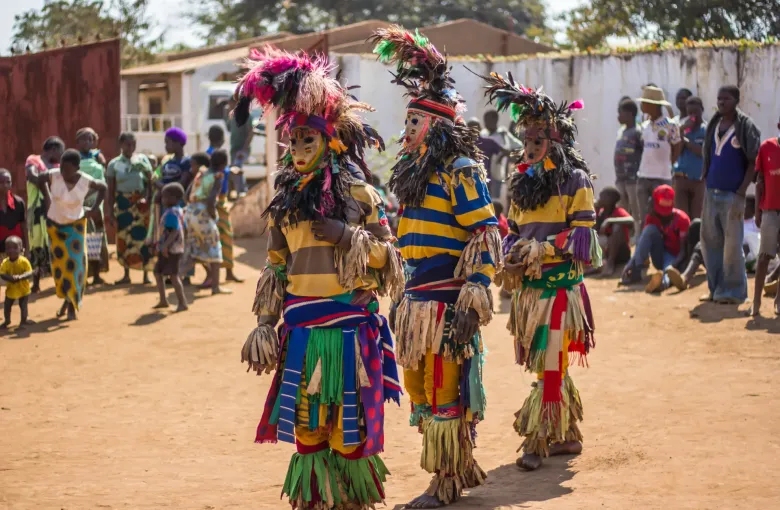
- Living culture is the strongest offer. Malawi has six UNESCO-inscribed traditions including Gule Wamkulu, Vimbuza and the culinary tradition of nsima, and they are practiced rather than performed. See Malawi Festivals and Celebrations.
- Village and community life of the kind in the photograph at the top of this page is where most of the country actually lives, and time spent there is worth more than distance covered.
Going with intent
- Fewer places, more nights. Malawi is small and the temptation is to cover it. Resist it.
- Learn some Chichewa. Muli bwanji will be met with delight. See Malawi Culture and Etiquette.
- Go with someone local. For the traditional ceremonies this is not a preference, it is the only way in, and it is also how you understand what you are being shown.
- Spend money where it stays. Guides, porters on Mulanje, craftspeople at markets, community-run lodges. Pay a fair price rather than the lowest achievable one.
- Do not buy wildlife products or uncut gemstones. Both are illegal, and the first is a prosecutable offense with a prison sentence attached.
Practical notes for the trip
Malawi is at Level 2 on the American scale and the FCDO warns against travel to no part of it, which makes it one of the more straightforward countries in the region to plan. The practical constraints are health and logistics rather than security: malaria throughout, bilharzia in the lake, cholera in the rainy season, fuel shortages on the road, and medical facilities that often want payment up front. All of it is in Malawi Travel Safety Guide.
A closing thought
Malawi's reputation as the warm heart of Africa rests on how people treat visitors, and a returning visitor is treated very warmly indeed. The trips that work here are the slow ones: a week at the lake and in the villages behind it will tell you more than a fortnight spent driving between sights.
Sources
- UNESCO World Heritage Centre: Malawi’s State Party record and its three inscribed properties. Accessed 14 September 2026.
- UNESCO Intangible Cultural Heritage: Malawi’s six inscribed elements, among them Gule Wamkulu, Vimbuza and the culinary tradition of nsima. Accessed 14 September 2026.
- UK Foreign, Commonwealth & Development Office: Malawi safety and security: crime, kidnap, road travel, fuel, local laws and the rainy season. Accessed 14 September 2026.
- US Department of State: the Malawi travel advisory, currently Level 2, Exercise Increased Caution. Accessed 14 September 2026.
Other Articles
Malawi Culture and Etiquette Guide
Malawi Festivals and Celebrations