What it is
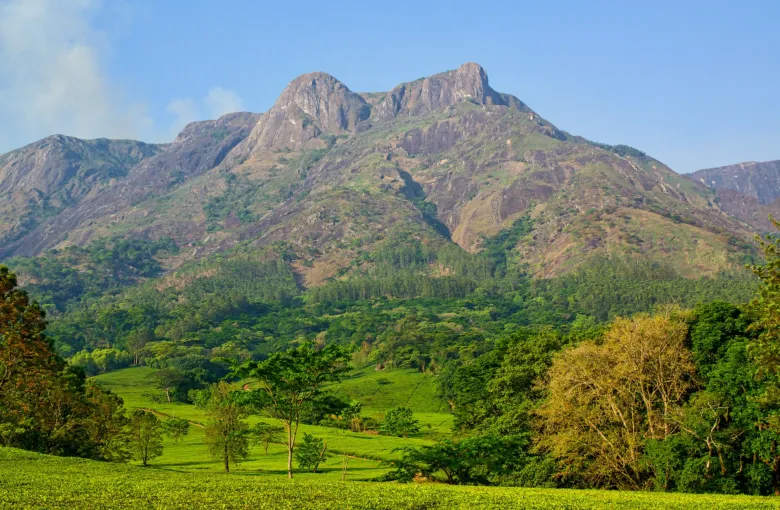
High on the plateau of central Malawi, in a cluster of forested granite hills in Dedza District, 127 sites across an area of 126.4 square kilometers carry what UNESCO calls the richest concentration of rock art in Central Africa.
The paintings come from two quite different traditions, separated by thousands of years, and the distinction is the most interesting thing about the place.
The hunter-gatherer paintings
The older works were made by BaTwa hunter-gatherers who inhabited the area. These are the schematic, mostly red designs, and they belong to the long rock-art tradition found across much of southern Africa.
The farmer paintings
The later works are what UNESCO calls the comparatively scarce tradition of farmer rock art, made by Chewa agriculturalists. These are the white figures, often animal and human forms, and they are far less common in the world's rock art than the hunter-gatherer kind. Both are visible on the panel in the photograph at the top of this page.
⚠ This is not an archaeological site in the ordinary sense
The farmer paintings are associated with Nyau, the Chewa secret society, and with the initiation ceremonies and funerary rites that Nyau conducts. Those practices continue. Some of the sites remain in use.
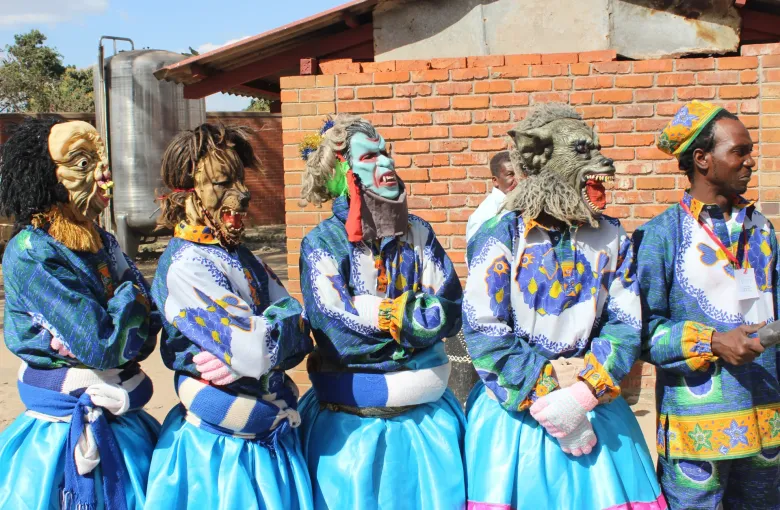
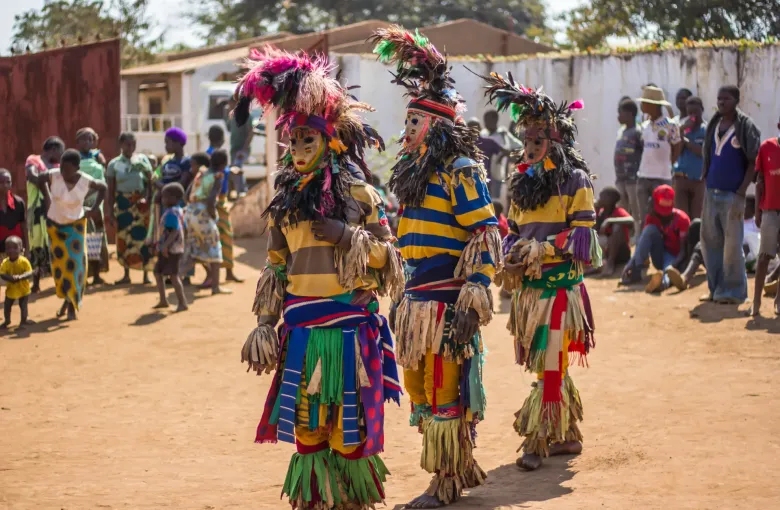
So Chongoni is not a place where something once happened. It is a place where something is still happening, and where a visitor is closer to a working religious landscape than to a gallery. The masked dance connected to that society, Gule Wamkulu, is itself on UNESCO's intangible heritage list. See Malawi Culture and Etiquette and Malawi Festivals and Celebrations.
What UNESCO recognized
Inscribed in 2006 under cultural criteria (iii) and (vi), which cover exceptional testimony to a cultural tradition and direct association with living traditions, beliefs and events of outstanding significance. That second criterion is the one that matters here: the inscription explicitly recognizes the connection to a living practice.
Visiting
- Go with a guide. Not for safety, but because the sites are scattered across the hills, many are unmarked, and a guide is also the person who knows which places are appropriate to visit and which are not.
- Expect to walk. The approaches are on foot over rough ground and up granite. Wear proper shoes. This is not a site that can be seen from a vehicle.
- Do not touch the paintings, do not wet them to bring out the color, a practice that destroys them, and do not move anything at a site.
- Ask before photographing, and accept if the answer is no at a particular place.
- Season. The dry months make the tracks easier. The plateau is cool, and cold at night. See Malawi Packing List.
Where it fits in an itinerary
Chongoni sits on the plateau between Lilongwe and the lake, which makes it a natural stop rather than a detour on the way to or from Lake Malawi National Park. Dedza itself is known for its pottery, and the two together make an easy and rewarding day.
What to expect, honestly
Rock art asks more of a visitor than a landscape does. The panels are weathered, the figures are faint in flat light, and a photograph rarely captures what the eye sees standing in front of them. Morning or late afternoon light is far better than midday. Go with someone who can read them for you and the place opens up. Go without, and you may see marks on a rock.
Sources
- UNESCO World Heritage Centre: the inscription of the Chongoni Rock-Art Area. Accessed 14 September 2026.
- UNESCO World Heritage Centre: the World Heritage List export, which carries each Malawian property’s inscription year, criteria and description. Accessed 14 September 2026.
- UNESCO World Heritage Centre: Malawi’s State Party record and its three inscribed properties. Accessed 14 September 2026.
- UNESCO Intangible Cultural Heritage: the inscription of Gule Wamkulu. Accessed 14 September 2026.
Other Articles
Malawi Culture and Etiquette Guide
Malawi Festivals and Celebrations