What it is, and why the name may be unfamiliar
You may have come looking for Tsingy de Bemaraha. That is one component of a larger property. UNESCO inscribes it as the Andrefana Dry Forests, a serial property of four national parks and two special reserves:
- Ankarafantsika National Park
- Mikea National Park
- Tsingy de Bemaraha National Park
- Tsimanampesotse National Park
- Analamerana Special Reserve
- Ankarana Special Reserve
It was first inscribed in 1990. Writing about it as a single park describes one sixth of it.
Why UNESCO inscribed it
The citation is about endemism and isolation. UNESCO describes the property as representing centers of endemism in the dry tropical and subtropical biomes of Madagascar, with western dry forests and southwestern dry thorny forests and thickets that evolved in isolation on a large island separated from all other land for tens of millions of years. The parks and reserves provide a continuum of dry to arid forest formations from north to south, taking in almost all the dry-forest centers of endemism in western Madagascar.
In plain terms: these are forests full of species that exist nowhere else, arranged along a gradient, and the property is designed to protect the gradient rather than a single site.
The Tsingy
The word describes the razor-edged limestone pinnacles that make Bemaraha famous, and it is usually glossed as meaning roughly "where one cannot walk barefoot". The rock is karst: limestone dissolved by water into blades, fissures and canyons, with forest growing in the gaps.
Movement through it is engineered. Visitors use fixed routes with via ferrata cables, harnesses, ladders and suspension bridges, and you go with a guide. The Grands Tsingy and the smaller Petits Tsingy are different circuits with different demands; the smaller is the one to choose if the harness sections do not appeal.
Is it for you
Honestly: this is the most physically demanding heritage site in this cluster. It involves heights, narrow gaps, ladders and sustained exposure. Grip matters more than strength. If that is not your trip, Ankarana offers tsingy formations, caves and lemurs with far less commitment, and Ankarafantsika is easier ground again. See Accessible Travel in Madagascar.
⚠ Getting there is the hard part, and it carries advice
The western components sit at the end of long unsealed roads, and the FCDO's regional advice for western Madagascar is explicit. Because of the risk of violent highway robberies, particularly at night, it says to use a recognized tour operator when traveling in the region between Besalampy and Morombe, including the RN35 and the RN1 between Tsiroanomandidy and Maintirano, and to maintain a high level of vigilance on the RN7, RN27, RN10 and RN34.
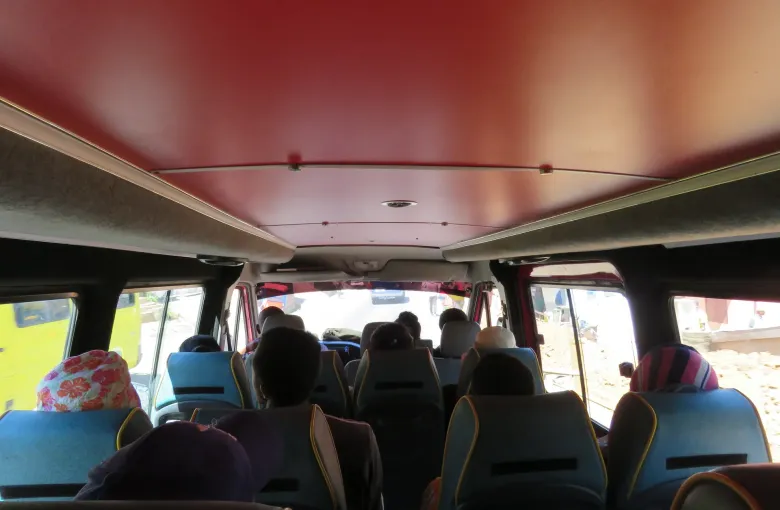
Its general advice applies too: armed robberies on main roads are frequent, particularly at night and outside major towns; drive in convoy where possible; and it advises against using multi-passenger taxi vans. See Getting Around Madagascar.
When to go
The dry season, roughly May to October, and this is not a preference. Access tracks to Bemaraha are the classic casualty of the rains, and parts of the western circuit close. Heat builds towards the end of the dry season, so the earlier months are more comfortable.
What to take
- Closed shoes with real grip. Limestone is unforgiving.
- Gloves for the cabled sections.
- Far more water than feels necessary, and a means of treating more.
- Sun protection that survives sweat.
- A head for heights, or the smaller circuit.
Getting the designation right
Ankarafantsika, Ankarana and the rest are part of a World Heritage property. The Avenue of the Baobabs, which many people combine with a Bemaraha trip because it sits on the road from Morondava, is not: it is a national Monument Naturel. Both are worth seeing. Only one of them is inscribed, and getting that right costs nothing.
Sources
- UNESCO World Heritage Centre: the inscription of the Andrefana Dry Forests and the six protected areas that make up the property. Accessed 14 September 2026.
- UNESCO World Heritage Centre: Madagascar’s State Party record and its three inscribed properties. Accessed 14 September 2026.
- UK Foreign, Commonwealth & Development Office: Madagascar regional risks, region by region, including the named roads and the southern triangle. Accessed 14 September 2026.
- UK Foreign, Commonwealth & Development Office: Madagascar safety and security: crime, beaches, vehicle crime, the advice against taxi-brousses and the false-police warning. Accessed 14 September 2026.
Other Articles
Getting Around Madagascar
Best Time to Visit Madagascar