The quick answer
If you have read about diaspora travel in West Africa, set that template aside. Uganda's diaspora story is not the transatlantic slave trade. It is a different history, and treating the two as interchangeable does both a disservice.
Uganda's principal displacement stories are the 1972 expulsion of the Asian community, the movements caused by the conflicts of the 1970s and 1980s, and a large modern diaspora built on education and work.
1972, and the returns
In 1972 Uganda's substantial South Asian population, much of it several generations settled and central to the country's commercial life, was expelled at short notice. Families dispersed largely to Britain, Canada and India, leaving businesses and homes behind.
From the 1990s onward some returned, and property restitution programs brought a number of families back into Ugandan commercial life. For descendants of those families a visit to Uganda is a specific kind of journey, often centered on a town, a street or a building rather than on a national narrative. Those journeys are entirely possible to arrange and they benefit from being planned as research trips rather than as tours.
The conflict years
The violence of the 1970s and 1980s, and the long insurgency in the north that followed, displaced very large numbers of Ugandans both internally and abroad. Many of those families have since returned or are connected to communities that remained. This history is recent enough that it is personal to people you will meet, which is a reason for care rather than avoidance.
The modern diaspora
Ugandans live and work in substantial numbers across Britain, North America, the Gulf and neighboring African countries, and remittances are a significant part of the national economy. A great deal of contemporary "diaspora travel" to Uganda is simply people coming home for a wedding, a funeral, a graduation or a construction project.
If you are making a roots journey
- Do the paperwork first. Records exist in church registers, school records, land records and family memory, and the work is much easier begun before you fly than after you land.
- Contact people in advance. A parish, a school or a district office will often help, and arriving unannounced puts everyone in a difficult position.
- Allow far more time than the distance suggests. See Getting Around Uganda.
- Bring a translator if you are going into a rural district. Uganda has many languages and English is not universal outside towns and cities.
- Manage your expectations about buildings. Much is gone. What remains is often people.
Cultural reconnection without a family link
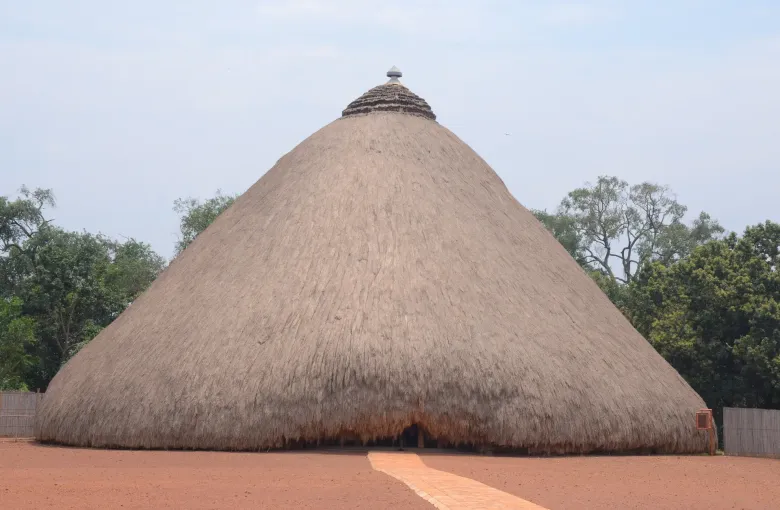
You do not need ancestry here to engage seriously with Ugandan heritage. The Tombs of Buganda Kings at Kasubi is the living center of a kingdom rather than a museum, and the traditions UNESCO lists, from barkcloth to the Empaako naming system, are held by communities who are generally glad of genuine interest.
The distinction worth holding onto is between being welcomed and being entitled. See Uganda Culture and Etiquette Guide.
How we help
We build these itineraries slowly, with local coordinators, and we do not promise to find anybody. What we can do is handle the logistics so that the days you have are spent on the search rather than on the road.
Sources
- UNESCO World Heritage Centre: the inscription of the Tombs of Buganda Kings at Kasubi. Accessed 14 September 2026.
- UNESCO Intangible Cultural Heritage: Uganda’s inscribed elements, including barkcloth making and the Empaako naming tradition. Accessed 14 September 2026.
- UK Foreign, Commonwealth & Development Office: Uganda travel advice: entry requirements, safety and security, health and local laws. Accessed 14 September 2026.
Other Articles
Kasubi Tombs: Visitor and Heritage Guide
Uganda Culture and Etiquette Guide