The quick answer
Uganda's calendar is shaped by three things: national days, religious observance, and the traditional kingdoms, whose anniversaries and coronation celebrations matter enormously to the people who belong to them and are largely invisible to visitors who do not know to look.
The fixed national dates
- Independence Day, 9 October. Uganda became independent in 1962. Parades, ceremonies and a general holiday.
- Liberation Day, 26 January.
- Martyrs Day, 3 June. See below, because it is on a different scale from the rest.
Martyrs Day at Namugongo
On 3 June very large numbers of pilgrims converge on Namugongo, outside Kampala, some of them having walked for weeks from neighboring countries. It commemorates Christian converts executed in the 1880s. It is one of the largest religious gatherings on the continent and it is a remarkable thing to witness.
It also means crowds, closed roads and full accommodation across Kampala. If you are visiting in early June, plan around it deliberately, in one direction or the other.
Religious observance
Christmas and Easter are widely observed. Eid al-Fitr and Eid al-Adha are public holidays and move with the lunar calendar. Ramadan affects opening hours in Muslim communities. Check the dates for your year rather than assuming.
The kingdoms
Buganda, Bunyoro, Toro and Busoga each mark coronation anniversaries and cultural days, and these are genuine occasions rather than performances laid on for visitors. Dates are set by the kingdom rather than by the state and are not always announced far ahead. If you would like to see one, ask us and we will find out what falls within your dates.
The living traditions UNESCO lists
This is the part most festival roundups miss. Uganda has six elements on the UNESCO intangible cultural heritage lists, and five of the six are on the Urgent Safeguarding List, which means UNESCO judges them to be at risk:
- Bigwala, gourd trumpet music and dance of the Busoga Kingdom.
- Empaako, the praise-name tradition of several peoples of western Uganda.
- Koogere, the oral tradition of the Basongora, Banyabindi and Batooro.
- Ma'di bowl lyre music and dance.
- The male-child cleansing ceremony of the Lango of central northern Uganda.
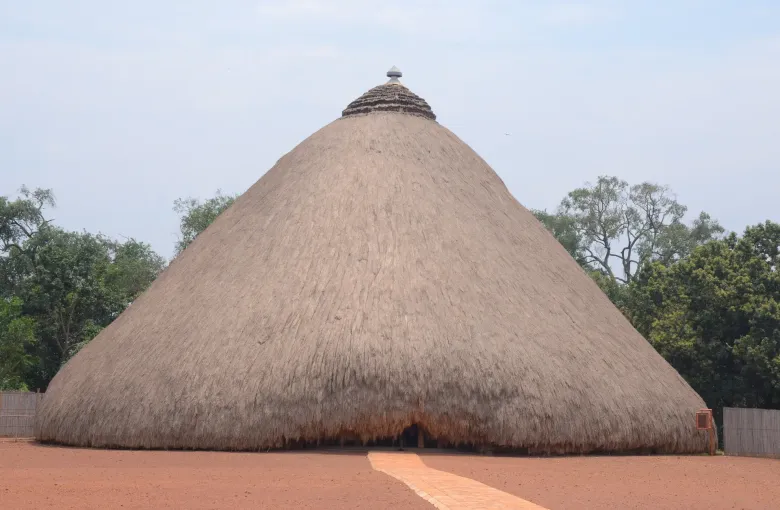
The sixth, barkcloth making, sits on the Representative List. Barkcloth is made from the inner bark of the mutuba fig, and the trees that mark the boundary of the Kasubi site are the same species. See Kasubi Tombs.
These are not scheduled events you can buy a ticket to. They are practices held by particular communities, and the honest way to encounter one is through a community organization that has invited visitors, not by turning up.
A practical caution
Large public gatherings in Uganda also include political ones. The FCDO records that rallies, protests and demonstrations can occur anywhere without warning and have caused loss of life. A crowd is not automatically a festival. See Uganda Travel Safety Guide.
Sources
- UNESCO Intangible Cultural Heritage: Uganda’s inscribed elements, including barkcloth making and the Empaako naming tradition. Accessed 14 September 2026.
- UNESCO World Heritage Centre: the inscription of the Tombs of Buganda Kings at Kasubi. Accessed 14 September 2026.
- UK Foreign, Commonwealth & Development Office: Uganda safety and security: terrorism, the political situation, crime, road travel and local laws. Accessed 14 September 2026.
Other Articles
Uganda Culture and Etiquette Guide
Kasubi Tombs: Visitor and Heritage Guide