The quick answer
Uganda is the one destination in this series where the two governments we quote most often do not merely differ in emphasis. They disagree. The United States places the entire country at its highest warning level. The United Kingdom issues no blanket warning against travel to Uganda at all, and publishes no regional-risks page for it.
Both of those are current. Neither is a mistake. Read both before you decide, and read them again close to departure.
What each government says, as of September 2026
The United States
The State Department places Uganda at Level 4, Do Not Travel, in an advisory last updated on 7 December 2025. It cites two things. The first is crime: it describes violent crime, including armed robbery, home invasion and sexual assault, as a real danger, more common in larger cities, in the Karamoja region and along the western and northern borders, and it notes that police capacity to respond to serious crime is limited. The second is terrorism.
Level 4 is the top of a four-step scale. It is the same level the department applies to countries in active conflict. That is the plain meaning of the advisory and we are not going to soften it.
The United Kingdom
The FCDO advises against travel to no part of Uganda. There is no "all travel" area and no "all but essential travel" area. For comparison, the same office does maintain such areas for Ethiopia and for Mozambique, so its silence on Uganda is a position rather than an oversight.
It is not a clean bill of health. The FCDO states that terrorists are very likely to try to carry out attacks in Uganda, that attacks could be indiscriminate, and it lists the kinds of places that have been targeted, among them hotels, transport hubs, restaurants and bars, places of worship, shopping centers, major gatherings and national parks.
Why both are quoted here
One government says do not go. The other says go, and be alert. Averaging those into a single comfortable sentence would invent a third position that neither government holds, and it would be the one sentence on this page most likely to be wrong. Your travel insurance, in particular, may be written against one of these advisories and not the other, which makes the difference practical rather than academic.
The law that changes the calculation for some travelers
Same-sex sexual activity is illegal in Uganda. In May 2023 Uganda introduced the Anti-Homosexuality Act 2023, which provides long prison sentences and, for offenses the Act classes as aggravated homosexuality, the death penalty. Sexual activity with someone of the same sex carries a punishment of life imprisonment. There are severe penalties for promoting LGBT+ rights.
We state this plainly because a travel guide that omits it is not a travel guide. If this law bears on you, it is not a detail to be discovered on arrival, and no itinerary we could design would change it.
The political calendar
Presidential and parliamentary elections were held on 15 January 2026 and the presidential inauguration took place on 12 May 2026. The FCDO records that elections and political events in Uganda have led to protests and violence, including fatalities, and to disruption of the internet and of social media. Rallies and demonstrations can occur anywhere without warning.
Health, and the Ebola question
This is the part most likely to be out of date wherever else you read it. The World Health Organization declared Uganda's Ebola outbreak over on 27 August 2026. The outbreak in neighboring Democratic Republic of the Congo continues, the risk of transmission into Uganda remains, and the Ugandan government is maintaining precautions on its border with the DRC.
Beyond that, the FCDO names malaria, yellow fever, mpox and Marburg virus disease among the health risks, and notes that altitude sickness is a risk in parts of the country. A yellow fever certificate may be requested; see Uganda Visa and Entry Requirements for how that interacts with your visa application.
The risk that is larger than crime
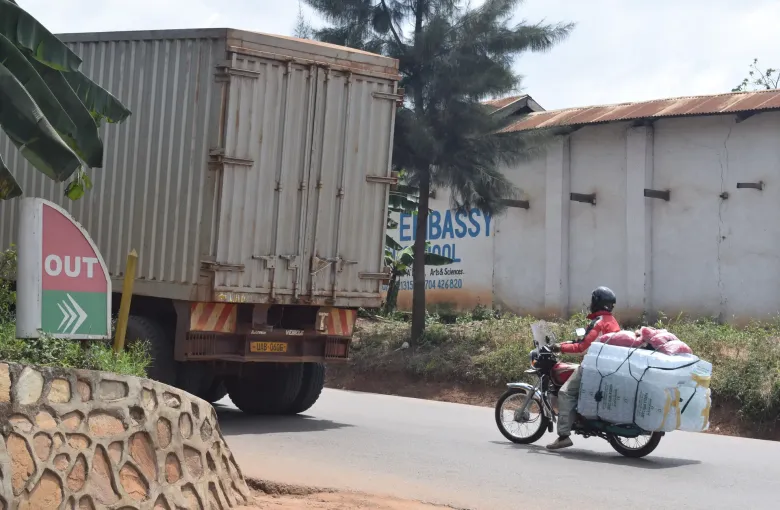
For most visitors the likeliest serious harm is not political and it is not criminal. It is the road. The FCDO describes travel by road as hazardous, particularly outside the main cities, driving standards as poor and the accident rate as high, and notes that other road users may drive at night without lights. Read Getting Around Uganda alongside this page, because the choices that reduce this risk are made when you book, not when you travel.
Practical precautions
- Carry comprehensive travel insurance, and check in writing whether it is void under a Level 4 advisory. This is the single most consequential item on the page.
- Confirm medical evacuation cover. Serious trauma care may require evacuation.
- Use arranged transport, particularly to and from airports and when withdrawing cash.
- Do not walk after dark, and avoid carrying large amounts of cash or wearing conspicuous jewelry.
- Avoid political rallies, demonstrations and large gatherings entirely.
- Register with your own government's traveler service before departure.
How to read this page
Uganda is a mainstream destination for gorilla trekking and receives visitors continuously. It also sits at Level 4 on the American scale. Both sentences are true at once, and anyone who tells you only one of them is selling you something. We would rather give you the two official positions, the law, the health picture and the road, and let you make the decision with the same information we have.
Sources
- US Department of State: the Uganda travel advisory, currently Level 4, Do Not Travel. Accessed 14 September 2026.
- UK Foreign, Commonwealth & Development Office: Uganda safety and security: terrorism, the political situation, crime, road travel and local laws. Accessed 14 September 2026.
- UK Foreign, Commonwealth & Development Office: Uganda health advice, including the status of the Ebola outbreak. Accessed 14 September 2026.
- US Centers for Disease Control and Prevention: Travelers’ Health, Uganda: vaccination guidance, malaria and yellow fever. Accessed 14 September 2026.
Other Articles
Getting Around Uganda

Uganda Visa and Entry Requirements