The quick answer
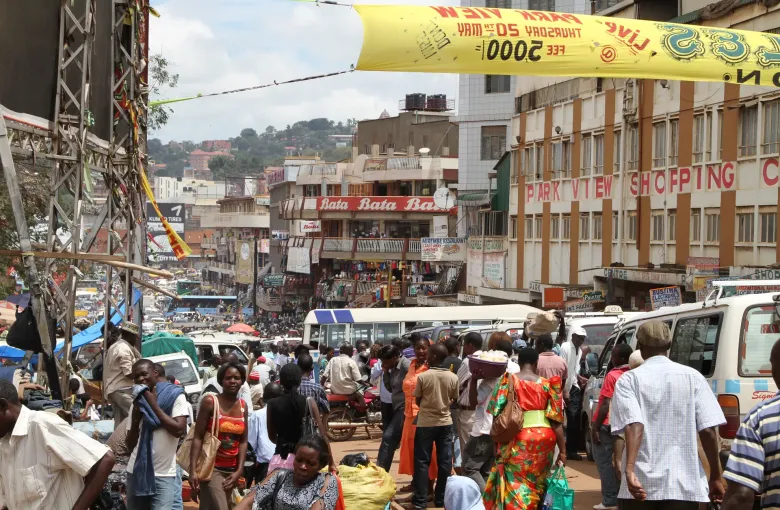
Almost everything that is likely to go seriously wrong on a Uganda trip happens on a road. The FCDO describes travel by road as hazardous, particularly outside the main cities, driving standards as poor and the accident rate as high, and notes that at night other road users may be driving without lights.
That is not a reason to stay home. It is a reason to make the transport decisions deliberately rather than by default, and most of them are made when you book.
Arriving
International flights arrive at Entebbe International Airport, which sits on Lake Victoria some distance from Kampala. Arrange your transfer in advance rather than negotiating on arrival, particularly if you land at night.
The road picture
Main routes between major centers are largely paved and can be good. Conditions deteriorate quickly off them, and the surface is only part of it. Heavy freight, pedestrians and livestock share the same carriageway, and overtaking conventions are not what you are used to.
Night driving
Avoid it. This is the single clearest rule on the page. Unlit vehicles, unlit pedestrians and unlit obstacles combine badly, and the emergency response you would expect at home is not available on most of the network.
Driving yourself
You can drive in Uganda on a UK license for up to three months. Beyond that you need a Ugandan license or a 1949 international driving permit. If you are coming from the UK, note that you cannot buy an IDP outside the UK, so it has to be arranged before you travel.
We rarely recommend self-driving for a first visit. A driver who knows the roads, the police checkpoints and the local conventions is better value than the saving, and the saving is smaller than it looks once fuel and time are counted.
Boda bodas
The motorcycle taxi is the fastest way across Kampala and the most dangerous thing a visitor routinely does. Head injuries are common and helmets frequently are not offered. If you use one at all, use an app-based service rather than a street pickup, insist on a helmet, and do not use one at night or in rain.
Minibuses and coaches
Shared minibus taxis are the backbone of public transport and are cheap, crowded and quick to fill. Longer intercity coaches are more comfortable. Neither is the option we would put a group on for a long transfer, mostly because you have no control over the driver.
Domestic flights
The distances to the southwest are long and the roads are slow. Scheduled and charter flights connect Entebbe with airstrips near the western parks, and on a short itinerary they buy back a full day in each direction. For a group with limited time this is usually the best money spent on the whole trip.
Water transport
Boats operate on Lake Victoria, Lake Bunyonyi and elsewhere. Life jackets are not universal. Ask for one, and do not board an overloaded boat.
How we handle transfers
We use vetted drivers and vehicles, we build itineraries that do not require night driving, and we would rather add a domestic flight than schedule a nine-hour road day. Read Uganda Travel Safety Guide alongside this page.
Sources
- UK Foreign, Commonwealth & Development Office: Uganda safety and security: terrorism, the political situation, crime, road travel and local laws. Accessed 14 September 2026.
- UK Foreign, Commonwealth & Development Office: Uganda travel advice: entry requirements, safety and security, health and local laws. Accessed 14 September 2026.
Other Articles
Uganda Travel Safety Guide

Best Time to Visit Uganda