The thing to understand first
Mozambique has two properties on the World Heritage List, not one. Almost everything written before 2025 says one, and the reason is worth a paragraph because it explains the whole page.
The second property did not arrive as a new inscription. iSimangaliso Wetland Park in South Africa was inscribed in 1999. In 2025 UNESCO approved a significant modification to its boundaries, extending it across the international border to take in Maputo National Park. The property is now transboundary, shared by South Africa and Mozambique, and is listed as iSimangaliso Wetland Park and Maputo National Park.
So Maputo National Park is not a World Heritage Site in its own right. It is the Mozambican component of one, and the distinction is not pedantry: it is why the inscription date reads 1999 and why the dossier number carries a suffix.
The record
- Inscribed: 1999. Boundary modification: 2025.
- Criteria: (vii), (ix) and (x), all natural.
- Property: 397,403 ha, with a buffer zone of 420,299 ha.
- States Parties: Mozambique and South Africa.
What is protected
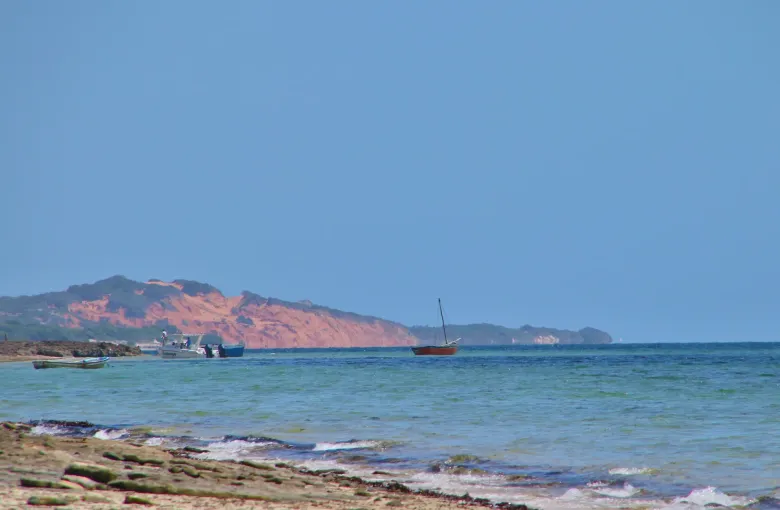
UNESCO describes a large and ecologically diverse transboundary property along the border of the two countries, taking in coral reefs, sandy beaches, coastal dunes, wetlands, grassland and forest. It is a coastal and marine property before it is a savanna one, which is worth knowing before you picture it.
The figures UNESCO records for the Mozambican side at the time of the extension are specific: 4,935 species recorded in Maputo National Park, of which 104 are assessed as threatened or near threatened on the IUCN Red List, and 184 are endemic or near endemic to Mozambique, southern Africa or the Western Indian Ocean.
The stretch of coast inside the property is a nesting beach for loggerhead and leatherback turtles, both of which UNESCO names in its description of the extension.
Visiting
Maputo National Park lies south of the capital and is the most accessible protected area in the country for anyone flying into Maputo. It is reached by road, and the last stretch is the kind of surface that wants a suitable vehicle, particularly in the wet season.
- Go in the dry season, roughly May to October, for access as much as for wildlife.
- Arrange the visit through your accommodation or a licensed operator. Park entry, vehicle suitability and guiding are all easier settled in advance than at a gate.
- It is a day trip from Maputo, but a poor one. Staying inside or near the park turns several hours of driving into time in the park.
- Turtle nesting is seasonal and regulated. If that is why you are going, ask before you book, and go with a guide who follows the rules about lights and distance.
What it is not
It is not a big-five safari park, and going in expecting one is the quickest way to be disappointed by somewhere genuinely remarkable. Wildlife populations here have been rebuilding over years of work, and the reason to come is the combination of coast, dune, wetland and grassland in one protected landscape rather than a checklist of large mammals.
It is also not the same thing as the Bazaruto Archipelago, the Quirimbas or Gorongosa. Those are national parks and reserves in their own right, and none of them is on the World Heritage List. Note that the Quirimbas are in Cabo Delgado, where the FCDO advises against all travel to most of the province and the US advisory says Do Not Travel, so that one is not a substitute destination either. See our safety guide.
Practicalities
Malaria is present countrywide and the CDC recommends prescription medicine to prevent it for travel anywhere in Mozambique, which includes this park. Take repellent and cover up at dusk, which is also when you will want to be outside.
Carry cash for fees, carry water, and tell someone your plan for the day. Phone coverage is not uniform.
Sources
- UNESCO World Heritage Centre: iSimangaliso Wetland Park and Maputo National Park: inscribed 1999, significant boundary modification 2025, and now a transboundary property shared by South Africa and Mozambique. Accessed 14 September 2026.
- UNESCO World Heritage Centre: Mozambique’s State Party record, which lists two properties inscribed on the World Heritage List. Accessed 14 September 2026.
- UK Foreign, Commonwealth & Development Office: Mozambique travel advice and the areas it advises against traveling to. Accessed 14 September 2026.
- US Centers for Disease Control and Prevention: Travelers’ Health, Mozambique: malaria prophylaxis for the whole country, chloroquine resistance and the recommended drugs. Accessed 14 September 2026.
Other Articles
Island of Mozambique: Visitor and Heritage Guide
Mozambique Travel Safety Guide