Why Mozambique is part of this story
The trade in enslaved people out of East Africa is less written about than the Atlantic trade and was not smaller for that. Mozambique's ports fed routes into the Indian Ocean world, north to Arabia and the Gulf, east to India, and across to the Mascarenes. From the late eighteenth century they also fed the Atlantic, carrying people to Brazil and to Cuba after other sources were closed off.
That is the reason a Mozambican thread runs through communities in Brazil, in the Caribbean, in the Indian Ocean islands and in the Gulf, and why a returning visitor may be tracing a line that does not run the way an Atlantic-focused history would predict.
Where to begin: the Island of Mozambique
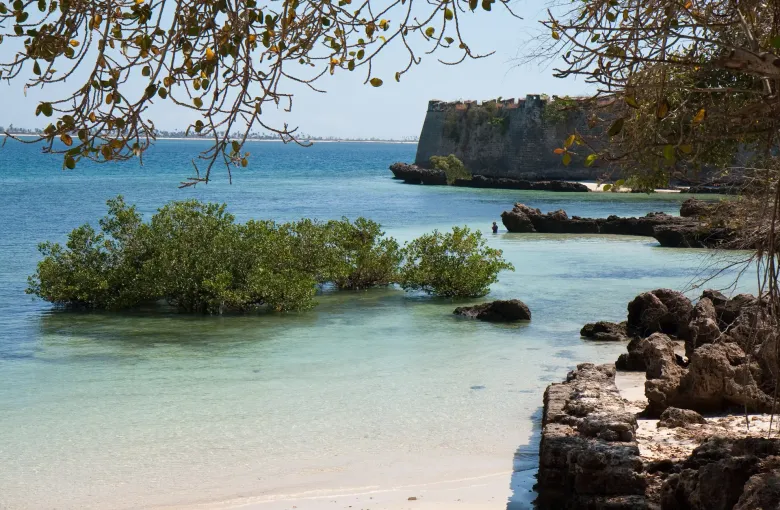
If there is one place to start, it is the Island of Mozambique, the capital of Portuguese East Africa for close to four centuries and the administrative point through which a great deal passed. UNESCO inscribed it in 1991 for the meeting of Swahili, Arab, Indian and European traditions in its architecture, and that meeting is not an abstraction: it is the physical record of who traded there and under what terms.
Go with a local guide, spend more than a day, and walk both the stone town and Makuti Town. See our Island of Mozambique guide for the practical detail, including the advisory position for Nampula province, which requires reading by district rather than by province.
What the archives hold, honestly
This is where we would rather disappoint you in advance than in a reading room.
Portuguese colonial administration generated records, and the Arquivo Histórico de Moçambique in Maputo holds a substantial part of what survives, with more in Portuguese archives in Lisbon. Church registers of baptism, marriage and burial exist for some parishes and some periods.
But the records were made by the people running the system, for their purposes. Enslaved people appear in them, when they appear, as property, as cargo manifests, as baptismal entries with a given name and no family name. An unbroken personal line back from a modern family to a named Mozambican ancestor is uncommon, and any service that promises one before seeing your documents is selling certainty it does not have.
What is genuinely achievable is more often regional than personal: establishing which ports, which routes, which decades, and which peoples. That is a real answer, and for many people it is a more truthful one than a name would be.
What DNA testing can and cannot do
Commercial ancestry testing can indicate broad regional affinity in southeastern Africa. It cannot tell you a village, a lineage or a name, and reference panels for this part of the continent are thinner than for West Africa. Treat a result as a direction of travel rather than a destination, and be skeptical of any product that converts a percentage into a specific origin story.
Language and living culture
Portuguese is the official language and the bridge between regions. The languages spoken at home vary: Emakhuwa in the north, Xichangana in the south, and many others between. If your family history points to a region, learning which language belongs to it is a concrete and achievable piece of reconnection.
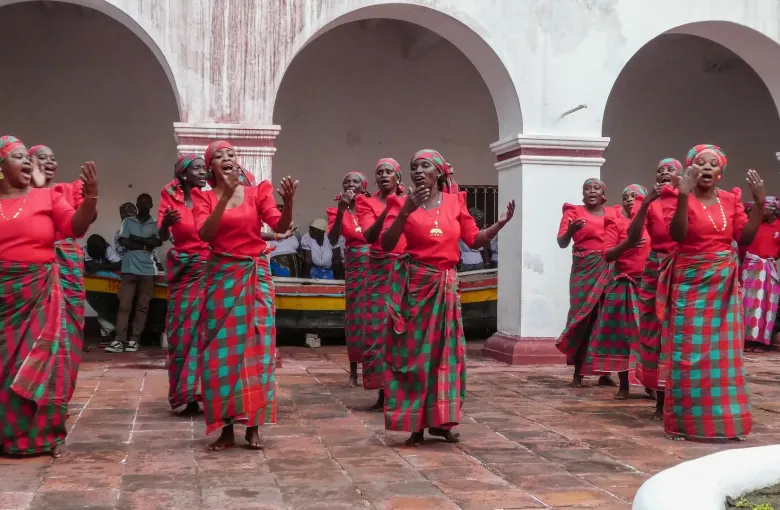
The living traditions are the other half. Chopi Timbila in Inhambane and Ingoma Ya Mapiko among the Makonde in the north are both inscribed by UNESCO, and both are performed by communities rather than preserved in cases. See the festivals and culture guides for how to encounter them without turning them into a show.
Planning a reconnection trip
- Do the archive work before you fly, or at least start it. Write ahead. A reading room is a poor place to begin from nothing.
- Allow far more time in one place than you think. This is not an itinerary of sites.
- Work with Mozambican historians and guides, and pay them properly. They know what survives locally and what does not.
- Bring someone with you if you can. This can be heavy going, and doing it alone in an unfamiliar country is harder than people expect.
- Read the travel advisories and plan around the restricted districts in the north. See our safety guide.
A note on expectations
People come back from this kind of trip with something, and it is frequently not the thing they went for. A region rather than a name. A language rather than a lineage. A place that feels different to stand in once you know what happened there. Those are not consolation prizes, and it is worth deciding in advance that they would count.
Sources
- UNESCO World Heritage Centre: the inscription of the Island of Mozambique in 1991 under criteria (iv) and (vi). Accessed 14 September 2026.
- UNESCO World Heritage Centre: Mozambique’s State Party record, which lists two properties inscribed on the World Heritage List. Accessed 14 September 2026.
- UNESCO Intangible Cultural Heritage: Mozambique’s three inscribed elements: Ingoma Ya Mapiko, Chopi Timbila and Gule Wamkulu. Accessed 14 September 2026.
- UK Foreign, Commonwealth & Development Office: Mozambique travel advice and the areas it advises against traveling to. Accessed 14 September 2026.
Other Articles
Island of Mozambique: Visitor and Heritage Guide
Mozambique Culture and Etiquette Guide