The short version
Most destinations answer this question with a weather chart. Nigeria does not, and pretending otherwise would be unhelpful. Four things actually set your dates here, and only one of them is about rain.
One: how long your vaccinations take
This is the constraint most people discover last and it is usually the binding one. A yellow fever certificate is required to enter Nigeria, and the US Centers for Disease Control and Prevention recommends the vaccine for all travelers aged nine months or older. The CDC also recommends that travelers to Nigeria take prescription medicine to prevent malaria, which has to be started some days before departure depending on which medicine you are given.
The FCDO's own advice is to check vaccine recommendations at least eight weeks before your trip. In practice that eight weeks, not the season, is the earliest realistic departure date for someone starting from nothing.
Two: the festival calendar
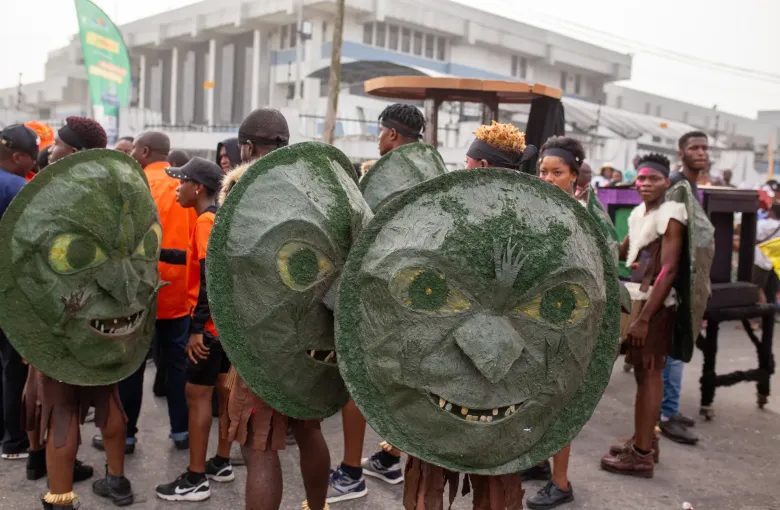
The single fixed cultural date in this cluster is the annual processional festival at the Osun-Osogbo Sacred Grove, which runs over twelve days in July and August. If seeing that is the reason for the trip, it sets everything else. If it is not, be aware that it is also when the grove is busiest, and a quieter month gives you a better walk through the forest.
Three: the roads
Road conditions change with the season and so does the risk picture on them. The FCDO notes that during the dry season, when roads are more easily accessible, the risk of intercommunal violence in the north east is heightened. That is a reason to plan around road travel rather than a reason to prefer one season, and it is one more argument for arranged vehicles and daylight driving. See getting around.
Four: the political and religious calendar
The FCDO asks visitors to take particular care during election periods, or periods of religious significance or other public holidays, and notes that widespread public demonstrations periodically take place including in Abuja and Lagos. Protests can occur with little notice. None of this makes a date impossible; it makes it worth checking before you commit to one.
What we are deliberately not telling you
You will not find a month-by-month temperature or rainfall table on this page. No source we read for this guide publishes one, and Nigeria runs from the Atlantic coast to the edge of the Sahel, so a single national figure would be wrong for most of the country anyway. The one seasonal window we can attribute is the CDC's: it describes the dry season in the northern meningitis belt as running roughly December to June, which is a statement about that belt rather than about the country. See the weather guide for what that means in practice.
So what would we actually recommend
November to March, for the southern and south-western states most of our itineraries use. We want to be clear that this is an editorial recommendation rather than a figure we can point at a source for, and that the honest reason to prefer it is comfort and road conditions rather than anything dramatic. If your dates are set by a festival, a family event or a vaccination schedule, those win, and they usually should.
Where a date is fixed for you
If your trip is built around family, a hometown or a specific community event, the date is already set and the planning runs the other way round. That is the ordinary case for a diaspora visit, and it is covered in Nigeria and diaspora reconnection.
Sources
- US Centers for Disease Control and Prevention: Travelers’ Health, Nigeria: the vaccines and medicines recommended before travel. Accessed 14 September 2026.
- UK Foreign, Commonwealth & Development Office: Nigeria entry requirements: a visa obtained before travel, the withdrawal of visa on arrival, six months of passport validity, the yellow fever certificate and the online health declaration. Accessed 14 September 2026.
- UNESCO World Heritage Centre: the inscription of the Osun-Osogbo Sacred Grove in 2005 under criteria (ii)(iii)(vi). Accessed 14 September 2026.
- UK Foreign, Commonwealth & Development Office: Nigeria safety and security: terrorism, kidnap described as widespread and able to occur anywhere, street and vehicle crime, curfews and financial scams. Accessed 14 September 2026.
- UK Foreign, Commonwealth & Development Office: Nigeria regional risks: the states the FCDO advises against all travel to, and the states it advises against all but essential travel to. Accessed 14 September 2026.
Other Articles

Nigeria Weather Guide
Nigeria Festivals and Celebrations