The quick answer
October to January is the window most itineraries are built around. The big rains have finished, the highlands are green rather than dusty, the skies are clear and the roads are as good as they get. It also contains two of the country's great festivals.
But in Ethiopia more than most places, the weather is not the thing most likely to decide your trip. Read Ethiopia Travel Safety Guide before you fix dates: both the US and UK governments advise against all travel to several regions, including the two that hold most of the famous sites, and that will shape an itinerary more than rainfall ever will.
Month by month, in broad terms
October to January: the main window
Clear, dry and cool, with cold nights. Roads are at their most reliable and internal flights least likely to be disrupted. Highland landscapes are still green from the rains that have just ended.
February to April: the small rains
Lighter and much less predictable. Often perfectly good, occasionally interrupted. Warmer than the main window. The dry-season meningitis recommendation from the CDC runs through this period.
May: hot and waiting
The hottest stretch in much of the country, before the big rains arrive.
Mid June to mid September: the big rains
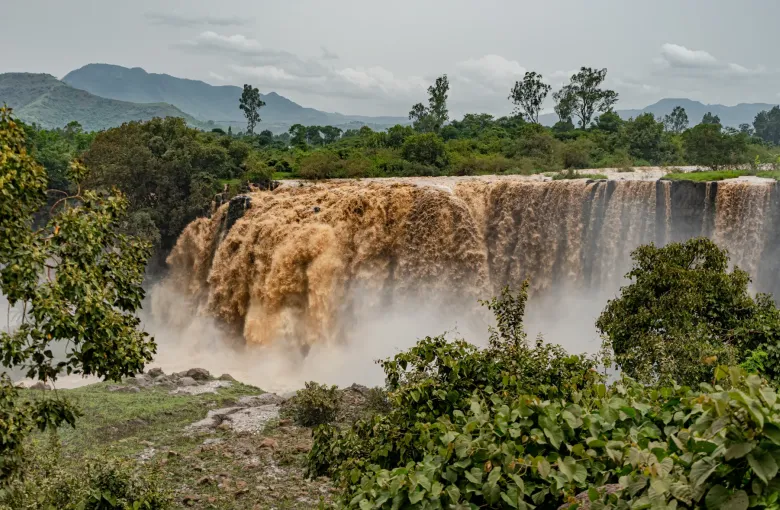
Heavy and sustained. Unpaved roads become the limiting factor, and some of them close. Rivers are full, which is when the Blue Nile Falls is at its most spectacular. The FCDO advises against all travel to Amhara region, where the falls are, so this is a case where the best month and the official advice point in opposite directions.
The end of this period carries Meskel and the Ethiopian New Year, so the calendar and the weather disagree here too.
The Ethiopian calendar moves everything
Ethiopia keeps its own calendar and its own way of telling the time. The FCDO notes that most hotels, larger organizations and airline tickets use the international calendar and clock, but that official documents are often dated using the Ethiopian calendar and that individuals and smaller organizations might use the Ethiopian clock.
The practical consequence for planning is that a festival date quoted to you locally may not be the date in your diary, and that the year number itself is different. Confirm any date that matters in both systems, in writing. Ethiopia Culture and Etiquette explains the clock, which is the part that causes the most confusion.
Planning around the festivals
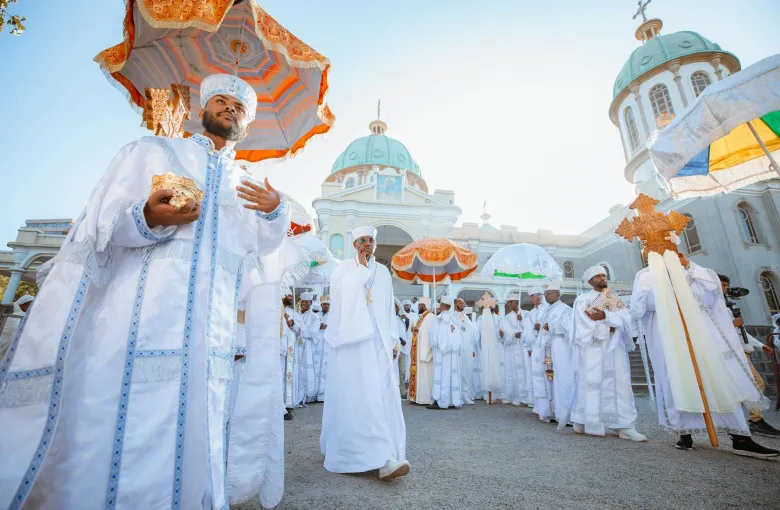
Two of Ethiopia's festivals are inscribed on UNESCO's Representative List of the Intangible Cultural Heritage of Humanity, and both are strong reasons to choose a date.
- Timkat, Ethiopian epiphany, in January. Inscribed by UNESCO. It falls inside the best weather window.
- Meskel, the commemoration feast of the finding of the True Holy Cross of Christ, in late September. Also inscribed. It falls right at the end of the big rains.
Both fill accommodation in the towns that celebrate them most visibly, and both are religious observances rather than performances. Ethiopia Festivals and Celebrations covers all seven inscribed elements and how to be present at one without intruding.
The dates that override the weather
- 1 June 2026: a nationwide general election. A public holiday has been declared, public buildings and banks will be closed, and there will be heavy security around polling stations with vehicle and identity checks. The FCDO advises staying away from gatherings and demonstrations. If your dates are flexible, this is a week to avoid.
- The dry season, December to June, in the meningitis belt. The CDC's vaccination recommendation is seasonal, so the right medical advice depends on when you go as well as where.
- Ramadan, which moves each year. The FCDO notes it is individually observed with no official restrictions imposed, but advises particular care during it, especially outside Addis Ababa.
A note on fuel
Fuel availability is currently limited across the country, with queues and shortages reported nationwide, and the FCDO warns that this may disrupt travel outside Addis Ababa in particular. That is a condition rather than a season, but it affects how much road travel you should build into any month. Check it with your operator close to departure.
So when should you go?
If the question is only weather: October to January. If the question is a specific festival: January for Timkat, late September for Meskel, and accept the conditions that come with it. If the question is the whole trip, start with the advisories rather than the calendar, because in Ethiopia right now they are the binding constraint.
Sources
- UK Foreign, Commonwealth & Development Office: Ethiopia travel advice: the areas it advises against traveling to, and the nationwide election. Accessed 14 September 2026.
- UK Foreign, Commonwealth & Development Office: Ethiopia safety and security: terrorism, kidnap, crime, road travel, local laws and the Ethiopian calendar. Accessed 14 September 2026.
- UK Foreign, Commonwealth & Development Office: Ethiopia health advice, including the end of the Marburg outbreak and the standard of healthcare. Accessed 14 September 2026.
- US Centers for Disease Control and Prevention: Travelers’ Health, Ethiopia: vaccination guidance, malaria, cholera and rabies. Accessed 14 September 2026.
- UNESCO Intangible Cultural Heritage: the inscription of Ethiopian epiphany. Accessed 14 September 2026.
- UNESCO Intangible Cultural Heritage: the inscription of the commemoration feast of the finding of the True Holy Cross of Christ. Accessed 14 September 2026.
Other Articles
Ethiopia Weather Guide
Ethiopia Festivals and Celebrations