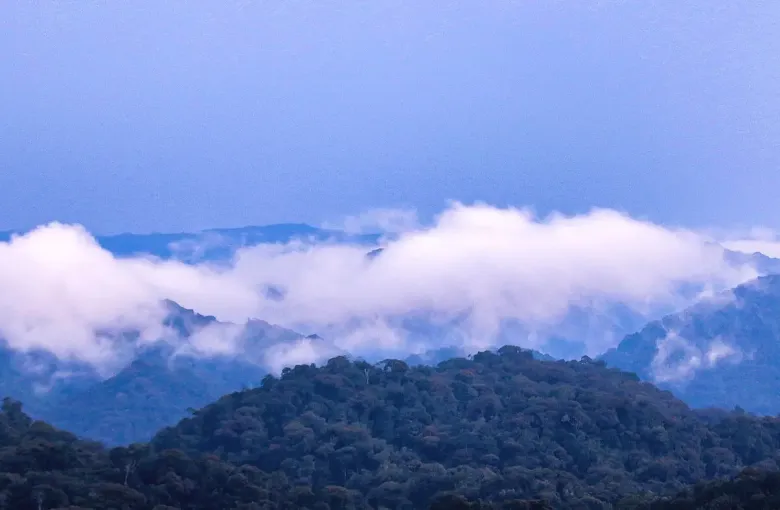
The quick answer
Rwanda lies on the equator and almost never feels like it. The whole country sits high, and altitude does the work that latitude would otherwise do: days are warm rather than hot, evenings are cool, and in the mountains and the forests it can be genuinely cold, wet and windy.
Pack for spring in the mountains, not for the tropics. That one adjustment prevents most of the discomfort visitors report.
The four seasons
Rwanda runs two rainy seasons and two dry ones, and the Foreign, Commonwealth and Development Office gives the rains as February to May and September to December, with April the height.
- The long rains, February to May. Serious rain, often in the afternoon, building through to April. Heavy storms cause landslides and flooding. The country is at its greenest.
- The long dry season, June to September. The clearest skies and the firmest ground. Dust becomes a feature on unsealed roads.
- The short rains, September to December. Usually showers rather than weather systems, and usually less disruptive.
- The short dry season, mid December to February. Warm, bright and quieter than the long dry season.
Treat those as tendencies rather than a timetable. The boundaries move by a few weeks from year to year, and they have been moving.
The forests keep their own weather
Nyungwe is a rainforest. UNESCO’s inscription describes intact forest, peat bogs, moors, thickets and grasslands, and all of that is sustained by rain that falls in every month of the year. Going in the dry season does not mean going somewhere dry. It means going somewhere wetter is less likely to be underfoot on the steepest part of the climb.
The Virunga volcanoes make their own cloud. A summit that was clear at breakfast can be invisible by mid morning and clear again at four. If a photograph of the volcanoes matters to you, give yourself more than one morning for it.
Altitude, and what it actually does to you
The FCDO notes that altitude sickness is a risk in parts of Rwanda. Most visitors are entirely fine, but there are two practical effects worth knowing.
The first is that you will be more out of breath than you expect on a climb you would find easy at home, and a gorilla trek is a climb. The second is that the sun is strong even when the air is cool, which is how people manage to get burned on a day they spent feeling chilly. Sunscreen matters here more than the temperature suggests.
If you are arriving and trekking within a day or two, build in an easy first day rather than a demanding one.
Rain and the road
The FCDO records that roads from Kigali to all the major towns are in good condition but can be damaged by landslides during the rainy season, and that many roads outside the larger urban centers are unlit after dark. During the long rains, an afternoon storm can turn a straightforward transfer into a slow one.
None of this makes travel in the rains a bad idea. It makes an itinerary with slack in it a good one. See Getting Around Rwanda for how that plays out on the ground.
What to expect, month by month, in one paragraph
If you want reliable conditions, come in the long dry season and accept the crowds and the prices. If you want the country at its most beautiful and you do not mind rain, come in the long rains and plan around the afternoons. If you want most of the first and much of the value of the second, come in the short dry season between the middle of December and February, which remains the most underrated window in the Rwandan year.
Planning with LABUSA Travel
We will tell you what your dates mean for the walking you have in mind, and when a week either side would materially change your trip.
Sources
- UK Foreign, Commonwealth & Development Office: Rwanda travel advice: regional risks, local laws, health and entry requirements. Accessed 13 September 2026.
- UNESCO World Heritage Centre: the inscription of Nyungwe National Park, and its account of the park’s species, buffer zone and the road that crosses it. Accessed 13 September 2026.
- Visit Rwanda: the national tourism presentation of parks, culture and itineraries. Accessed 13 September 2026.
Other Articles
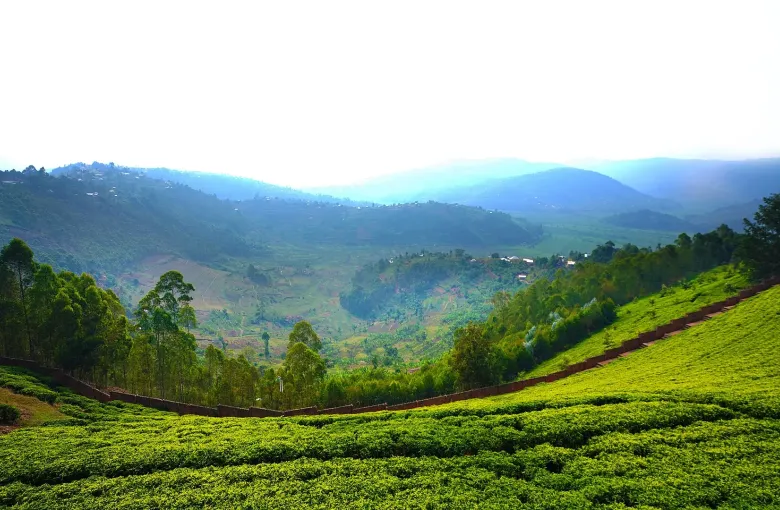
Best Time to Visit Rwanda
Rwanda Packing List