The quick answer
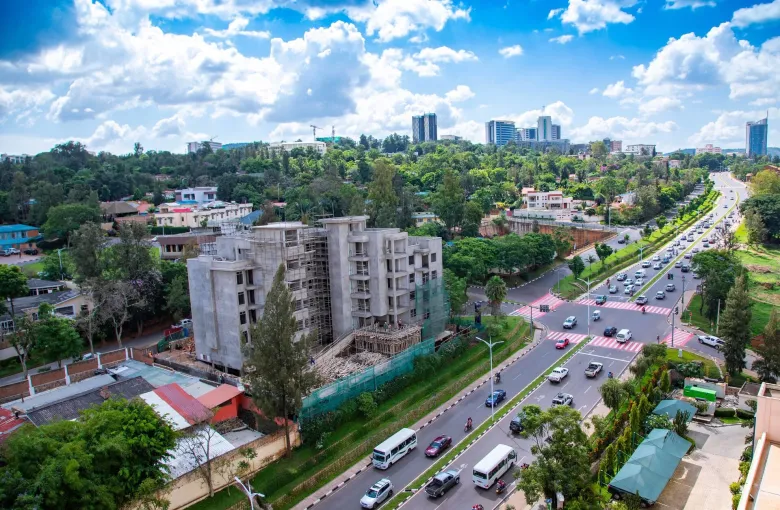
Rwanda is small and its main roads are good, so distances that look significant on a map are usually a few hours in a vehicle. Most visitors travel by private vehicle with a driver, and for a trip built around the parks that is the sensible default.
The real risk in Rwanda is the road, not crime. The CDC states plainly that motor vehicle crashes are the leading killer of healthy US citizens in foreign countries, and the FCDO records that the minibuses and motorbike taxis most people travel on are very vulnerable to accidents. Everything else on this page follows from that.
What the roads are actually like
The FCDO records that roads from Kigali to all the major towns are in good condition, and that they can be damaged by landslides during the rainy season. Outside the larger urban centers, many roads are unlit after dark and driving standards are poor.
Two practical consequences. First, build slack into wet season itineraries, because one landslide closure turns a three hour transfer into a long day. Second, avoid intercity road travel after dark. This is the single most effective safety decision you can make in Rwanda and it costs nothing but an earlier start.
Nyabugogo, and the coach network
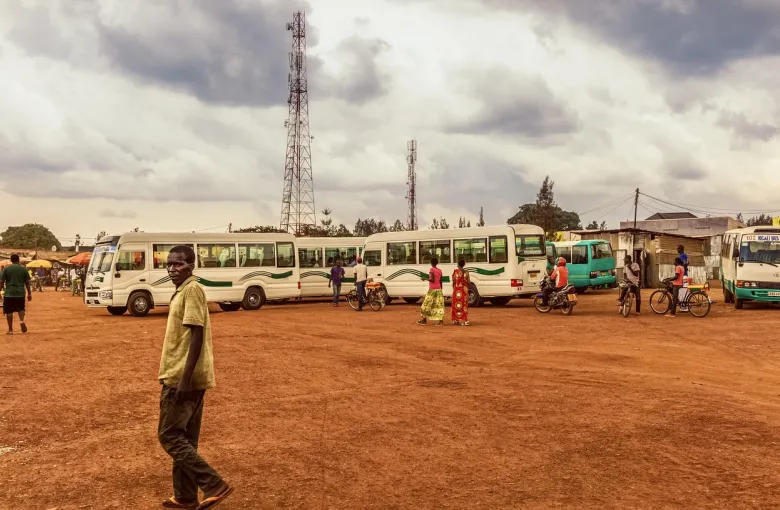
Nyabugogo in Kigali is the country’s main bus park, and effectively every intercity journey starts or ends there. It is busy, it is well organized for what it is, and the coach companies running from it serve the whole country at very low fares.
Express coaches between Kigali and the main towns are a reasonable option for an independent traveler: book a seat with one of the established operators rather than taking whatever leaves first, and travel in daylight.
Moto taxis
Motorbike taxis are everywhere, they are cheap, they are how a great many people get around Kigali, and they are the most exposed way to travel. Helmets are provided and required.
We are not going to tell you never to take one. We will tell you that they are the vehicle the FCDO singles out alongside shared minibuses as especially accident prone, that a short hop in daylight is a different proposition from a long ride after dark in the rain, and that if you are on a group trip your operator almost certainly has a view on it.
Shared minibuses
The other half of the FCDO’s warning. Cheap, frequent, and they leave when they are full rather than at a time. Fine for a short, curious, daylight hop between towns. Not the way to move a group with luggage across the country.
Driving yourself
Possible, and less common than in neighboring countries. If you intend to drive:
- Carry the 1949 version of the international driving permit together with your home license. Both, in the car. You cannot buy an IDP after you arrive, so arrange it beforehand.
- After one year of driving in Rwanda you are required to hold a Rwandan license, which involves an application to the Commissioner for Traffic and Road Safety.
- Lock the doors while driving and do not leave valuables in a parked car.
- Expect pedestrians, cyclists and livestock on rural roads, and expect to be slower than the distance suggests.
Kigali on foot, and the car free mornings
Kigali is hilly, clean, unusually orderly and pleasant to walk, in daylight, in the areas you have reason to be in. Take the usual care after dark and arrange transport rather than walking home late. Note also that some off limits military zones are not well lit or signposted, and entering one can lead to arrest, so stay to populated streets at night.
On the first and third Sunday of each month Kigali closes streets to cars from 7am to 10am. It is a genuinely nice thing to stumble into, and a nuisance if you had a transfer booked through it.
Getting to the parks
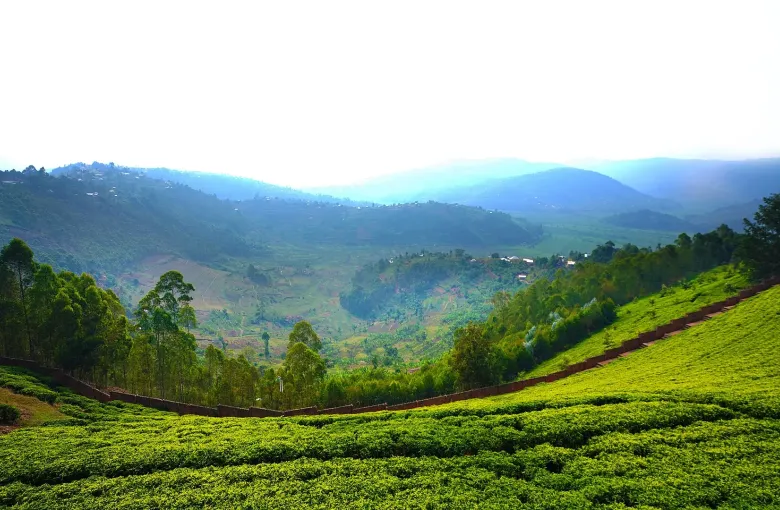
Volcanoes National Park is reached through Musanze, a straightforward drive north from Kigali on good road. Nyungwe is a much longer drive southwest and the journey is part of the experience, climbing through tea country before entering the forest. Treks start early, which in practice means staying near the park the night before rather than driving out from Kigali on the morning.
Planning with LABUSA Travel
We build transfers around daylight, around trek start times and around the rains, and we use drivers we know rather than whoever is available.
Sources
- UK Foreign, Commonwealth & Development Office: Rwanda travel advice: regional risks, local laws, health and entry requirements. Accessed 13 September 2026.
- US Centers for Disease Control and Prevention: Travelers’ Health, Rwanda: vaccination guidance, malaria and yellow fever entry rules. Accessed 13 September 2026.
- Visit Rwanda: the national tourism presentation of parks, culture and itineraries. Accessed 13 September 2026.
Other Articles
Rwanda Travel Safety Guide
Best Time to Visit Rwanda