The short version
Nigerian cooking is confident, generous and hot, and it has traveled further than almost any other African cuisine. Eat widely. The one habit to keep throughout is about water rather than food.
What to eat
Jollof rice is the dish everyone has heard of and the one that starts arguments across three borders. It is rice cooked in a tomato and pepper base until the grains take the color of it, and it appears at every celebration worth the name. Ask a Nigerian whose jollof is best and then sit back.
Suya is the one you will remember. Thin strips of beef threaded on a skewer, coated in a dry spice mix built on ground peanut, chili and ginger, and grilled over an open fire at a roadside stall from early evening onward. It is sliced onto paper with raw onion and more of the spice. Suya is northern in origin and it is now sold on every street in the country.
Then the staples that a visitor often meets last and should meet first. Pounded yam and its relatives, eaten with the fingers and used to lift a soup: egusi, thickened with ground melon seed; ogbono, which draws; bitterleaf, okra, and the long-simmered pepper soups that are as much a remedy as a meal. Moin moin, a steamed bean pudding, and akara, its fried cousin, are breakfast. Plantain turns up fried, roasted and pounded, and the fried version, dodo, is the thing children fight over.
Along the coast the fish is excellent and the pepper is serious. Inland the grilled meat is excellent and the pepper is also serious. Ask for it mild the first time and adjust upward; nobody will think less of you.
The market
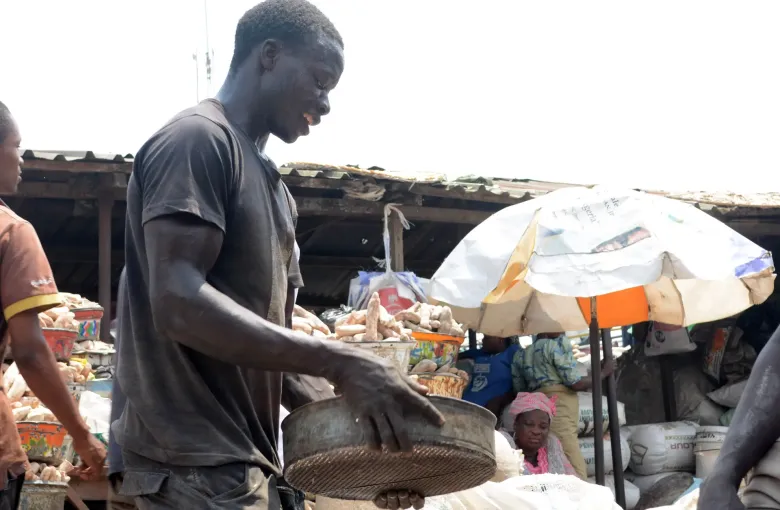
A Nigerian market is the country at full volume, and it is worth going to one with someone who knows it rather than alone. Yams stacked like firewood, dried fish, bitter kola, palm oil in repurposed bottles, mounds of dried chili in a dozen grades of heat. Buy the spice mix for suya and take it home; it travels better than almost anything else you can carry.
The health part, and it is not optional
The CDC records that active cholera transmission is widespread in Nigeria. Cholera is rare in travelers, and safe food and water habits plus handwashing are what keep it that way. It also recommends hepatitis A and typhoid vaccination for travelers here, both of which are contracted through contaminated food and water.
In practice that means: drink sealed bottled or properly treated water, and use it for brushing your teeth. Skip ice unless you know where it came from. Eat food that is hot and freshly cooked, which describes a suya stall perfectly and describes a lukewarm buffet not at all. Peel fruit yourself. Wash your hands or use sanitizer before eating, which at a stall with no running water is the single most useful thing in your bag.
None of that is a reason to eat only in hotels. The stall grilling over live fire in front of you is often the safest food on the street as well as the best.
Where we take groups
We book restaurants that can handle a group and we build in at least one market visit and one evening eating the way the city eats. See culture and etiquette for how meals work socially and the money guide for paying in a market.
Sources
- US Centers for Disease Control and Prevention: Travelers’ Health, Nigeria: the vaccines and medicines recommended before travel. Accessed 14 September 2026.
- UK Foreign, Commonwealth & Development Office: Nigeria health: yellow fever, schistosomiasis, Zika virus, malaria and dengue, and what medical care costs. Accessed 14 September 2026.
Other Articles
Nigeria Culture and Etiquette Guide
Nigeria Currency and Money Guide