The short version
Nigeria runs substantially on cash, cards are accepted in far fewer places than a visitor expects, and the security advice about money here is unusually specific. The awkward part is not paying for things. It is getting hold of the money in the first place.
No exchange rate on this page, deliberately
You will not find a figure here. No source we read for this cluster publishes one, and a rate written into a travel guide is out of date within weeks and quietly misleading for years afterward. Check a live rate on the day, from your own bank or a reputable converter, and treat any number you see printed anywhere as historical.
The ATM is the part to plan
The FCDO's wording is direct: areas around banks and ATMs have seen a spike in criminal activity, and it advises taking extra precautions when withdrawing cash, especially at night. So: withdraw during the day, from a machine inside a bank building or inside a hotel rather than one on a street frontage, and do not count the money where you took it out.
Card fraud is common, and the fix is simple
Credit card fraud is described as common, with the standing advice to keep your card within sight when paying a bill. That means not letting a card be carried away to a back office. Where a place cannot bring the terminal to the table, pay cash. Tell your bank you are traveling before you go, so a legitimate transaction is not the one that gets blocked.
Carrying it
Do not carry large amounts of cash. That is the FCDO's phrasing and it is the right instinct: carry what the day needs, leave the rest in the hotel safe, and split it between two places on your person. The same advice that covers the watch and the jewelry covers the wallet.
The scams to know about
British nationals are increasingly targeted by scammers operating in West Africa, and the forms are familiar: romance and friendship, business ventures, and work or employment offers. The consistent shape is a request for funds, and the consistent defense is to treat any such request with suspicion however well you think you know the person asking.
There is a variant worth naming because it targets people at home rather than travelers. If you are emailed about a money transfer to Nigeria for someone you know, contact that person directly through a number you already had. If a caller claims to be in distress, ask whether they have reported it to the consular section at the British Deputy High Commission in Lagos or the British High Commission in Abuja.
What we do about it
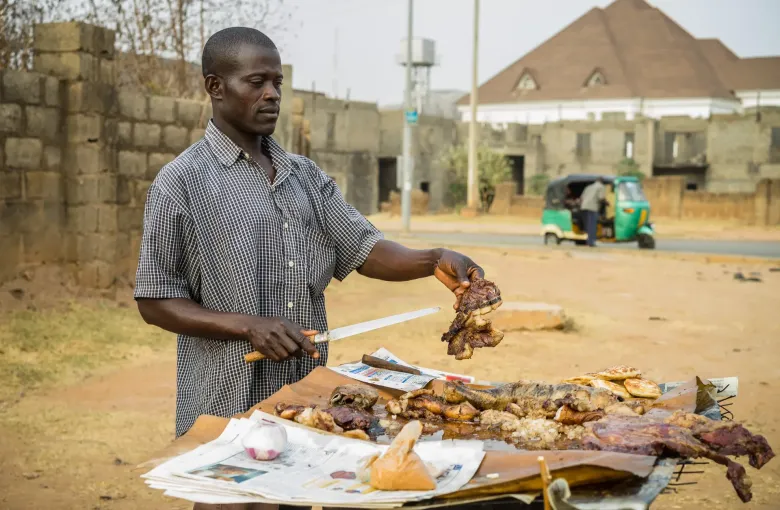
On a LABUSA itinerary the large payments are settled before you travel, which removes the reason to carry serious money at all. What is left is market money and tips. See travel safety and the food guide, since the market is where most of it goes.
Sources
- UK Foreign, Commonwealth & Development Office: Nigeria safety and security: terrorism, kidnap described as widespread and able to occur anywhere, street and vehicle crime, curfews and financial scams. Accessed 14 September 2026.
- UK Foreign, Commonwealth & Development Office: Nigeria travel advice: the FCDO advises against all travel to parts of Nigeria and against all but essential travel to further parts. Accessed 14 September 2026.
Other Articles
Nigeria Visa and Entry Requirements
Nigeria Travel Safety Guide