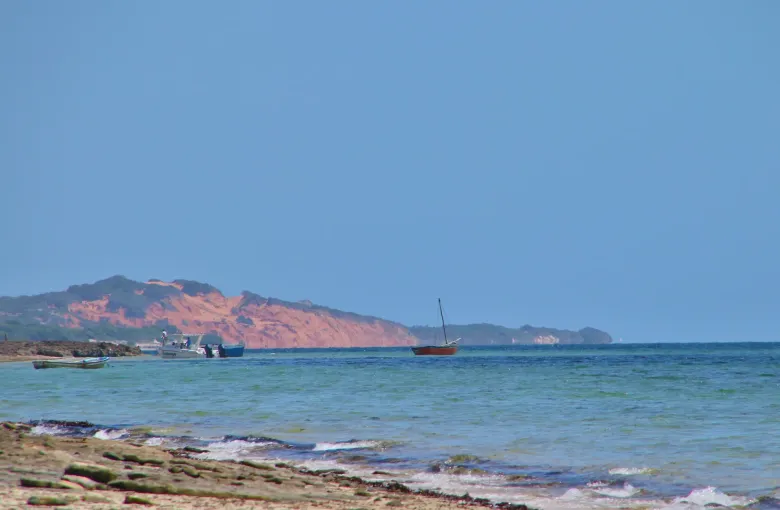
Why this country rewards a slower trip
A lot of what is best about Mozambique is not a sight to be reached. It is a stretch of coast, a stone town to walk, an afternoon on a veranda while the heat goes out of the day. That suits a traveler who is happy to stay put, and it punishes an itinerary that treats the country as a list.
The practical version: two places in two weeks, not five. The transfers are the tiring part, and the coast does not get better for being sampled faster.
Heat and humidity
This is the first thing to plan around. Travel in the dry season, roughly May to October, when humidity is lower and nights are cooler. In the far south, winter evenings are genuinely pleasant.
Then structure the day the way people who live there do: out early, indoors or in shade through the middle, out again late. Drink more water than you think you need, and carry rehydration salts. Heat exhaustion arrives quietly.
Health planning, which is the serious part
Take this section more seriously than the equivalent in a guide to somewhere else.
- See your own doctor and a travel clinic at least eight weeks ahead. That is the FCDO's lead time, and it is what vaccine courses need.
- Malaria. The CDC recommends prescription medicine to prevent it for travel anywhere in Mozambique. The options it lists are atovaquone-proguanil, doxycycline, mefloquine and tafenoquine, and which is appropriate depends on your other medication. That conversation is the point of the appointment.
- Bring every medicine you take, in original labeled packaging, with copies of prescriptions, and more than the trip requires. The State Department notes that medicine availability is variable and often in short supply.
- Insurance that covers medical evacuation and that does not exclude your pre-existing conditions. The FCDO is explicit that serious illness or injury may require evacuation to South Africa. Read the policy document, not the marketing page.
- Carry a written summary of your conditions, medications and allergies, and a copy in Portuguese.
The emergency ambulance numbers the FCDO publishes are 848888 and 823388. Put them in your phone before you need them.
Water and food
Drink bottled or treated water, including for brushing teeth. There is a cholera outbreak in central and northern areas, so this is a real precaution rather than a general one. Eat hot food from places with turnover, and peel your own fruit. See the food guide.
Two scheduling habits
Never connect a domestic flight to an international one on the same day. Build in an overnight. Domestic schedules move and boat transfers are weather-dependent, and a day of slack converts a crisis into an inconvenience.
Arrive somewhere with daylight left. Unfamiliar steps, sand and unlit paths are the ordinary cause of a fall, and arriving at dusk removes your margin.
Getting about
Use a private vehicle with a driver rather than shared minibuses, take taxis arranged through your hotel, and let someone else carry the bag. Ask about the walk from the vehicle to the room before you book: on this coast it is frequently across sand.
Boat transfers to the islands may involve boarding from a beach rather than a jetty. Ask what boarding actually involves, at what tide, with how many crew. See the accessibility guide, which goes into this in more detail and is useful well before anyone would call it necessary.
Where it works best
- Maputo as a base. The most even surfaces, the best medical facilities, and enough to fill several unhurried days.
- The Inhambane and Vilankulo coast, for a long stay in one lodge with the sea in front of it.
- Maputo National Park, close enough to the capital to be reached without a long internal flight.
- The Island of Mozambique, if walking uneven stone for a few days appeals. It is one of the most rewarding places in the country and the least flat.
One thing to check before booking anything
Read the current travel advisories. The north of the country is restricted by both the US and UK governments and no itinerary we would build goes there. What is unrestricted is the southern and central coast, the capital and the island, which is a full trip by any measure.
Sources
- UK Foreign, Commonwealth & Development Office: Mozambique health advice, including the cholera outbreak, the emergency numbers and the standard of healthcare. Accessed 14 September 2026.
- US Centers for Disease Control and Prevention: Travelers’ Health, Mozambique: malaria prophylaxis for the whole country, chloroquine resistance and the recommended drugs. Accessed 14 September 2026.
- UK Foreign, Commonwealth & Development Office: Mozambique travel advice and the areas it advises against traveling to. Accessed 14 September 2026.
- US Department of State: the Mozambique travel advisory, currently Level 2, Exercise Increased Caution, with Do Not Travel areas in the north. Accessed 14 September 2026.
Other Articles
Accessible Travel in Mozambique
Maputo National Park: Visitor and Heritage Guide