Why Ethiopia, specifically
Ethiopia holds a place in Black and pan-African thought that no other African country occupies, and the reasons are historical rather than sentimental.
It has an unbroken Christian tradition reaching back to the fourth century, one of the oldest anywhere in the world. It has its own script, its own calendar, and a literary tradition in Ge'ez. It was the seat of the Aksumite kingdom, a first-millennium power that traded with Rome and Persia. And it was never brought under lasting European colonial rule, which for generations made it the proof that African sovereignty and African antiquity were not a matter of speculation.
That is why Ethiopia appears in so much of the diaspora's own language, from nineteenth-century Ethiopianism through pan-Africanism to Rastafari. A visit here is not a discovery of something obscure. It is, for many people, a visit to something they were told about long before they could go.
What a reconnection visit is, and is not
It is worth being clear with yourself about what you are looking for, because the answers are different.
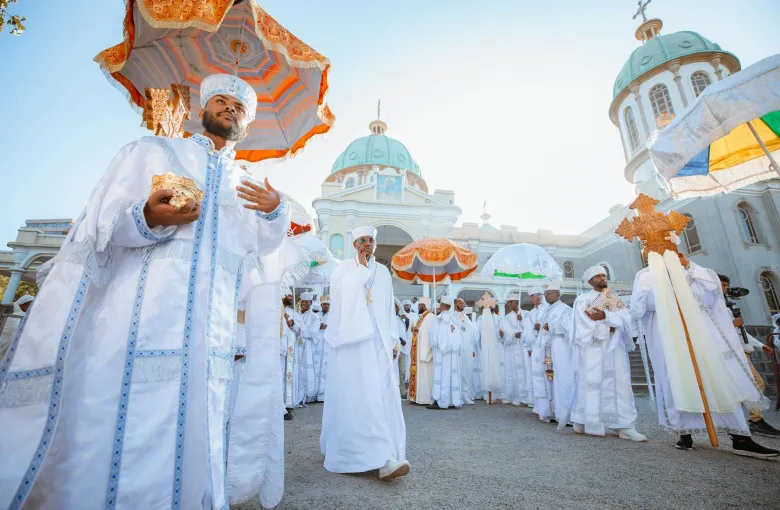
- Historical and religious continuity is the strongest thing Ethiopia offers, and it is everywhere. The procession in the photograph at the top of this page is not a re-enactment.
- Ancestral tracing is a different matter here from the Atlantic-facing countries of West Africa. Ethiopia was not a major source region for the transatlantic trade, and a visit framed as tracing a family line may be looking in the wrong place. That is worth knowing before you arrive rather than after.
- Living culture is the everyday answer: coffee, liturgy, the calendar, the food, the languages. It asks for time rather than an itinerary.
The church, and how to be in it
The Ethiopian Orthodox Tewahedo Church is the thread running through most of what a visitor will see, and its sites are places of worship first. Everything in Ethiopia Culture and Etiquette matters: shoes off, dress conservatively, stand at the edge, ask before photographing, and accept that there are parts of a church a lay person does not enter.
If you are coming from a Christian tradition yourself, expect the differences to be larger than you assume. The calendar, the fasting discipline and the liturgy all have their own long development. Arriving as a student rather than a returning member is the posture that works.
Festivals as a way in
Two of Ethiopia's seven UNESCO-inscribed traditions, Meskel in late September and Timkat in January, are public and enormous. They are the most direct route into the country's religious life that exists, and they are also the times when accommodation is hardest and crowds are largest. See Ethiopia Festivals and Celebrations.
Practical realities for travelers of Ethiopian descent
- Documents. If you hold an Ethiopian Origin ID, often called a yellow card, or a temporary residents permit, the visa rules are different for you. The FCDO notes that holders do not need a visa. Confirm your own status well before you fly rather than at check-in.
- Dual nationality. Which passport you travel on has consequences for what consular help your other government can give you. Settle this before you go.
- Exit bans. The US State Department lists exit bans among its reasons for placing Ethiopia at Level 3. Anyone with family, property or business ties should understand what that means for them specifically.
- Expectations. Family and community obligations can arrive quickly and generously once you are there. That is a good problem, and it is easier if you have thought about time and money in advance.
The hard part
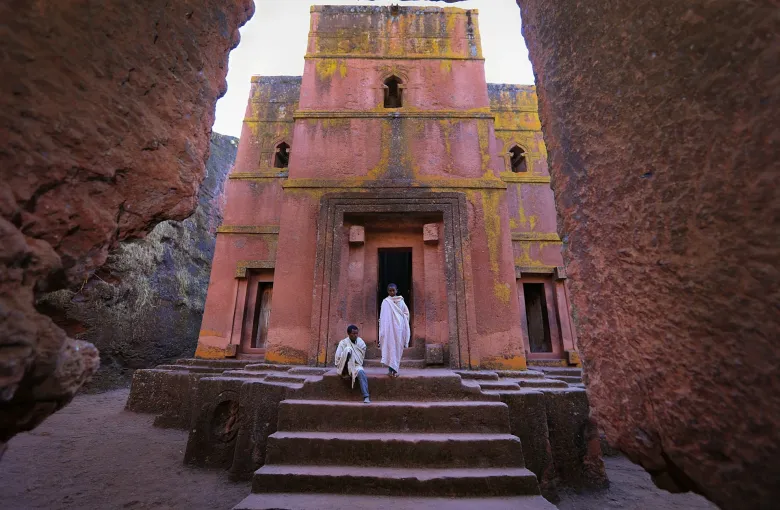
Much of what draws the diaspora to Ethiopia is in the north. Lalibela and the Simien are in Amhara; Aksum is in Tigray. Both the US and UK governments advise against all travel to those regions as of September 2026. That is the single biggest practical obstacle to a reconnection trip right now, and there is no way to write around it.
What is open is substantial: Addis Ababa, its churches and museums, the coffee culture, the food, and the everyday life of a capital that is one of the most consequential cities on the continent. Read Ethiopia Travel Safety Guide, follow the advisories over time, and plan the north for when it is possible rather than deciding it is impossible.
Going with intent
The trips that work are the ones with fewer places and more time in each. Learn some Amharic greetings. Sit through the whole coffee ceremony, all three rounds. Ask people about the calendar and let them explain it. Ethiopia rewards attention more than it rewards distance covered, and that is as true of a first visit as of a fifth.
Sources
- UNESCO World Heritage Centre: Ethiopia’s State Party record and its twelve inscribed properties. Accessed 14 September 2026.
- UNESCO Intangible Cultural Heritage: Ethiopia’s seven inscribed elements, among them Meskel, Timkat and the Gada system. Accessed 14 September 2026.
- UK Foreign, Commonwealth & Development Office: Ethiopia travel advice: the areas it advises against traveling to, and the nationwide election. Accessed 14 September 2026.
- UK Foreign, Commonwealth & Development Office: Ethiopia entry requirements: passport validity, the e-visa, the yellow fever certificate and the currency limits. Accessed 14 September 2026.
- US Department of State: the Ethiopia travel advisory, currently Level 3, Reconsider Travel. Accessed 14 September 2026.
Other Articles
Lalibela: Visitor and Heritage Guide
Ethiopia Culture and Etiquette Guide