The short version
Nigeria is a difficult destination for a traveler with reduced mobility, and saying otherwise would not help anyone. Step-free access is rare, pavements are uneven where they exist at all, and adapted transport is not something you will find on arrival. What does work here is people, planning and paying for the right vehicle in advance.
What is genuinely hard
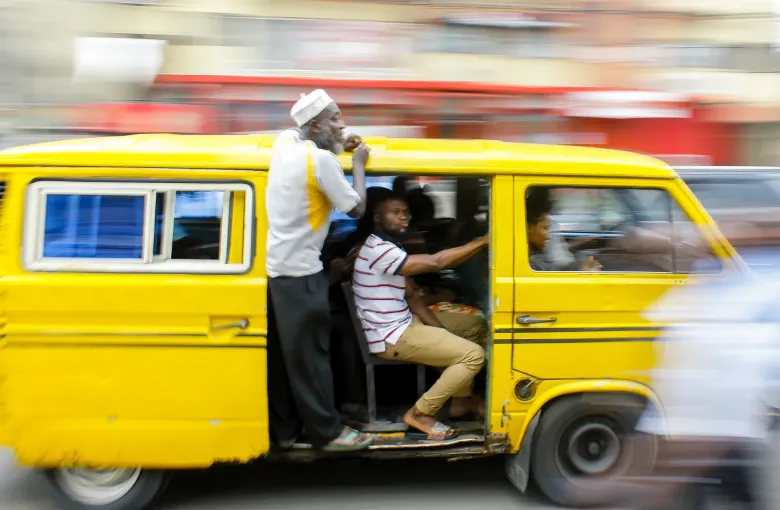
Public transport is out. The danfo minibus, the keke and the shared taxi all involve a step up, a crowded interior and a driver in a hurry, and none of them is adaptable. Older buildings, markets and heritage sites are almost never step-free, and the ground at a place like a forest grove is uneven by its nature. Lifts exist in newer hotels and office buildings and cannot be relied on to be working.
Public toilets that a wheelchair user can use are effectively absent outside international hotels and the newer airport terminals. That single fact shapes an itinerary more than any other.
What can be arranged
A private vehicle with a driver for the whole trip, which is what we would recommend for any group here in any case, removes most of the daily problem. Hotels at the international end of the market in Lagos and Abuja have ground-floor rooms, some with roll-in showers, and staff who are used to being asked. Outside the cities, a ground-floor room in a lodge with level approaches is a realistic ask and a purpose-built accessible bathroom usually is not.
The other thing that works, and it is not a small thing, is that Nigerians will help. Offers of physical assistance come readily and without embarrassment. Whether you want that is your call entirely, and it is worth deciding in advance so you are not negotiating it at the foot of a staircase.
Medical care
The FCDO is direct about this. Medical standards differ from those at home and you will have to pay for any treatment at a public hospital, with private hospitals more expensive again. Local hospitals may be crowded and there can be shortages in medical supplies and equipment.
The consequence is that insurance covering treatment and, if it comes to it, medical evacuation is not a box to tick on this trip. Bring your own consumables and spares: anything specific to your equipment should be assumed unavailable. Pharmacies are widely available and will accept a prescription from home, and most medicines that need a prescription there need one here too, so bring the original packaging.
Questions to ask before you book
- How many steps are there between the vehicle and the room, and is there a ramp or a lift?
- How wide is the bathroom door, measured rather than estimated?
- Is there a step into the shower, and is there anything to hold?
- Is the room on the ground floor, and if not, is there a lift that is currently working?
- At each site on the itinerary, how far is the walk from where the vehicle can stop?
Ask for photographs rather than descriptions. We ask these questions for every property we book and we will tell you plainly when the answer is no. See Nigeria for senior travelers and getting around.
Sources
- UK Foreign, Commonwealth & Development Office: Nigeria health: yellow fever, schistosomiasis, Zika virus, malaria and dengue, and what medical care costs. Accessed 14 September 2026.
- UK Foreign, Commonwealth & Development Office: Nigeria safety and security: terrorism, kidnap described as widespread and able to occur anywhere, street and vehicle crime, curfews and financial scams. Accessed 14 September 2026.
- UK Foreign, Commonwealth & Development Office: Nigeria travel advice: the FCDO advises against all travel to parts of Nigeria and against all but essential travel to further parts. Accessed 14 September 2026.
Other Articles
Nigeria for Senior Travelers
Getting Around Nigeria