The quick answer
Mauritius has two seasons. November to April is hot and humid, with the heaviest rain and the cyclone window. May to October is cooler and drier, and it is the straightforward answer for most trips.
Being south of the equator, the island's summer is the northern hemisphere's winter, which catches out visitors who booked on instinct.
The island has a wet side and a dry side
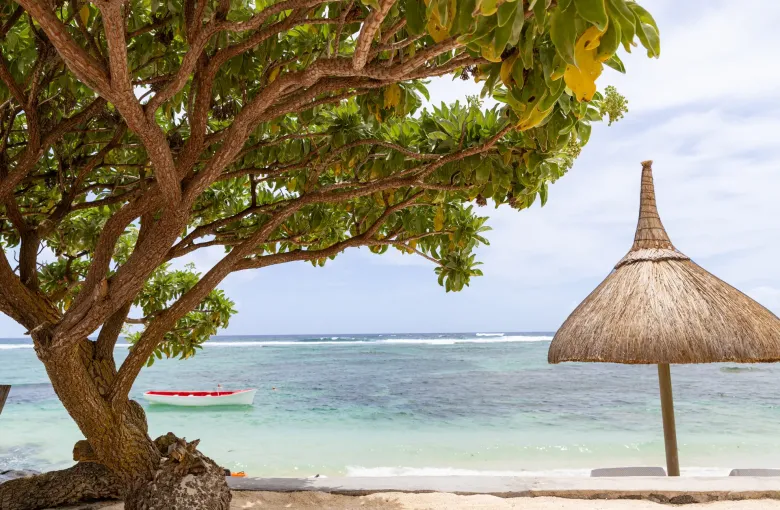
This matters more than the calendar for choosing where to stay. The central plateau and the southeast catch the prevailing southeasterly trade winds and are markedly wetter and cooler. The west and northwest coasts sit in the rain shadow and are drier and hotter.
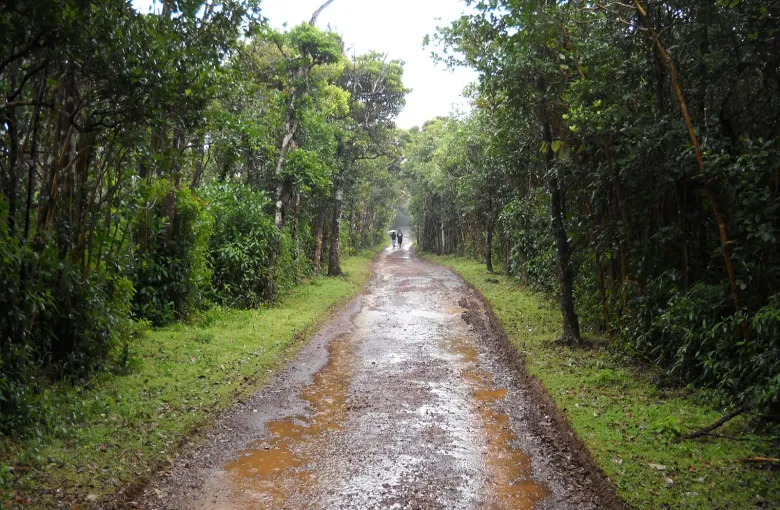
The Black River Gorges uplands exist because of that rainfall: the native forest there survives in the wettest part of the island. Expect it to be raining in the gorges when it is not raining at Flic en Flac, and to need a layer you did not think you would.
⚠ Cyclone season
Tropical cyclones are possible in the wet months, broadly November to April, with the greatest risk in the middle of that window. Mauritius has a well-practiced warning system with graded classes, and hotels take it seriously: when a class is raised, activities stop and people stay put.
What this actually costs a visitor is usually flights and days rather than safety. If you travel in those months, build spare time around your departure and take travel insurance that covers disruption. Nobody plans a Mauritian holiday around a cyclone; a few end up rearranged by one.
Season by season
- May to June. The rain easing, the air fresher, the sea still warm. An excellent and underrated window.
- July to September. The coolest and driest months, and the windiest. Superb for walking and for the west coast. The trade winds make the southeast breezy, which kitesurfers come for.
- October to November. Warming up, still largely dry early on. Many find this the best compromise.
- December to April. Hot, humid and wet, with cyclones possible. The sea is at its warmest. Rain is often heavy and short rather than all day.
Mosquitoes follow the rain
The FCDO names dengue and chikungunya among the health risks here, both spread by day-biting mosquitoes. They are more of an issue in the warm wet months, and the practical consequence is that repellent belongs in a day bag rather than only in an evening routine. See Mauritius Packing List.
What this means for the trip
If you are here to lie by a lagoon, the dry season is more comfortable and the wet season is warmer in the water. If you are here to walk the uplands, choose the dry season without hesitation. If you are combining the two, base on the drier west and travel in for the walking. See Best Time to Visit Mauritius.
Sources
- UK Foreign, Commonwealth & Development Office: Mauritius travel advice, which warns against travel to no part of the country. Accessed 14 September 2026.
- UK Foreign, Commonwealth & Development Office: Mauritius health advice: the emergency numbers, dengue, chikungunya and schistosomiasis, stonefish stings, and the rules on bringing medication. Accessed 14 September 2026.
- Mauritius National Parks and Conservation Service: the Black River Gorges and Bel Ombre Biosphere Reserve nomination dossier, which records the proclamation of the national park in 1994 under the Wildlife and National Parks Act 1993 and the endemic species it protects. Accessed 14 September 2026.
Other Articles
Best Time to Visit Mauritius
Mauritius Packing List