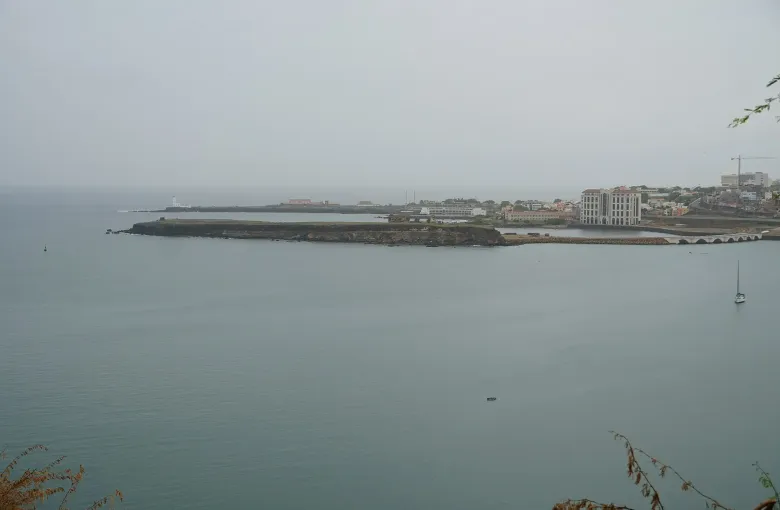
The short version
Accessible travel in Cape Verde is realistic on Sal and Boa Vista and difficult almost everywhere else. That is not a comfortable thing to write about a country we are recommending, and it is the truth.
Where it works
The large resorts on Sal and Boa Vista are recent, purpose-built and flat, and they are the part of the country where step-free rooms, accessible bathrooms, level access to restaurants and pool hoists are a normal thing to ask for. The islands themselves are low and sandy, the roads are surfaced, and airport transfers are short.
If the trip you want is warm sea, flat ground and a comfortable base, Cape Verde can do that straightforwardly, and it does it better than most destinations at this latitude.
Where it does not
Almost everything that makes the other islands worth visiting also makes them hard.
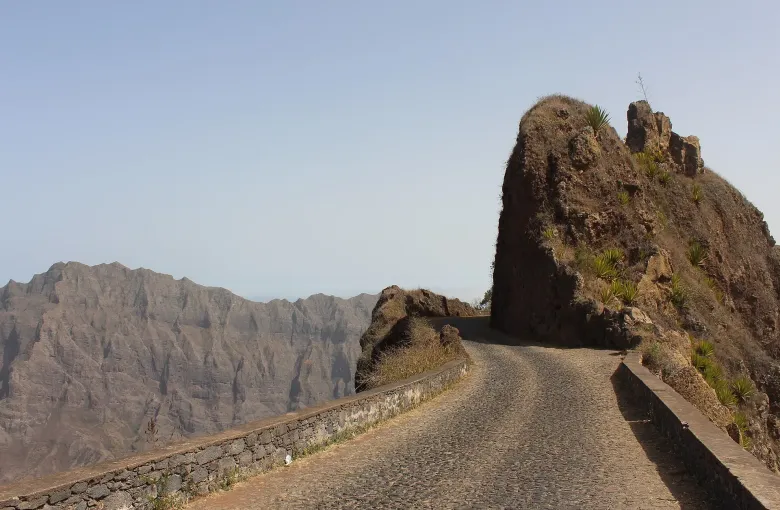
- Cobbled streets and roads. Much of the older network is hand-laid stone, which is uneven, slippery when wet and punishing in a wheelchair or with a stick.
- Gradient. Santo Antão, Fogo, Brava and the interior of Santiago are steep. Towns are built on slopes and the streets are often stepped.
- Cidade Velha is walkable on the flat but the fort above it is reached by a short steep climb on rough ground, and there is no alternative route.
- Ferries. Boarding is by gangway, sometimes with a step and a swell, and crew assistance is willing rather than trained.
- Aluguer transport is a high step into a van and is not adaptable.
The things to settle before booking
Ask for measurements, not adjectives. "Accessible" is used loosely here, as it is in most places. Door widths, the height of the bed, whether the bathroom has a level entry or a lip, and whether the route from the room to the restaurant and the pool involves a step are the questions that decide whether a week works.
Ask about the airport as well as the hotel. Assistance exists at the international airports and should be arranged in advance through the airline rather than assumed.
Bring spares and consumables. Specialist supplies and repairs are limited, and an inter-island ferry is not a supply chain. Whatever you depend on, bring enough of it.
Insurance, again
Global Health Insurance Cards are not accepted in Cape Verde, so cover that includes treatment and evacuation matters more here than in a European destination. See travel safety.
What we do about it
We will tell you plainly when an island is not going to work rather than selling you a compromise that fails on the second day. Where the answer is a flat base on Sal or Boa Vista with carefully chosen day trips, we will say so, and we will check the specifics with the property rather than relying on a listing.
Sources
- UK Foreign, Commonwealth & Development Office: Cape Verde travel advice: the FCDO restricts no part of the country, and Global Health Insurance Cards are not accepted. Accessed 14 September 2026.
- UK Foreign, Commonwealth & Development Office: Cape Verde safety and security: snatching, burglary and muggings, named for Praia and for Sal and Boa Vista. Accessed 14 September 2026.
- UNESCO World Heritage Centre: the inscription of Cidade Velha, Historic Centre of Ribeira Grande, in 2009 under criteria (ii)(iii)(vi). Accessed 14 September 2026.
Other Articles
Cape Verde for Senior Travelers
Getting Around Cape Verde