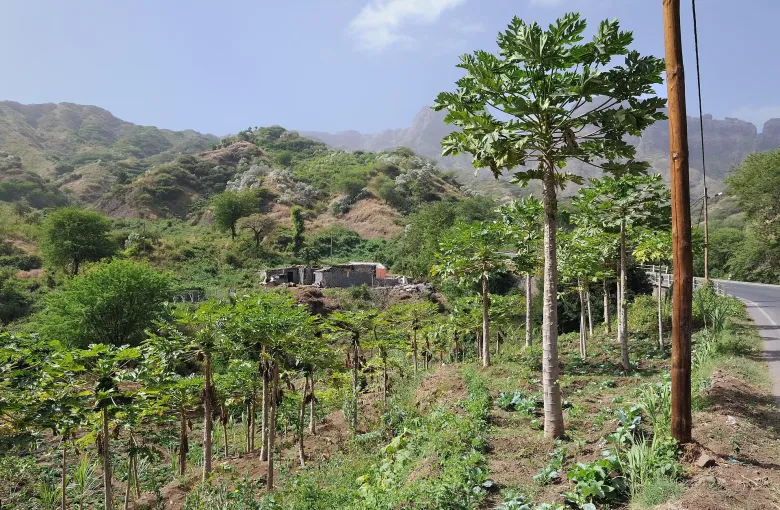
The short version
Cape Verde is one of the more straightforward destinations in this part of the world, and the honest headline is an absence: the FCDO advises against travel to no part of it. There is no restricted province, no no-go island and no region you need to plan around.
What that absence actually means
It is worth being precise, because "no advisory" is easy to read as "no risk". The Foreign, Commonwealth & Development Office publishes a page of Cape Verde travel advice and that page has no "areas where FCDO advises against travel" section at all. For comparison, the same office publishes a long list of restricted states for several mainland countries. Here there is nothing to list.
There is also no separate regional risks page for Cape Verde on gov.uk. That is not an oversight on our part: the address simply does not exist, which is itself the clearest evidence that the country is not divided into safer and less safe parts in the way its neighbors are.
The risk that is real, and where
What the FCDO does name is ordinary and worth taking seriously: snatching, burglary and muggings, and it names where. Those are described as happening particularly in the capital city of Praia, and on the islands of Sal and Boa Vista. Praia is the capital and the largest city. Sal and Boa Vista are the two resort islands, which is to say the two places with the highest concentration of visitors carrying valuables.
The precautions are the ones you would take in any city you did not know. Do not walk with a phone in your hand. Do not carry the day's cash in a back pocket. Be more careful after dark and on quiet stretches of beach than you would be in daylight on a busy street. Use the hotel safe for the passport and carry a copy.
Health is the part people underprepare
The health picture matters more here than the crime picture, and it is covered properly in our other guides, but two things belong in a safety page.
The first is dengue. The Cape Verde government has raised the civil protection warning level for dengue on the islands of Santiago, Fogo and Brava. Dengue is spread by a mosquito that bites during the day, so repellent is a daytime habit here rather than an evening one.
It is worth pairing that with an absence. The US Centers for Disease Control and Prevention does not recommend the yellow fever vaccine for this destination, and neither it nor the FCDO lists malaria among Cape Verde's risks. We say so because the opposite is widely assumed of anywhere off the West African coast, and acting on that assumption means taking medication nobody has recommended to you.
The second is insurance, and it is the one that costs money. Global Health Insurance Cards are not accepted in Cape Verde. Whatever reciprocal arrangement you are used to at home, it does not apply. Travel insurance that covers treatment and, if it comes to it, medical evacuation to Europe, is not a formality on this trip.
What we do about it
We build itineraries that keep the awkward moments to a minimum: arranged transfers rather than finding a car at the airport late, accommodation chosen for where it sits as well as what it costs, and a clear account of which beaches have lifeguards and which do not. See getting around and what to pack.
Sources
- UK Foreign, Commonwealth & Development Office: Cape Verde travel advice: the FCDO restricts no part of the country, and Global Health Insurance Cards are not accepted. Accessed 14 September 2026.
- UK Foreign, Commonwealth & Development Office: Cape Verde safety and security: snatching, burglary and muggings, named for Praia and for Sal and Boa Vista. Accessed 14 September 2026.
- UK Foreign, Commonwealth & Development Office: Cape Verde health: shigella, salmonella and dengue, and the civil protection warning level for dengue on Santiago, Fogo and Brava. Accessed 14 September 2026.
- US Centers for Disease Control and Prevention: Travelers’ Health, Cape Verde: the yellow fever vaccine is not recommended for this destination. Accessed 14 September 2026.
Other Articles
Cape Verde Visa and Entry Requirements
Getting Around Cape Verde