The short version
Sun protection you would take to a desert. A windproof layer even in summer. Shoes with a real sole. Repellent you will use in the daytime.
Sun, and why more than you think
These are tropical latitudes with little cloud and a constant breeze, and the breeze is the problem: it makes the sun feel manageable while it is doing exactly as much damage. The people who burn here are the ones who felt comfortable.
- High-factor sunscreen, more than you expect to use, and reapplied after swimming.
- A hat that will stay on in wind. A wide brim with no chin strap is a hat you will lose on the first headland.
- Sunglasses, genuinely useful against glare off pale sand and off the sea.
- A long-sleeved light shirt, which is better sun cover than repeated sunscreen and better in wind than bare arms.
Wind
The northeast trade wind blows most of the year and is why the islands are a windsurfing destination. Bring a light windproof layer. Evenings on the coast and anywhere with altitude are cooler than the daytime temperature suggests, and a packable shell is more useful here than a fleece.
Feet
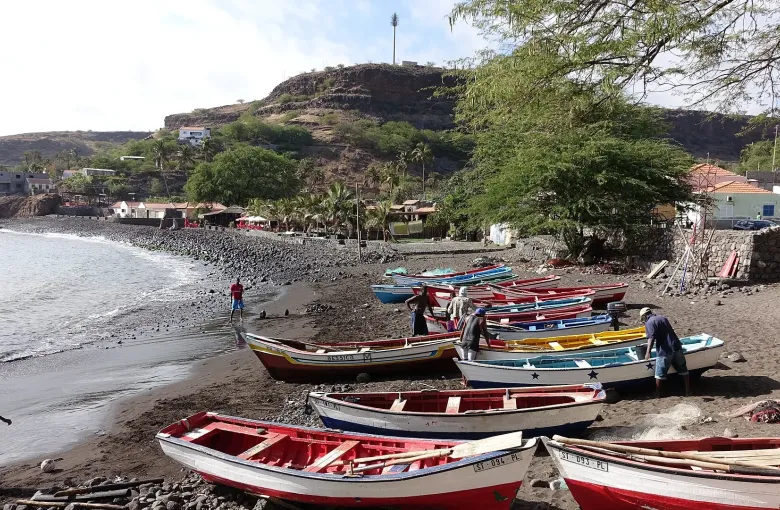
If you are staying on a beach island, sandals are most of the answer. If you are going anywhere near Santo Antão, Fogo or the interior of Santiago, bring closed shoes with a proper sole. The walking surface is volcanic rock, loose scree and hand-laid cobblestone, all of which are hard on a thin sole and unkind to a rolled ankle. This is the single most common packing regret here.
Mosquitoes, in the daytime
Bring repellent and keep it in the day bag rather than the bathroom. The mosquito that carries dengue bites during the day, which inverts the habit most travelers have. The government has raised the civil protection warning level for dengue on Santiago, Fogo and Brava, so on those islands in particular this matters.
Medicines and documents
- Every prescription you take, in its original labeled packaging, with enough for the trip and a few days over in case a ferry does not sail.
- A small first aid kit with blister plasters, which the cobbles will justify.
- Rehydration salts. The FCDO names shigella and salmonella among the risks here, and the useful response to a bad day is fluids.
- A printed copy of your insurance policy and of the pre-registration confirmation. Global Health Insurance Cards are not accepted in Cape Verde, so the policy is the document that matters.
What you can leave at home
Heavy waterproofs, unless you are traveling in the short rainy window. Formal clothes; nowhere here expects them. A travel adaptor collection, if you are coming from continental Europe, because the sockets will look familiar.
Sources
- UK Foreign, Commonwealth & Development Office: Cape Verde health: shigella, salmonella and dengue, and the civil protection warning level for dengue on Santiago, Fogo and Brava. Accessed 14 September 2026.
- UK Foreign, Commonwealth & Development Office: Cape Verde travel advice: the FCDO restricts no part of the country, and Global Health Insurance Cards are not accepted. Accessed 14 September 2026.
- US Centers for Disease Control and Prevention: Travelers’ Health, Cape Verde: the yellow fever vaccine is not recommended for this destination. Accessed 14 September 2026.
Other Articles
Cape Verde Weather Guide
Cape Verde Travel Safety Guide