The quick answer
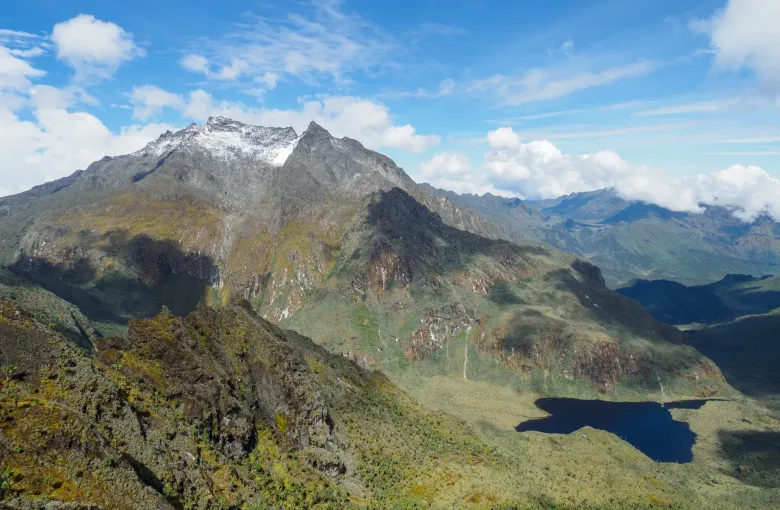
Bwindi is a UNESCO World Heritage Site, inscribed in 1994, covering 32,092 hectares on the eastern edge of the Albertine Rift Valley. It holds almost half the world's mountain gorilla population, and it is the reason most visitors come to Uganda.
What makes it exceptional
UNESCO describes Bwindi as one of the largest areas in East Africa still carrying Afromontane lowland forest that extends well up into the montane forest belt. It is believed to be a Pleistocene refugium, a pocket where forest survived through the ice ages while it retreated elsewhere, which is why the biodiversity here is so concentrated.
The inscription notes that the property has possibly the greatest number of tree species for its altitude anywhere in East Africa, along with endemic butterflies and one of the richest mammal assemblages in Africa. It is listed under criteria (vii) and (x).
The phrase in the inscription most worth reading
UNESCO calls Bwindi a conservation frontline: an isolated forest of outstanding biological richness surrounded by an agricultural landscape that supports one of the highest rural population densities in tropical Africa. It goes further, and says that community benefits arising from mountain gorilla and other ecotourism may be the only hope for the future conservation of this unique site.
That is an unusually direct statement for a World Heritage citation, and it is the single most important thing to understand about visiting. The permit you buy is not a ticket. It is the mechanism by which a forest surrounded by hungry farmland continues to exist.
What a trek involves
Groups are small and numbers are strictly limited. You set out in the morning with trackers who have usually located the family already, and you walk until you find them. That walk can be an hour or it can be most of the day, on steep, wet, tangled ground. The time you spend with the gorillas once you arrive is limited and strictly enforced.
It is a physically demanding day for most people. Hiring a porter is both a genuine help and a direct transfer of tourism income into the communities at the forest edge.
Conduct
- Follow the guides without argument. The rules exist to protect the gorillas from human disease.
- Keep the required distance, and move back if a gorilla moves toward you.
- Do not go if you are unwell. A human respiratory infection is a serious threat to them.
- No flash photography.
- Keep your voice down and do not eat in their presence.
Getting there and when
Bwindi is in the far southwest, a long road journey from Kampala or a short flight to a nearby airstrip. See Getting Around Uganda. The drier spells make the trek easier underfoot; see Best Time to Visit Uganda. Permits, not weather, are usually the binding constraint on dates.
For what to wear and carry, Uganda Packing List has the boots and gloves question settled.
Sources
- UNESCO World Heritage Centre: the inscription of Bwindi Impenetrable National Park. Accessed 14 September 2026.
- UNESCO World Heritage Centre: Uganda’s State Party record and its three inscribed properties. Accessed 14 September 2026.
- UK Foreign, Commonwealth & Development Office: Uganda travel advice: entry requirements, safety and security, health and local laws. Accessed 14 September 2026.
Other Articles
Best Time to Visit Uganda
Uganda Packing List