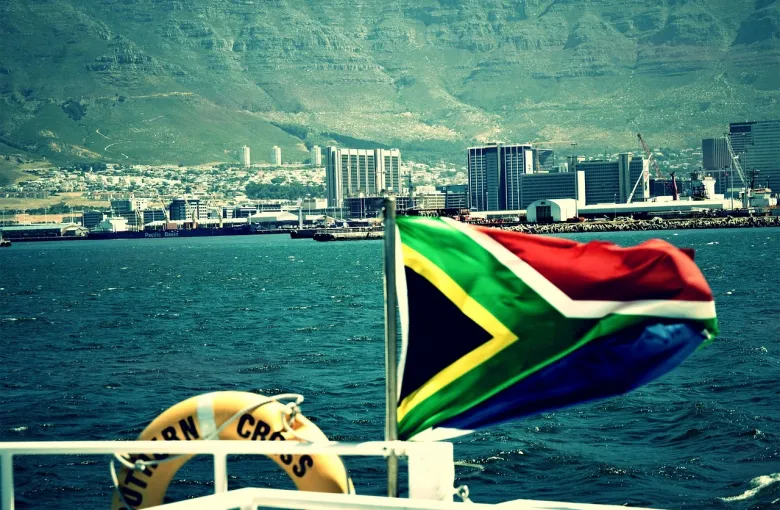
History
Kruger is one of Africa’s oldest and largest protected areas, established from an earlier game reserve at the turn of the twentieth century and expanded through it. It runs for hundreds of kilometers along the country’s northeastern border and is now part of a wider transfrontier conservation area extending into neighboring countries.
Like every protected area of its era, its creation involved the removal of people who lived on the land, and the relationship between the park and the communities on its western boundary remains an active part of how it is managed and discussed. It is worth knowing that history rather than encountering the park purely as wilderness.
What you will see
The Big Five — lion, leopard, elephant, buffalo and rhino — all occur here, along with cheetah, wild dog, giraffe, zebra, hippo, crocodile and an enormous list of antelope and birds. The scale is the distinguishing feature: this is not a reserve you see in a morning but a landscape of several distinct ecological zones, from dense bushveld in the south to sparser country in the north.
Rhino sightings are treated with discretion for good reason; do not share precise locations publicly.
What makes Kruger unusual: you can drive it yourself
Kruger has a network of tarred and gravel roads, rest camps with a range of accommodation, shops and fuel, and it is entirely normal for visitors to drive themselves through it in an ordinary car. Very few major African parks work this way.
The trade-offs are real. A self-drive visitor sees less than a guide would, because finding animals is a skill; must stay on the roads and inside gate times, which are strictly enforced; and cannot drive at night, which is when much of the interesting activity happens. Many rest camps sell guided night drives and walks to close exactly that gap, and taking one is the obvious answer.
The private reserves
Along Kruger’s western boundary sit private reserves sharing unfenced borders with the park, so animals move freely between them. What differs is the rules: off-road driving to follow a sighting, night drives, guided walks, and a cap on vehicle numbers. Guiding standards are generally very high and leopard viewing in particular is exceptional.
They cost considerably more, and they are all-inclusive rather than self-catering. The common answer is a stay that uses both.
Visiting
Kruger is a SANParks park and entry is by conservation fee, with different rates for residents and international visitors. Reach it by road from Johannesburg in around five hours, or fly to one of the regional airports serving the area.
The dry winter, roughly May to September, is the best game viewing: thin bush, animals at water, mild days and cold mornings. Summer is green, hot, wet and much harder for spotting, though the birding is at its best.
⚠ Kruger is in a malaria area, with risk varying by season. Take advice from a travel health professional well before you go — the CDC guidance is the reference and this page does not substitute for it.
Visiting respectfully
Stay in your vehicle except at designated points. Keep to the roads and the speed limit — animals use them too, and the limit is about them rather than you. Never feed anything. Keep a real distance, particularly from elephant with calves; an elephant that turns to face you is asking you to leave. Be inside a camp before the gates close, which matters more than it sounds.
Common questions
How many nights?
Three is where it starts to make sense. Two works as part of a longer route. One is a long way for a single drive.
Self-drive or guided?
Guided if the wildlife is the priority; self-drive if independence and cost are. Doing both is common and sensible.
Will I see the Big Five?
Often, over several days, and never guaranteed. Leopard is the usual gap.
Seeing it on a LABUSA Travel journey
We will tell you honestly where a private reserve is worth the difference and where the public park gives you the same animals for less — and we build in at least one guided drive even on a self-drive itinerary, because it changes what you see.
Other Articles
Best Time to Visit South Africa
South Africa Packing List