The quick answer
South Africa is in the southern hemisphere, so the seasons are the reverse of North America and Europe: summer runs roughly December to February and winter June to August. More importantly, the country does not have one best season. Kruger is at its best in the dry winter and Cape Town is at its best in the dry summer, and those are opposite halves of the year.
That single fact shapes more South African itineraries than anything else on this page.
The two calendars
Safari country — the northeast, dry winter
From roughly May to September the bush thins out, surface water disappears, and animals concentrate at the rivers and waterholes that remain. Game viewing is at its easiest and most reliable. Mornings are genuinely cold on an open vehicle and the days are mild and dry. Malaria risk in the lowveld is at its lowest in these months, which is a real consideration for some travelers.
The trade-off is that the landscape is brown and the bush is at its least photogenic.
The Cape — dry summer
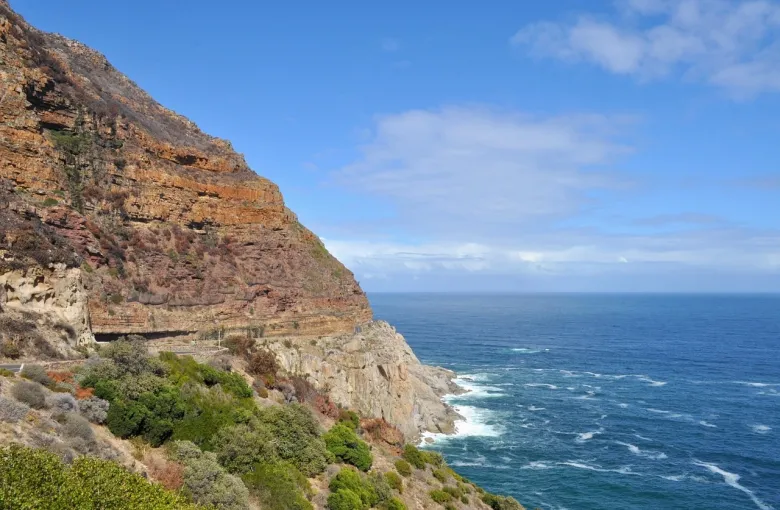
Cape Town has a Mediterranean climate, which almost no other part of the country does: it is dry and warm from about November to March, and its rain falls in winter. Summer is when the beaches, the winelands, the coastal drives and the mountain are at their best, and it is also the busiest and most expensive time, particularly over the December holidays when South Africans themselves are on leave.
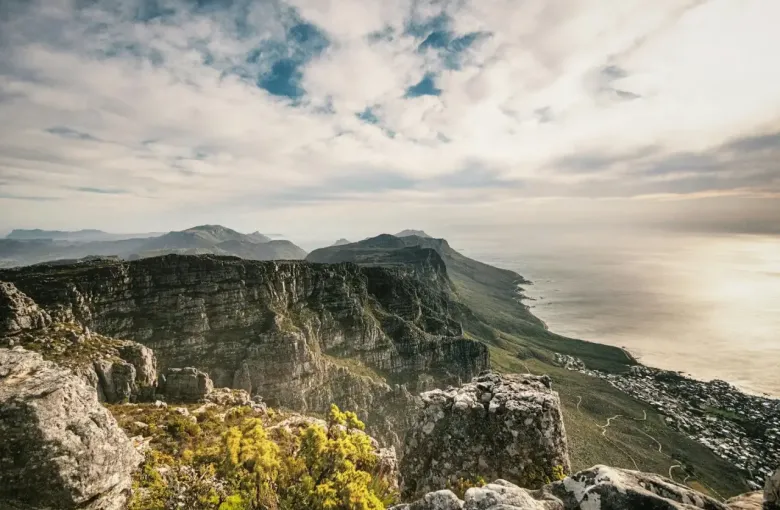
The Cape summer wind — the south-easter, known locally as the Cape Doctor — is a real feature and can close the Table Mountain cableway for a day at a time.
So when do you go?
- Safari is the priority — May to September. Accept a cool, quiet Cape.
- Cape Town is the priority — November to March. Accept thicker bush and warmer, wetter game viewing.
- You want both — the shoulder months, roughly April–May and September–October, are the honest compromise. Neither is at its absolute peak; both are good, prices are lower and the crowds are thinner. This is what we most often recommend.
Whales, flowers and other seasonal events
Southern right whales come inshore along the Western Cape coast during the winter and spring months, and can be watched from land at several points along that coast — one of the few places in the world where that is true. In roughly the same window, spring wildflowers transform the semi-arid west of the country for a few weeks each year, on a timing that depends entirely on the rainfall that preceded it.
Both are worth building a trip around if they matter to you, and neither can be promised on a particular date.
School holidays and the December wall
South African school holidays, and especially the long break from December into January, fill the coast, the national parks and the roads. Cape Town over the New Year is a different and much more expensive city. If your dates are flexible, moving a week either side of that period changes both the price and the experience.
Common questions
Is winter too cold for safari?
No — it is the best time for it. Bring layers for the morning drive and you will be comfortable by nine.
Can I see Cape Town in winter?
Yes, and it is cheaper and emptier. Expect rain and wind, and treat the mountain and the boat trips as weather-dependent.
When is the cheapest time?
Broadly the shoulder months and the Cape winter. December is the most expensive by a distance.
Seeing it on a LABUSA Travel journey
Our South African itineraries are built around this split rather than in spite of it. Tell us which half of the country matters most and which month you can travel, and we will tell you plainly what that combination gives up — which is more useful than being told every month is a good month.
Other Articles
South Africa Weather Guide
Kruger National Park: Visitor and Heritage Guide