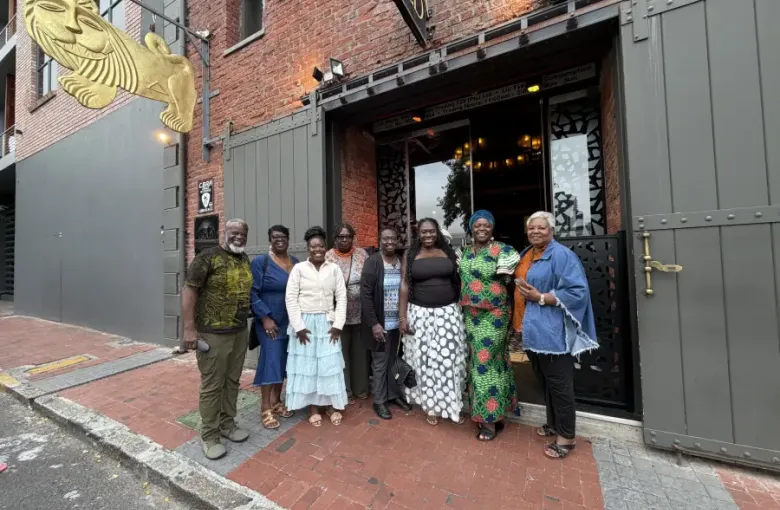
The quick answer
Greet people before you ask them anything. Ask before photographing anyone. Be careful and curious rather than confident about the country’s recent history. And do not assume that the South African you are speaking to shares the background of the last one — this is a country of many communities and it is unusually conscious of that.
Twelve official languages
South Africa recognizes twelve official languages, among them English, Afrikaans, isiZulu, isiXhosa and, most recently, South African Sign Language. English is widely spoken and is the usual language of business and signage, but it is the first language of only a minority.
Nobody expects a visitor to speak any of the others. A greeting in the language of the person you are speaking to is disproportionately appreciated, and asking which language someone prefers is a courteous question rather than an awkward one.
The history is recent, and it is not settled
Apartheid ended within living memory. Almost every adult South African either lived under it or was raised by people who did, and its consequences — in where people live, what they own and what work they do — are visible on any drive across a city.
South Africans generally talk about this openly and are willing to discuss it with visitors who are genuinely interested. What lands badly is arriving with conclusions: telling South Africans what their history means, or how their present should be fixed. Ask, listen, and accept that you will hear different accounts from different people, because you will.
Political conversation is normal, robust and not considered impolite. Being asked your own view is common.
Greetings and manners
Greet before transacting — in shops, at gates, in offices. Handshakes are usual, sometimes in a three-part form that a visitor can simply follow. Age is treated with visible respect. "Now now", "just now" and "now" all mean different amounts of delay, none of them immediate, and the difference is learned by observation.
Ubuntu — roughly, a person is a person through other people — is a real idea here rather than a slogan, and it underlies a lot of everyday courtesy.
Photography
Ask first, every time, and accept no. This matters especially in townships and informal settlements, where photographing people’s homes without asking is experienced exactly as it would be anywhere else. Do not photograph police, military installations or government buildings.
Visiting a township
Township tours can be excellent and can be extractive, and the difference is how they are arranged rather than the intention behind them. A good visit is run by people from the community, pays them directly, involves conversation rather than observation, and does not treat homes as scenery. Ask your operator who is paid and how. A company that will not answer is telling you something.
Do not go independently. That is a safety point and also a courtesy one.
Some practical points
- Tipping is expected in the service trades — see our money guide, including car guards and fuel attendants.
- South Africa has constitutional protections for LGBTQ+ people and legal same-sex marriage, which is not the regional norm; social attitudes nonetheless vary a great deal by place.
- Race is discussed directly in South Africa, including in official statistics, in ways that can surprise visitors from countries where it is not.
- Punctuality is expected for business and treated flexibly socially.
Common questions
Is it rude to ask about apartheid?
Generally no, if you ask rather than assert, and if you are prepared to listen to an answer that does not match what you expected.
Should I learn some Zulu or Xhosa?
A greeting goes a long way. Nobody expects more.
How should I respond to people asking for money?
A polite decline is normal. If you want to give, giving through a community organization or a guide accomplishes more than giving on the street.
Seeing it on a LABUSA Travel journey
Our guides are South African and our township and heritage visits are arranged directly with the communities involved. We brief you on what is expected wherever you are going, and that briefing is part of the trip rather than an add-on to it.
Other Articles
South Africa and Diaspora Reconnection
South Africa Festivals and Celebrations