The quick answer
South African cooking is the product of an unusual number of traditions sitting on top of each other — indigenous, Dutch, Malay, Indian, British and Portuguese — and the results differ sharply between Cape Town, Durban and the interior. It is also one of the few African countries with a serious restaurant scene and a three-hundred-year-old wine industry.
The braai is not a barbecue
A braai is meat cooked over wood or charcoal, and calling it a barbecue misses the point in the same way that calling a Sunday roast "hot lunch" would. It is a social institution: an afternoon rather than a meal, with the fire lit long before anything is cooked and the cooking done by one person while everyone else stands nearby.
Expect boerewors — a coiled, coarse-ground, coriander-spiced sausage — along with steak, lamb chops and chicken, and pap, a maize porridge, with a tomato and onion relish. South Africa marks Heritage Day in September, and it is widely also observed as a national braai day, which tells you how seriously it is taken.
The dishes worth knowing
Bobotie
Spiced minced meat with dried fruit under a set savory custard. The signature dish of Cape Malay cooking and gentler than its ingredient list suggests.
Biltong
Air-dried, spiced cured meat, and not the same thing as jerky — it is dried rather than cooked, and coriander and vinegar do most of the flavoring. The national snack, sold everywhere, and worth trying before you decide.
Bunny chow
Durban’s contribution: a hollowed-out half loaf of bread filled with curry. It comes from the city’s large Indian community and it is street food in the best sense — cheap, generous and eaten with the hands.
Cape Malay cooking
Fragrant, mildly spiced curries and stews with dried fruit and warm spice, developed in Cape Town over centuries. It is distinct from Indian cooking despite sharing ingredients, and the Bo-Kaap neighborhood is where to eat it.
Potjiekos, chakalaka and sides
Potjiekos is a slow stew cooked in a three-legged iron pot over coals. Chakalaka is a spicy relish of vegetables and beans. Both accompany more meals than they headline.
Something sweet
Malva pudding, a warm sponge soaked in a cream sauce, and koeksisters, plaited dough soaked in cold syrup. Both are very sweet and both are worth it once.
Wine, and rooibos
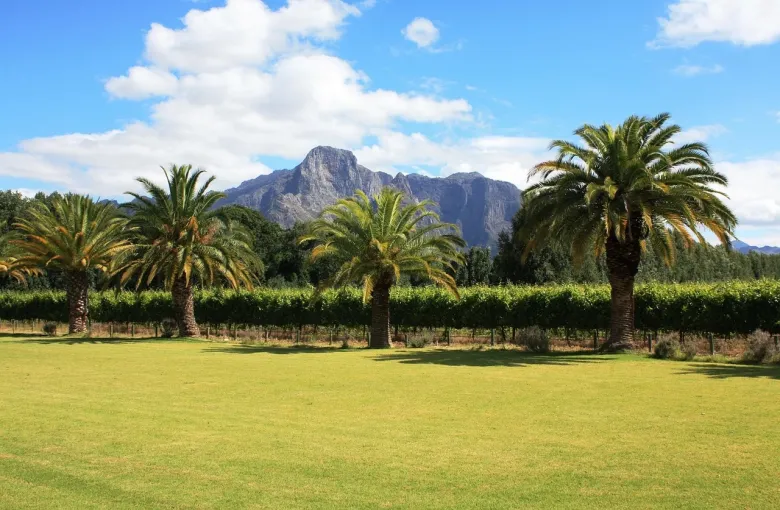
The Cape winelands are among the oldest wine regions outside Europe, and Stellenbosch and Franschhoek are close enough to Cape Town for a day out. Tastings are inexpensive by international standards and the estates are set up for visitors.
Rooibos is a caffeine-free red bush tea grown only in the Western Cape, drunk everywhere and worth bringing home. Coffee culture in the cities is strong and modern.
Eating as a vegetarian
Easier than the braai-centered reputation suggests, particularly in Cape Town and Durban, where Cape Malay and Indian cooking give real options rather than an afterthought salad. Cities have dedicated vegetarian and vegan restaurants. In smaller towns and at a braai, plan ahead — and be aware that a dish described as vegetable may be cooked with meat stock.
Common questions
Is the food spicy?
Mostly not. Cape Malay food is aromatic rather than hot; Durban curries can be genuinely fierce if you ask for them that way.
Can I drink the tap water?
In the major cities, generally yes. In rural areas, ask.
What should I not miss?
A braai with company, a Cape Malay meal in Cape Town, and a bunny chow if you reach Durban.
Seeing it on a LABUSA Travel journey
We build in meals that are worth eating rather than merely convenient, including at least one that is a social occasion rather than a stop. Tell us about dietary requirements early and they will be handled quietly at every stop on your route.
Other Articles
South Africa Culture and Etiquette Guide
South Africa Festivals and Celebrations