History
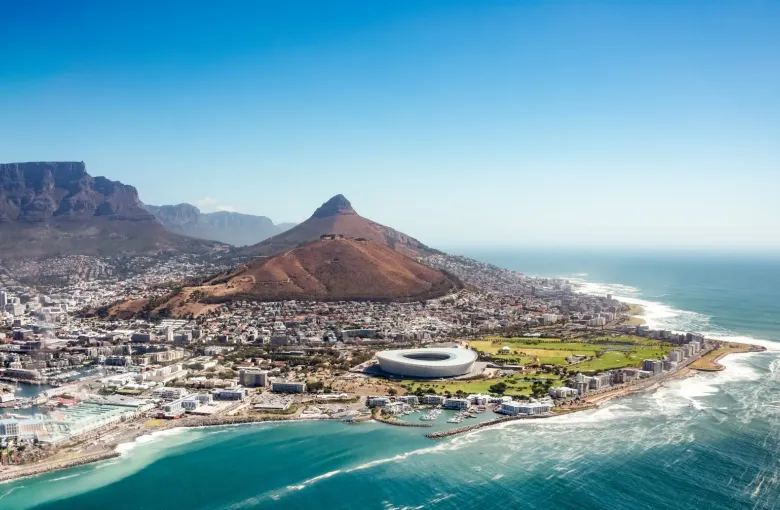
Cape Town grew around a supply station established at the foot of the mountain in the seventeenth century, on land already occupied by Khoi pastoralists, and its subsequent history — of slavery, of colonial rule, of segregation and forced removal — is written into the shape of the city that exists now. Table Mountain has been the fixed point through all of it, and the mountain and the peninsula around it are now a national park inside a metropolitan area, which is a rare arrangement.
The mountain is also part of one of the smallest and richest floral kingdoms on earth. The fynbos that covers it grows nowhere else, and its protected areas carry World Heritage recognition for that botanical significance rather than for anything built.
What you will see
From the top, the city on one side and two oceans’ worth of coastline on the other. On the mountain itself, fynbos — proteas, ericas, restios — which repays a closer look than most visitors give it, and dassies, which will approach you.
Beyond the mountain, the peninsula: Chapman’s Peak Drive cut into a cliff face, the penguin colony at Boulders, Cape Point at the end, and the Kirstenbosch botanical garden on the mountain’s eastern slope. In the city, the Bo-Kaap with its painted houses and Cape Malay history, and the District Six Museum.
Visiting the mountain
A rotating cableway runs to the summit, weather permitting, and "weather permitting" is doing real work in that sentence: the cableway closes for high wind with little notice, and the cloud that forms over the summit — the tablecloth — can arrive within an hour.
Go early, go on the first clear day of your stay rather than the day you planned, and check the status before you travel across the city. Walking up is possible on several routes of varying difficulty; do not treat it as a stroll, and do not go alone.
Beyond the postcard
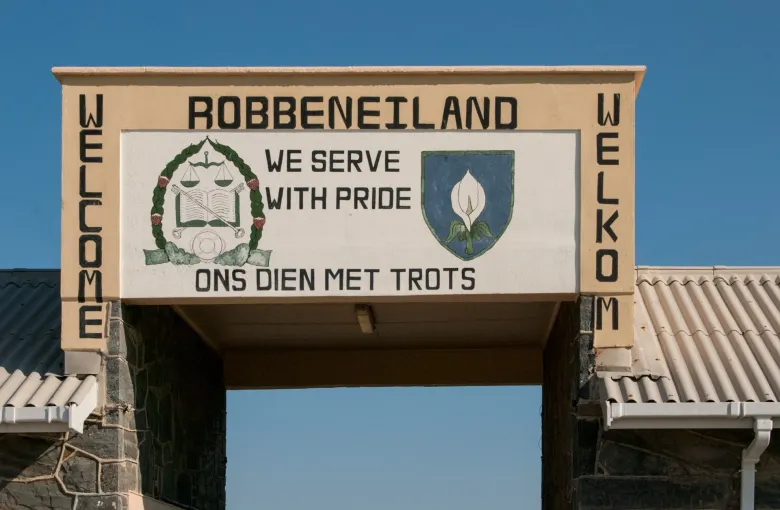
Cape Town is the most photographed city in the country and one of the most unequal, and a visit that stays on the mountain and the waterfront sees very little of it. The District Six Museum, Bo-Kaap and a guided township visit are not a worthy supplement to the pretty version — they are the city. Robben Island, covered in its own guide, departs from the waterfront.
Getting there
Cape Town International Airport is well connected domestically and internationally. The city is compact enough that a hotel in the center or along the Atlantic seaboard puts most of this within half an hour, traffic permitting. A rental car makes the peninsula much easier; ride-hailing covers the city.
Visiting respectfully
Stay on the paths on the mountain — fynbos is fragile and fire risk is taken extremely seriously. Do not feed the wildlife, including the dassies and the baboons on the peninsula; baboons in particular become dangerous when habituated, and feeding them is both illegal and harmful.
In the city, photograph people only with permission, and arrange township and heritage visits with the communities involved.
Common questions
How many days does Cape Town need?
Four is a comfortable minimum with the peninsula and Robben Island. Three works if you are disciplined.
What if the cableway is closed?
It happens often. Keep the plan flexible and be ready to go on a different morning.
Is the winelands a day trip?
Comfortably, and it is one of the best days out from the city.
Seeing it on a LABUSA Travel journey
We build Cape Town with a flexible mountain day rather than a fixed one, and with the city’s harder history included rather than optional. Both of those are deliberate.
Other Articles
Robben Island: Visitor and Heritage Guide
Best Time to Visit South Africa