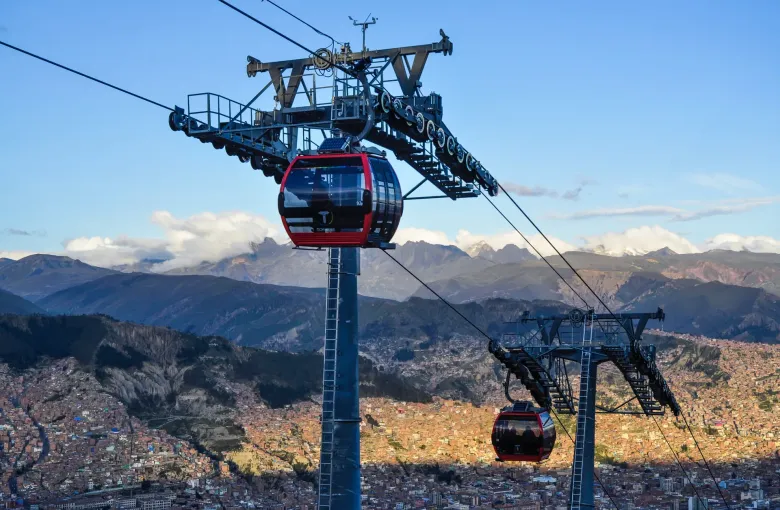
Bolivia has two seasons and they divide the year cleanly. The dry season runs from May to October and the wet season from November to March, with April and the end of October behaving as transitions. Temperature is governed far more by altitude than by month: the altiplano is cold at night all year, and the lowland east is warm and humid all year.
The dry season, May to October
This is the straightforward half. Skies over La Paz, Potosi, Sucre and Lake Titicaca are clear, roads across the altiplano are firm, and the salt flat is a solid white plain you can drive across in any direction. Nights are genuinely cold. June and July are the coldest months and the clearest, and a night on the Salar in July can fall well below freezing.
It is also the busy half, and the two ends of it are busier again. Book ahead for anything around the Carnival of Oruro, which moves with Easter, and for the stretch either side of Independence Day in August.
The wet season, November to March
Rain in the highlands usually means an afternoon downpour rather than a whole gray day, and the landscape turns green in a way the dry months never show. Unsealed roads soften, some become impassable, and a mountain route can close without warning. In the lowland east this is the serious rainy season and river travel is affected.
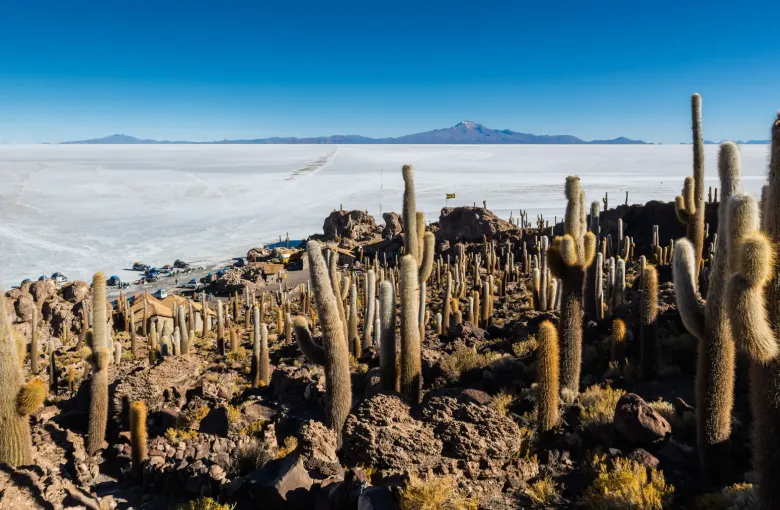
There is one large compensation, and for many visitors it is the reason to come in these months at all. A shallow layer of water lies across parts of the Salar de Uyuni, and the surface becomes a mirror that reflects the sky to the horizon. Tour operators route around the deeper water, some parts of the flat become unreachable, and Isla Incahuasi and its cacti may be cut off. You are trading access for the reflection.
Altitude decides the shape of the first week
This is the planning fact that matters more than the weather. El Alto, the airport that serves La Paz, sits above four thousand meters, and most visitors arrive there having slept at sea level the night before. Altitude affects people unpredictably and it does not track fitness or age.
The usual advice is to give the first day to nothing in particular, and to build the itinerary so it climbs rather than starts at the top. Arriving into Santa Cruz in the lowlands and working upward is gentler than landing in La Paz and leaving the next morning for Lake Titicaca. If your trip must start high, keep the first forty eight hours light and unhurried. The travel safety guide goes into what to watch for.
What actually decides the date
- Whether you want the Salar as a mirror or as a white plain. These are the two things people come for and you cannot have both.
- The Carnival of Oruro, if you want it or want to avoid it. It moves with Easter and it fills the city and every road to it. See the festivals guide.
- Road conditions, if any part of the trip is overland and unsealed. The wet season is when a spare day stops being a luxury.
For what each month feels like at each elevation, see the weather guide, and for what to bring once the dates are settled, the packing list.
Sources
- UK Foreign, Commonwealth and Development Office: Bolivia travel advice: the index to the entry, safety, regional and health pages this cluster draws on, the advice against all but essential travel to the Chapare region of Cochabamba Department, the State of Emergency under which police and armed forces may detain a person who does not comply for up to eight hours without charge, and the standing guidance that no travel can be guaranteed safe. Accessed 17 September 2026.
- Centers for Disease Control and Prevention: Bolivia traveler health: a yellow fever vaccination certificate required for all arriving travelers aged one year and over, and separately a vaccine recommendation limited to travelers aged nine months and over going to areas below 2,300 meters east of the Andes, namely the entire departments of Beni, Pando and Santa Cruz and designated areas of Chuquisaca, Cochabamba, La Paz and Tarija, with the vaccine not recommended above 2,300 meters; malaria risk recorded in areas below 2,500 meters and none recorded in the city of La Paz. Accessed 17 September 2026.
- UNESCO World Heritage Centre: Bolivia States Party record: the properties Bolivia has inscribed on the World Heritage List, and separately the Tentative List of sites it may nominate in future. Accessed 17 September 2026.
Other Articles
Bolivia Weather Guide
Salar de Uyuni: Visitor and Heritage Guide